
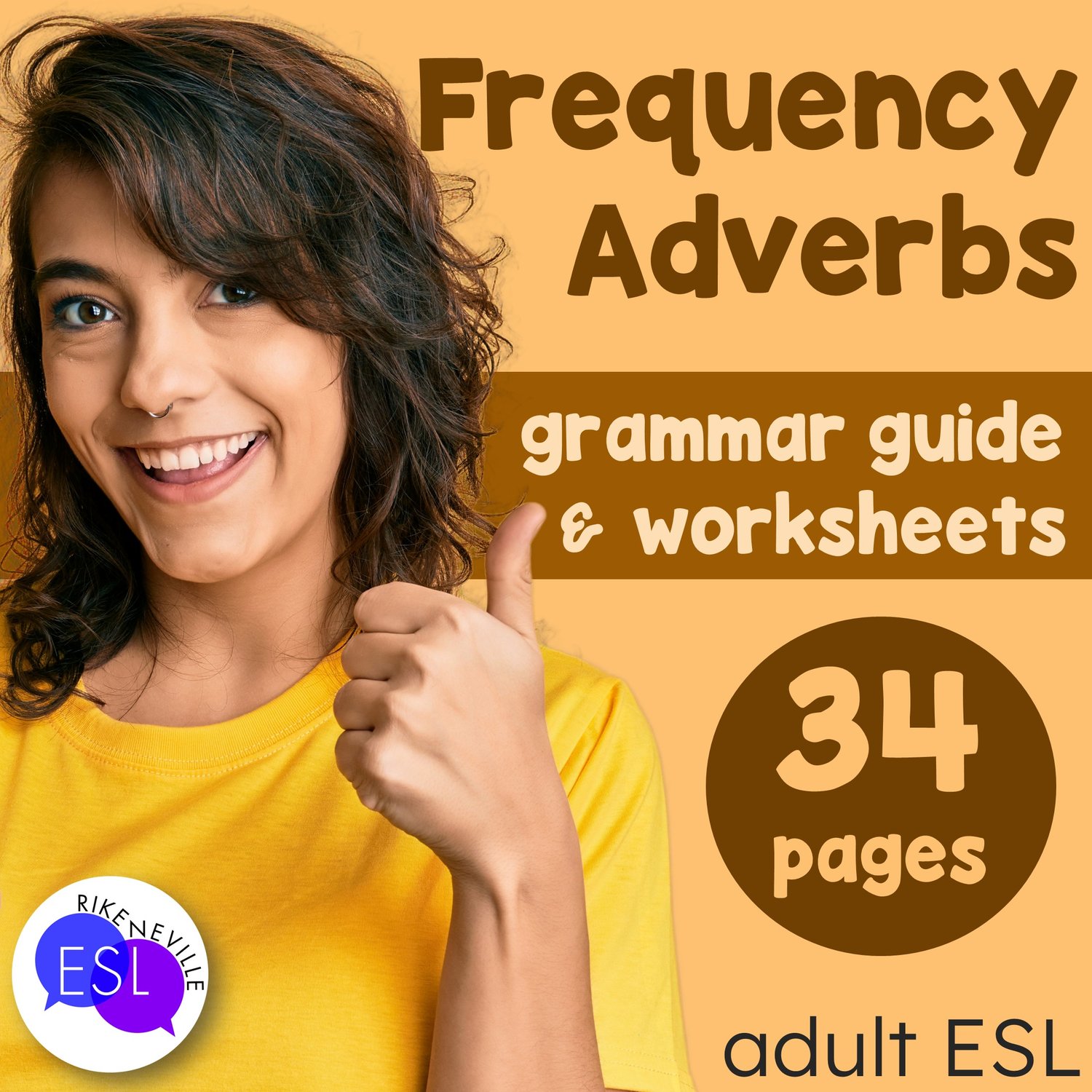



Frequency Adverbs Grammar Guide and Worksheets for Adult ESL
This frequency adverbs pack gives your beginner and low-intermediate adult ESL grammar students clear explanations and scaffolded practice so they can describe their daily routines and habits accurately. Students learn where frequency adverbs belong in sentences, practice identifying correct placement, and use them in real conversations about their own lives.
You want this because your students need to move beyond "I drink coffee" to "I always drink coffee in the morning" without freezing up about word order. This resource builds from guided practice to independent use, so students gain more confidence with each activity.
WHAT'S INSIDE this 34-page PDF:
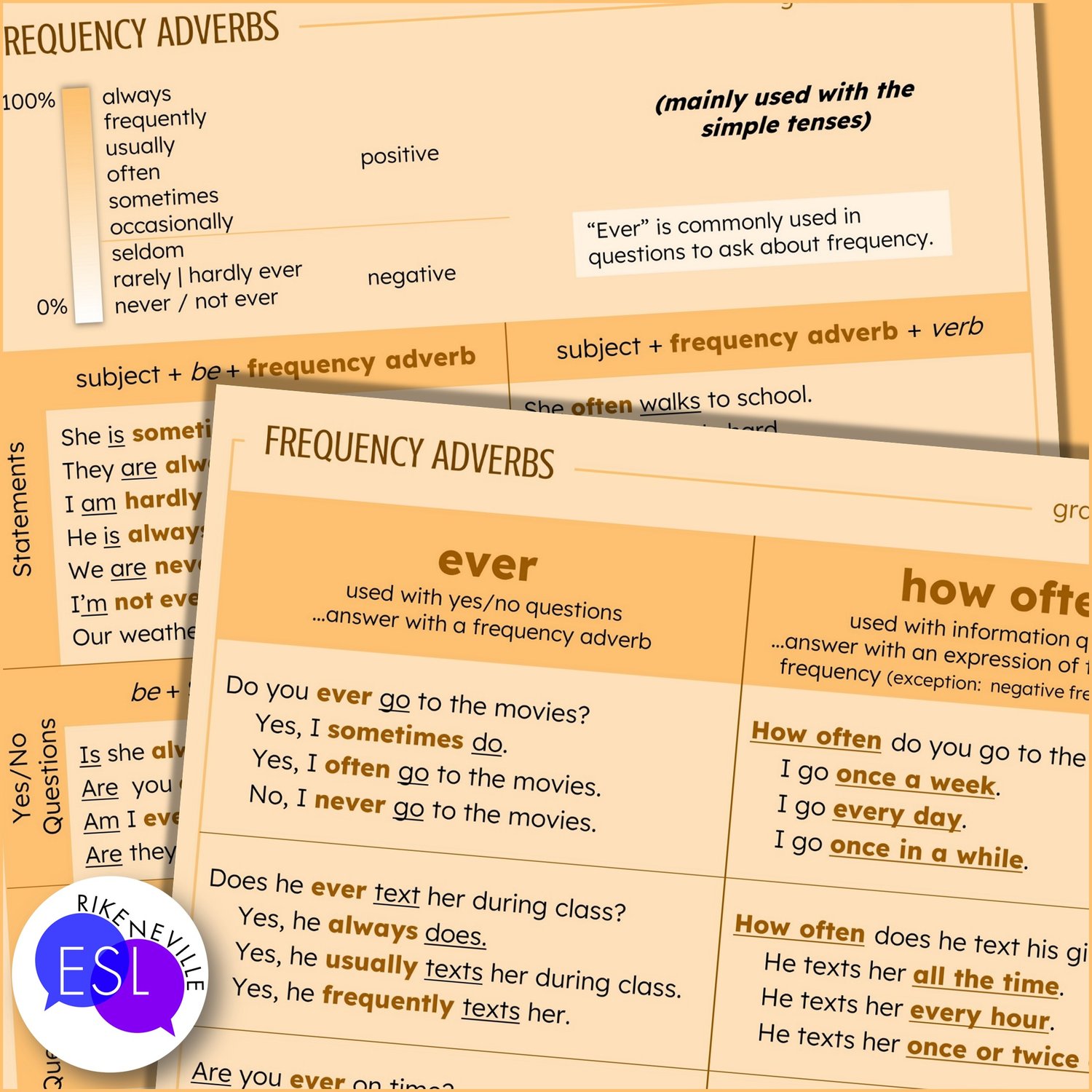
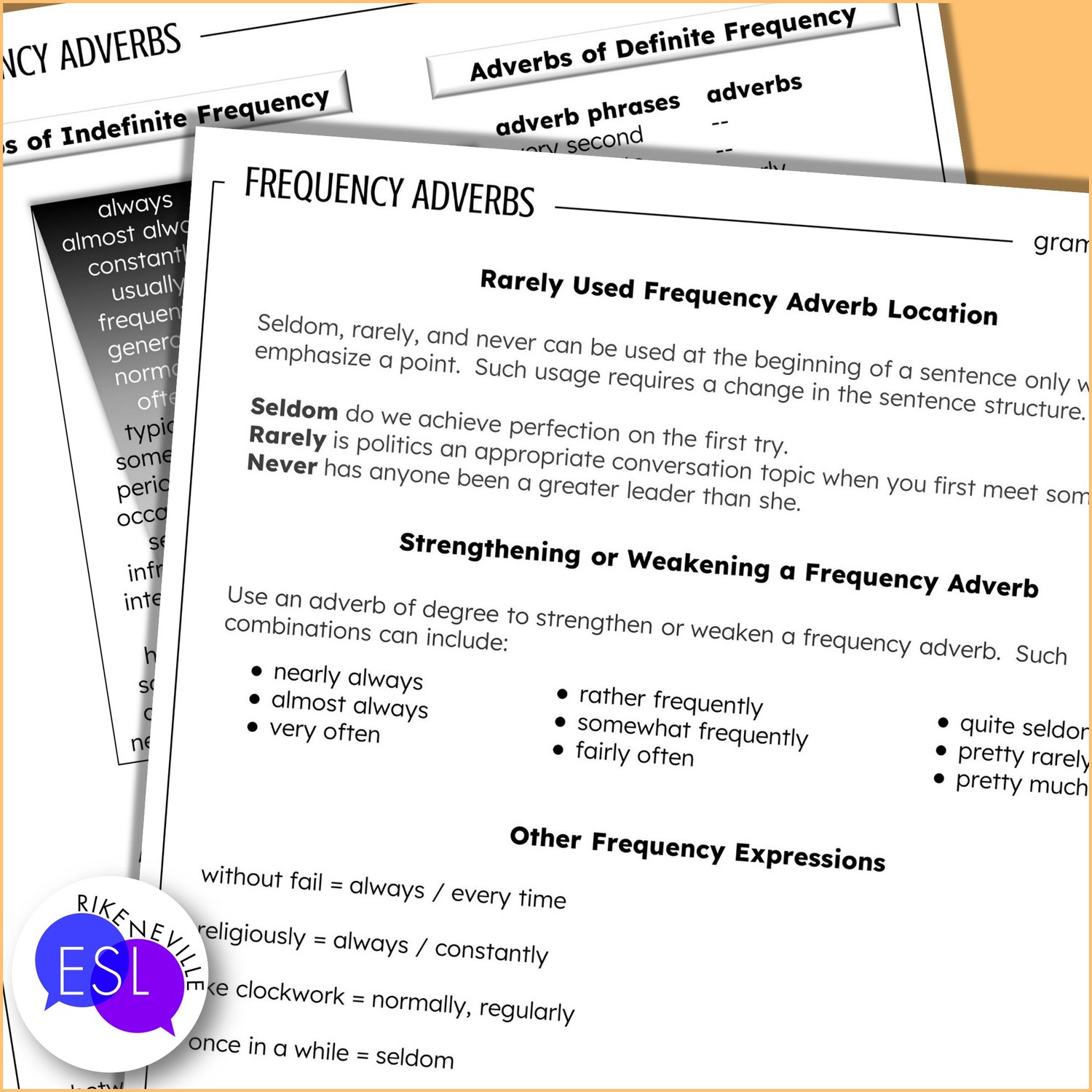
✅ Grammar guide (color + black-and-white versions with clear explanations of placement rules)
✅ Scaffolded worksheets (sorting, sentence-building, placement practice, and original sentence creation)
✅ Real-life application activities (students connect frequency adverbs to their own routines)
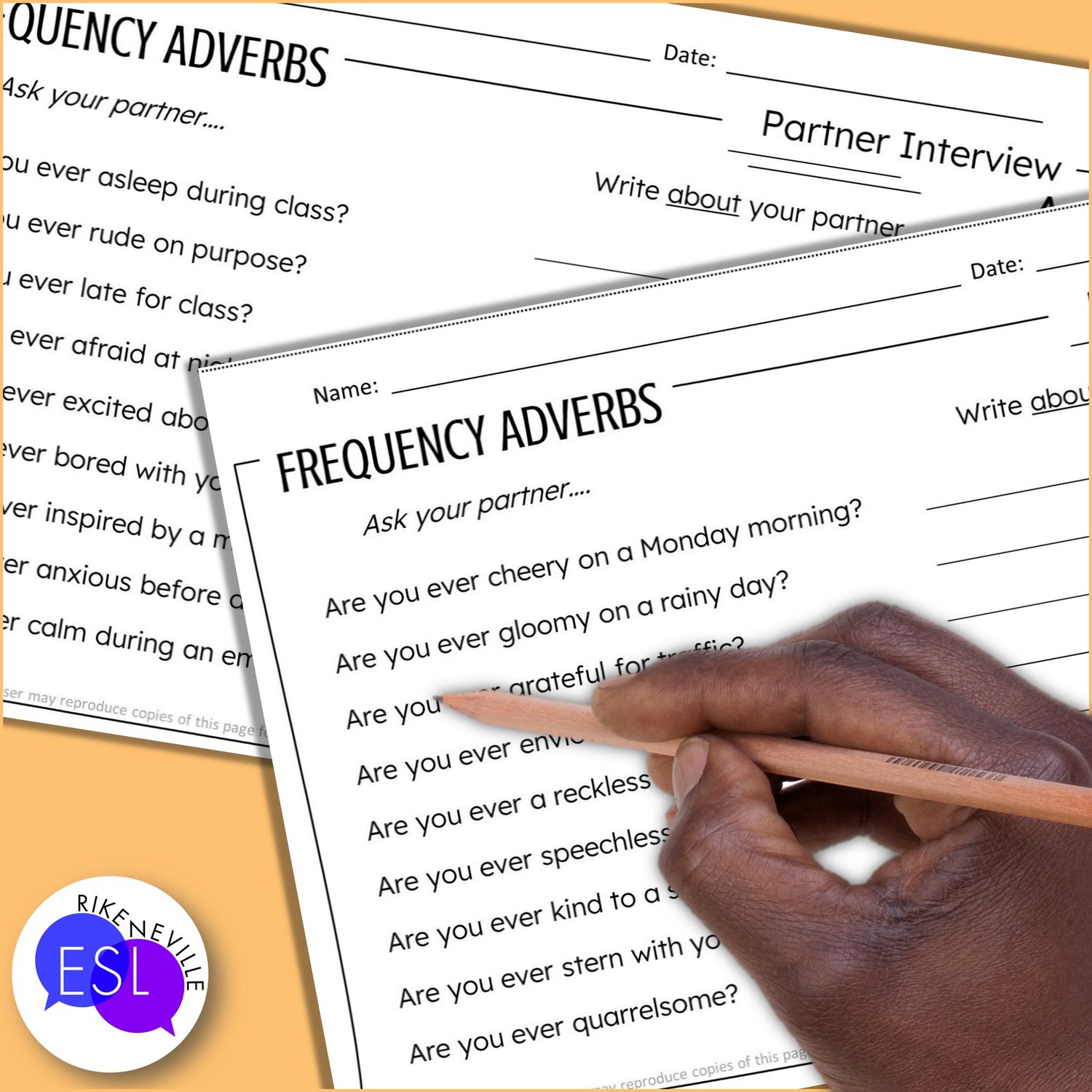
✅ Speaking practice (partner interviews like "Do You Ever...?" and "Are You Ever...?")
✅ Answer keys (of course)
HOW TO USE THIS:
Start with the grammar guide so students understand where frequency adverbs go in different sentence structures. You're giving them the foundation before they practice.
Move through the worksheets in order (or not, it’s up to you). Students sort adverbs, build sentences, identify correct placement, then create their own. The scaffolding means they're not thrown into the deep end right away.
Use the real-life activities to make it personal. When students write "I always drink coffee in the morning" or "I never eat breakfast," they're connecting grammar to their lives. That helps them remember.
The speaking activities get them using frequency adverbs out loud with partners. This is low-pressure, high-repetition conversation practice that doesn't feel like drilling.
THIS WAS CREATED FOR YOUR ADULT ESL STUDENTS
Your beginner and low-intermediate students need frequency adverbs to describe their routines, habits, and schedules. Whether they're talking about work schedules, daily habits, or weekend plans, these adverbs make their English more natural and precise.
The scaffolded approach respects their intelligence while building confidence step by step. They're not guessing at word order any more. Instead, they're learning the patterns, practicing with support, and then using frequency adverbs independently.
This also works well for secondary ESL students and native English speakers with grammar gaps who need structured practice without feeling like they're doing elementary school worksheets.