


Coordinating Conjunctions Compound Sentences Discovery Lesson for Adult ESL
This two-part discovery lesson on coordinating conjunctions turns your ESL classroom into an investigation site.
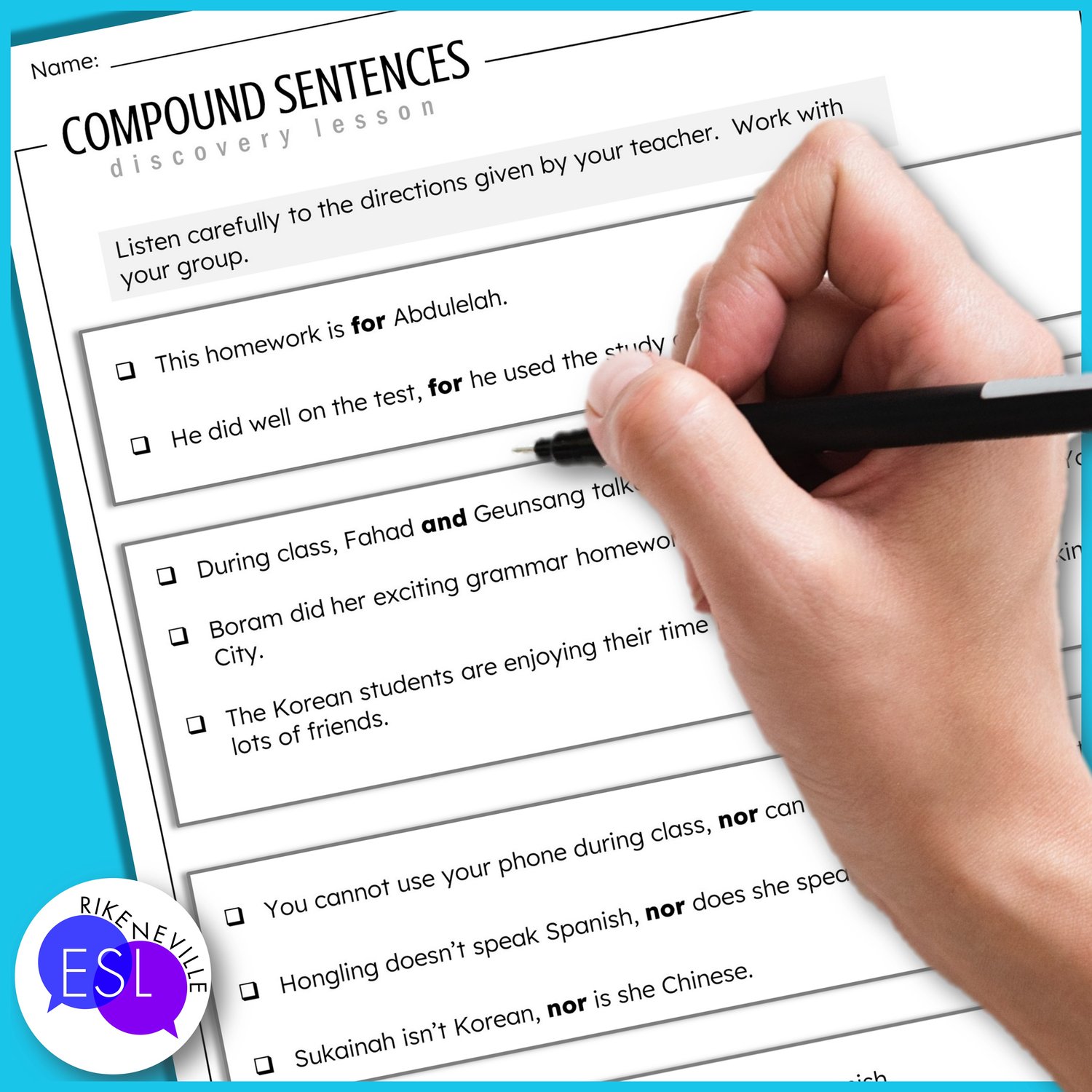
Your students will work in small groups to analyze examples, spot patterns, and build their own understanding of how coordinating conjunctions connect subjects, verbs, and complete thoughts. Then they practice combining sentences using context clues before writing their own compound sentences.
You want this because you want your students to work together in small groups to figure out how coordinating conjunctions work and why they matter instead of sitting through another lecture. This is how you decrease teacher talk.
WHAT'S INSIDE this 15-page PDF:
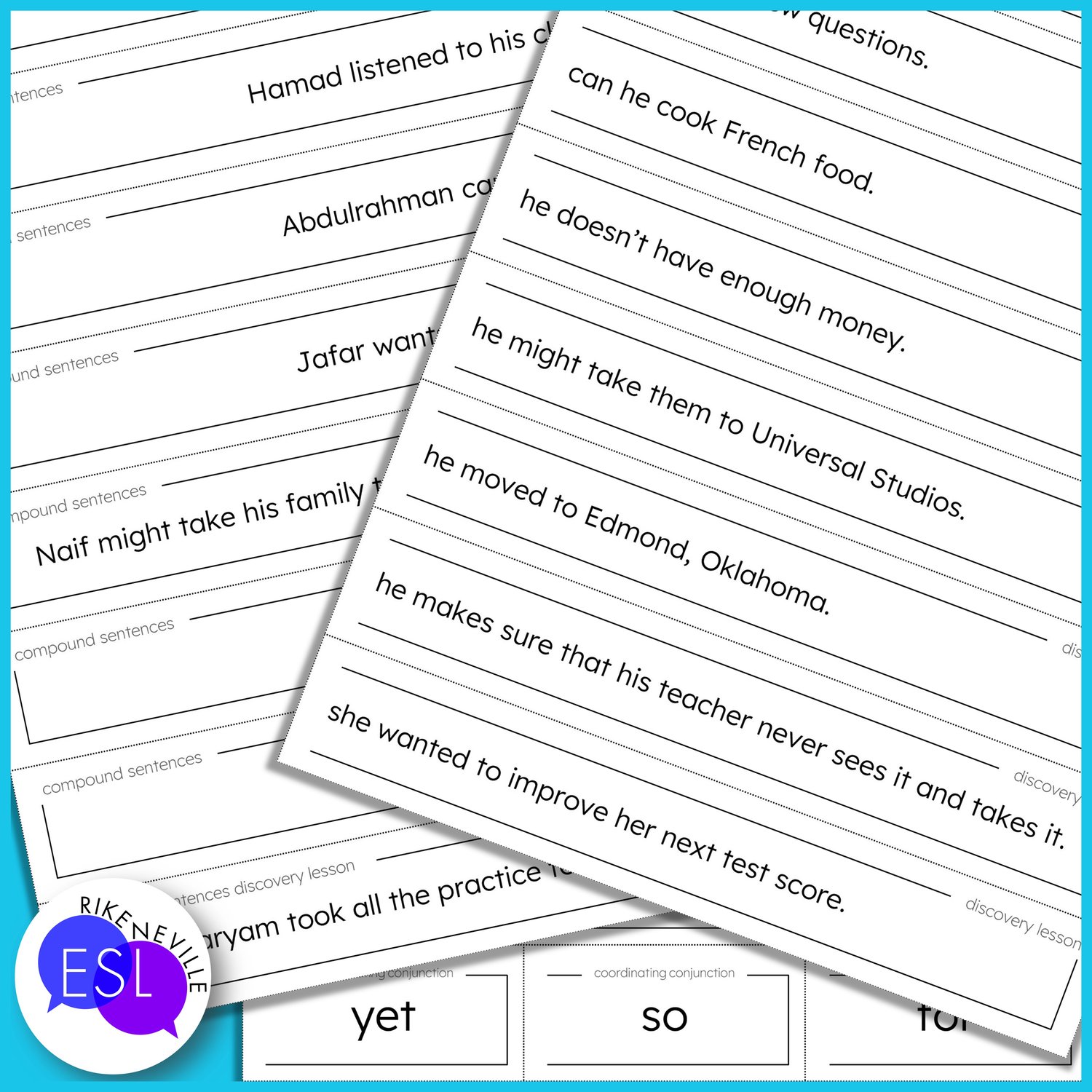
✅ Linguistic Investigation activity (teacher-supported, student-led discovery)
✅ Grammar practice activity (combining sentences with context clues + writing original compound sentences)
✅ Teacher notes and answer keys
HOW TO USE THIS
Start with the Linguistic Investigation. Students work in small groups to examine sentence examples and discover how coordinating conjunctions function. You're there to guide, but they're doing the thinking.
Then move to the grammar activity. Students combine simple sentences using coordinating conjunctions that match the context, then create their own compound sentences. Use it as classwork, homework, or partner practice, whatever fits your lesson flow.
THIS WAS MADE FOR YOUR ADULT ESL STUDENTS
Your high-beginner students need grammar instruction that respects their intelligence. Discovery-based learning puts them in control of their learning instead of making them passive note-takers. They're analyzing, discussing, and building critical thinking skills alongside grammar skills.
The compound sentences they practice help prepare students for writing essays, emails, and workplace communication. And because they figured out the rules themselves through the investigation, they’ll remember them better.
This also works well for older teen learners who need active, engaging instruction instead of traditional grammar drills.