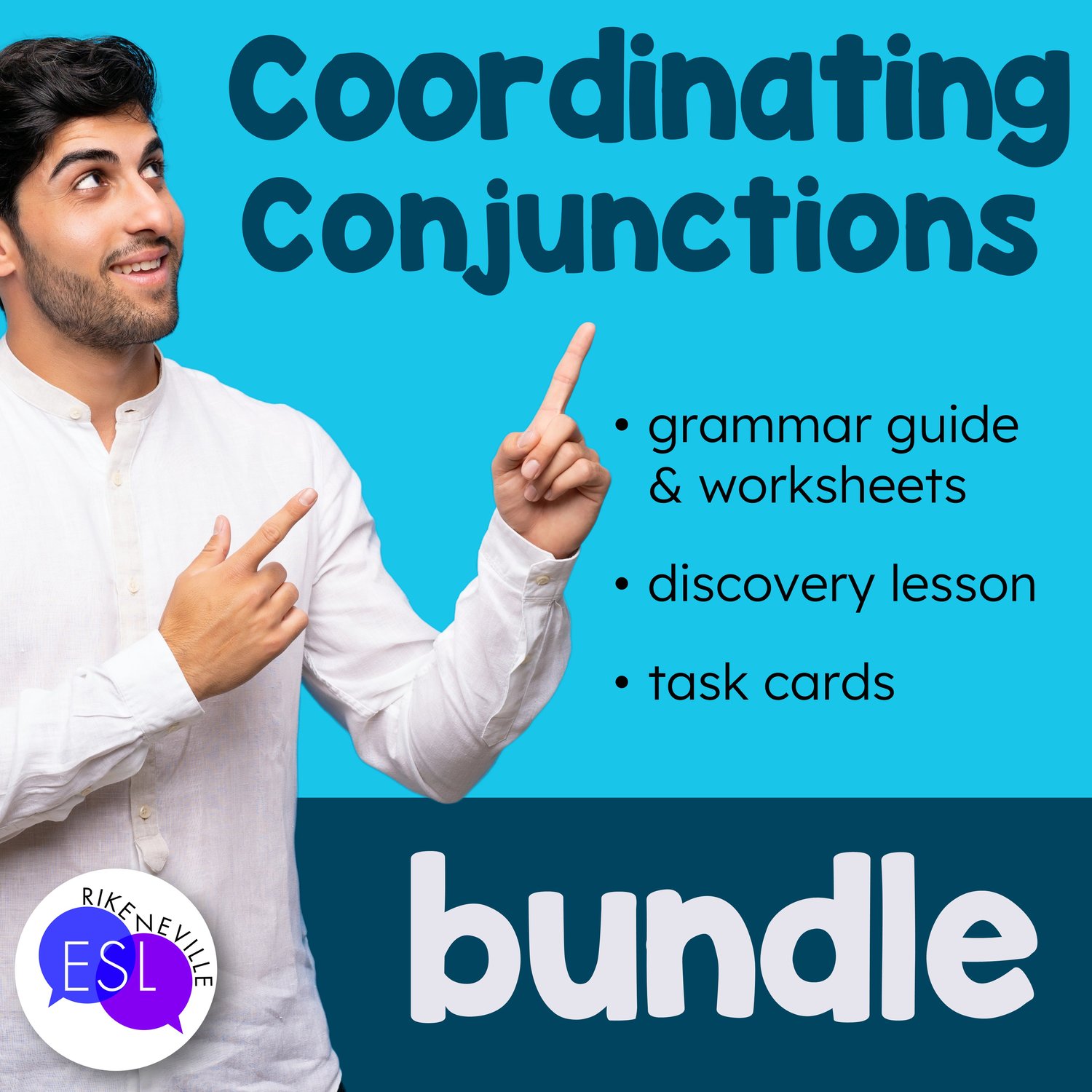

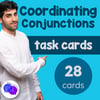
Coordinating Conjunction GRAMMAR for Adult ESL & Remedial English | Task Cards
Coordinating conjunctions are one of those grammar pieces that seem simple until you're teaching them. Students either forget them entirely or throw in conjunctions that don't match the meaning. But, once they get coordinating conjunctions down, their writing transforms.
Suddenly they're connecting ideas, showing relationships between thoughts, and sounding more fluent. This improves how they communicate their thoughts and helps them pass their English proficiency tests and communicate better in the workplace.
You want this task card set because it gives students focused practice with coordinating conjunctions through four different question types.
WHAT'S INSIDE this 18-page PDF:
✅ 2 teacher pages
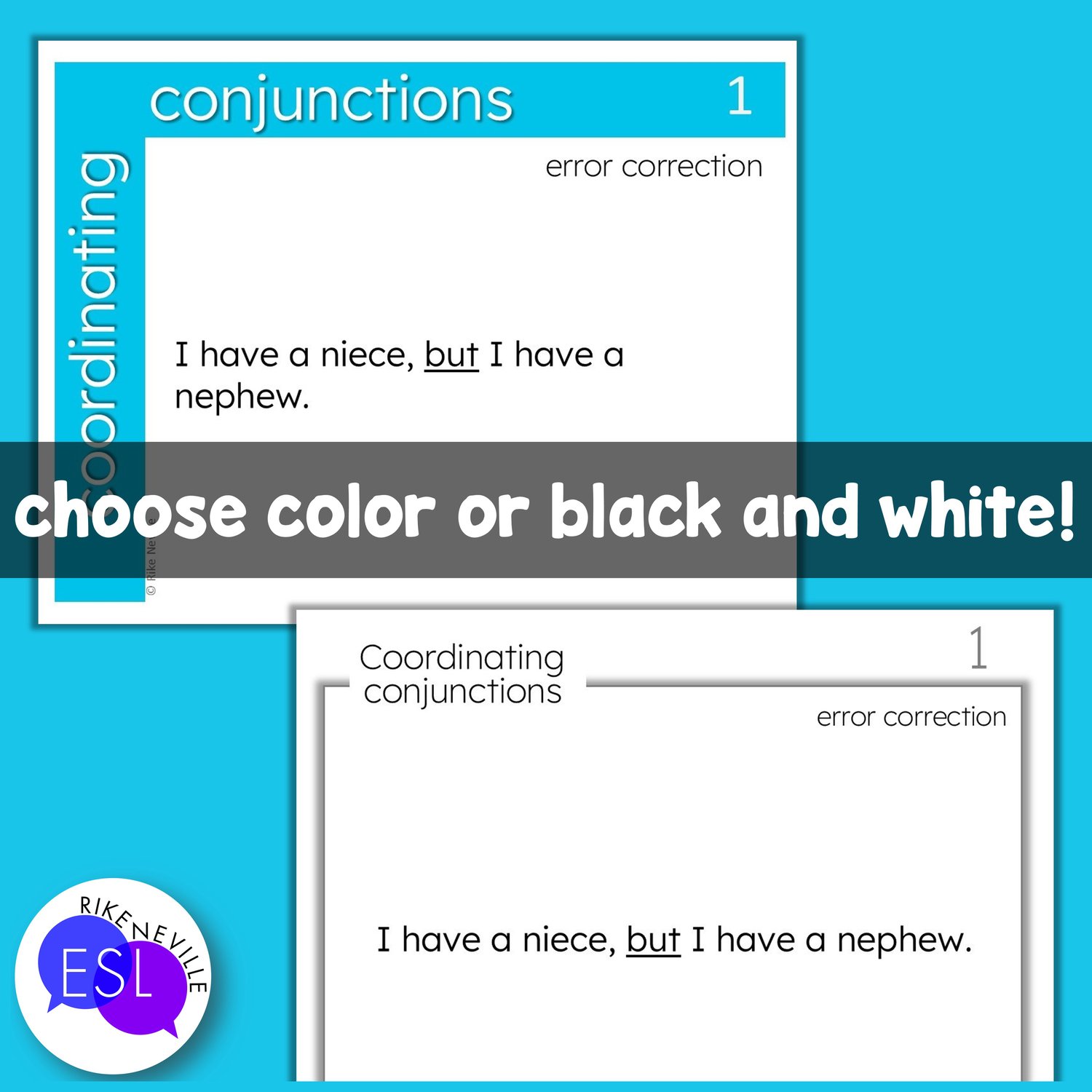
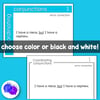
✅ 28 color task cards (7 pages) + the same thing in black and white
✅ student answer sheet
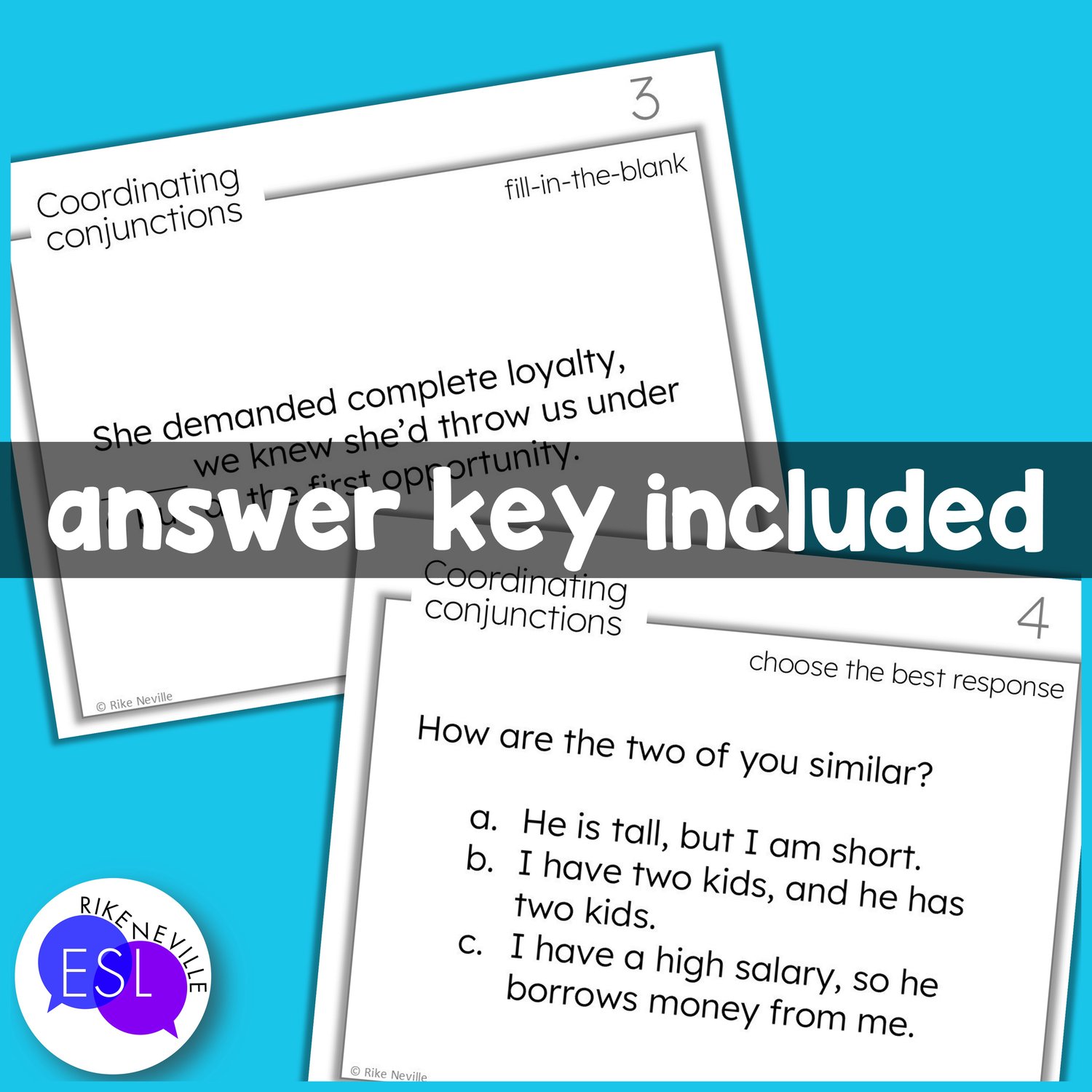
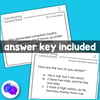
✅ answer key
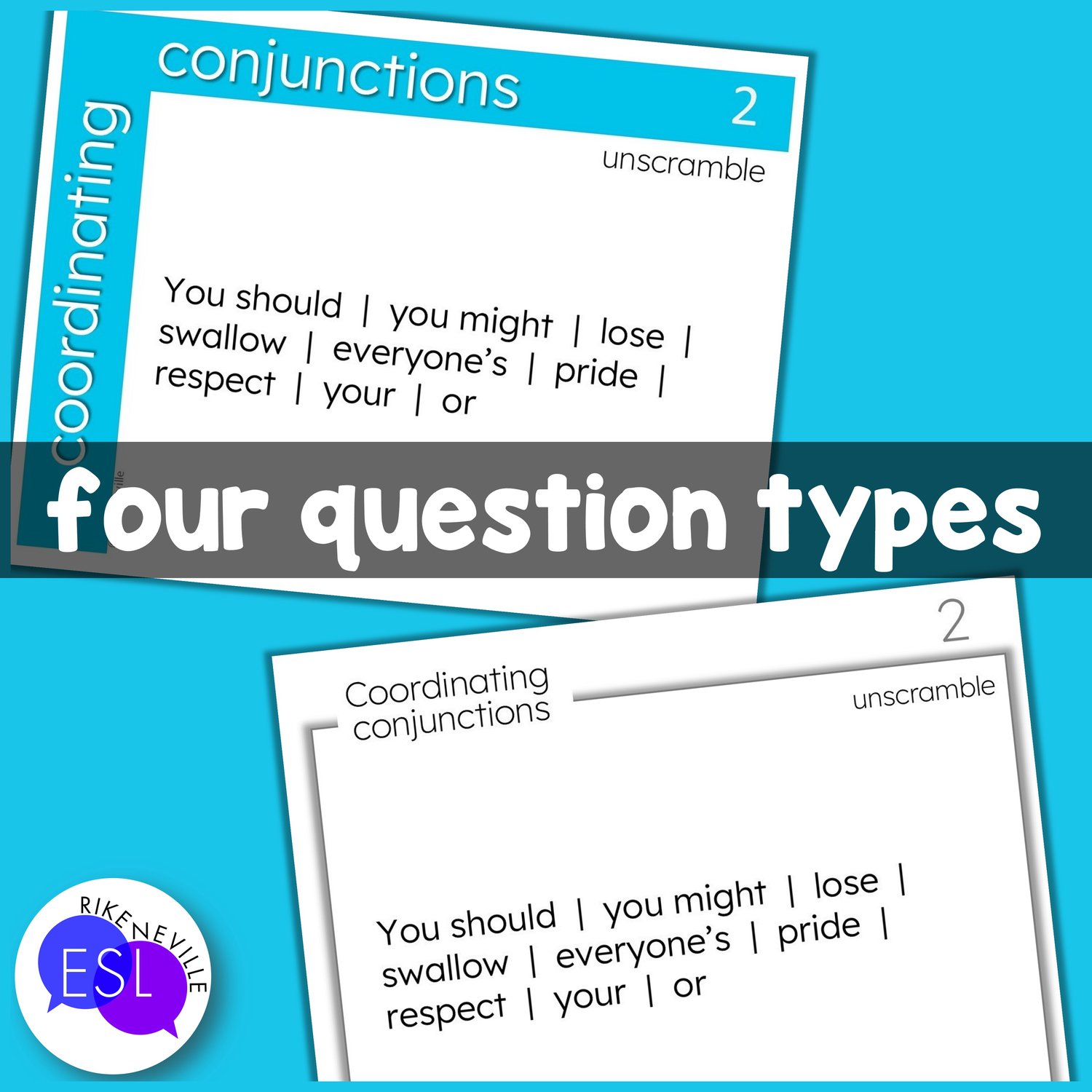
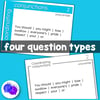
FOUR QUESTION TYPES
- error correction: Find and fix the conjunction mistakes.
- unscramble: Put scrambled words in the right order to create compound sentences.
- fill-in-the-blank: Choose the correct conjunction to complete sentences.
- choose the best response: Pick which sentence uses the conjunction correctly.
HOW TO USE THIS
Print the cards, cut them out, and you're ready. It’s that easy.
Use them however works for your classroom...individual practice, partner work, station activities, exit tickets, review before a test. The variety of question types means students aren't just filling in blanks; they're thinking about how conjunctions work.
If you've got a mixed-level class (and who doesn't?), you can differentiate by removing the more difficult cards for students who are still building confidence.
THIS WAS MADE FOR YOUR ADULT ESL STUDENTS
Your students are mid to high beginners working toward better writing skills. They need practice that feels appropriate for adults with real goals like passing tests, writing emails, and communicating at work. No childish examples here, just straightforward sentences they can apply immediately.
The task card format lets students work at their own pace. Stronger students can move through independently while you support those who need more help. And because there are 28 cards with varied question types, they're getting repetition without it feeling repetitive.