
Possessive Adjectives Grammar Guide with Worksheets for Adult ESL
Your adult ESL grammar students will practice possessive adjectives through this grammar guide and worksheet pack that moves from clear explanations to hands-on activities. They get a reference guide, practice worksheets, partner activities, and a mini-book comparing possessive adjectives to subject, object, and possessive pronouns.
This possessive adjectives pack builds from explanation to application, so students do more than memorize rules. They'll use possessive adjectives in sentences, partner discussions, and visual activities that internalize this grammar concept.
WHAT'S INSIDE this 34-page PDF:
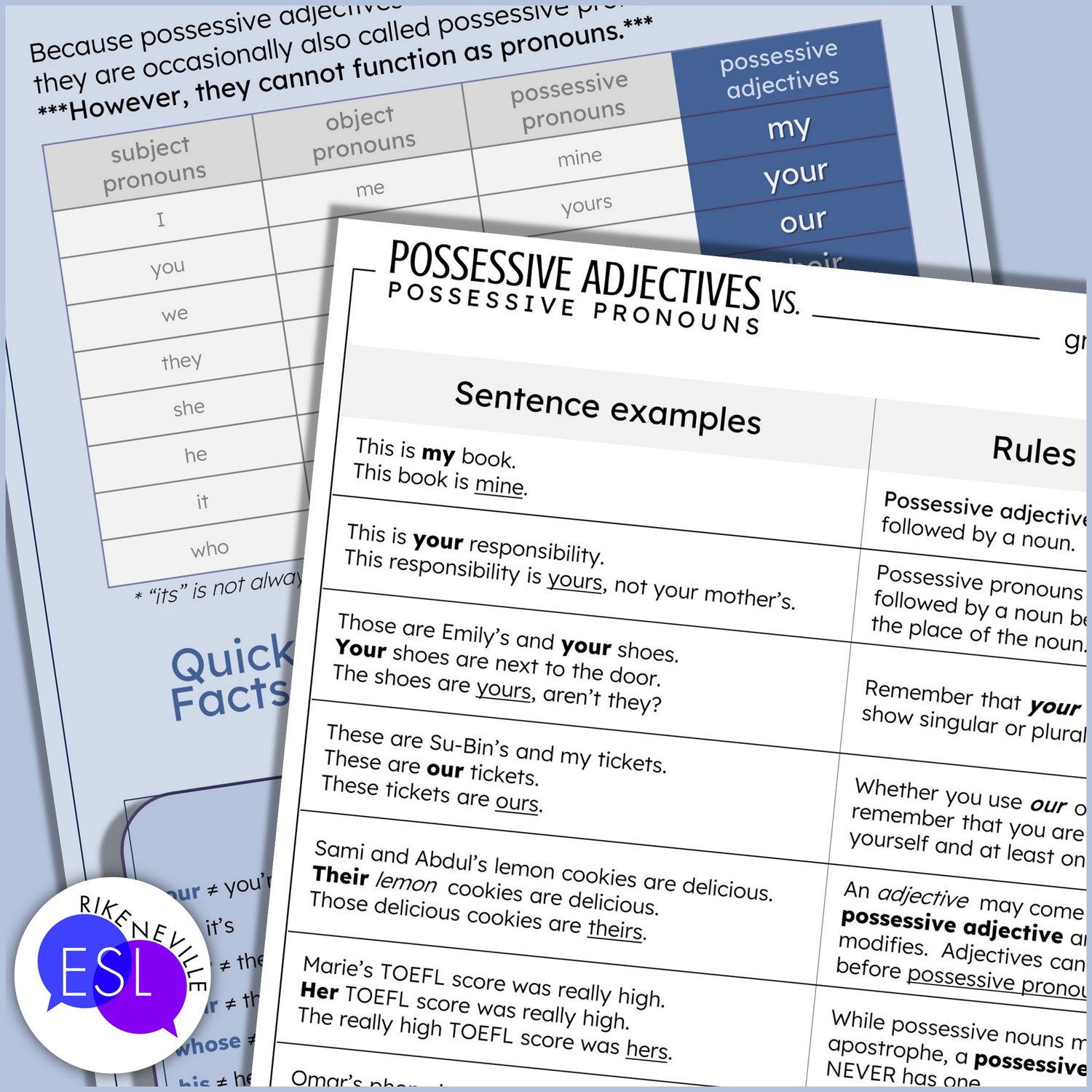
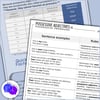
✅ Possessive adjectives grammar guide (color version + black & white version)
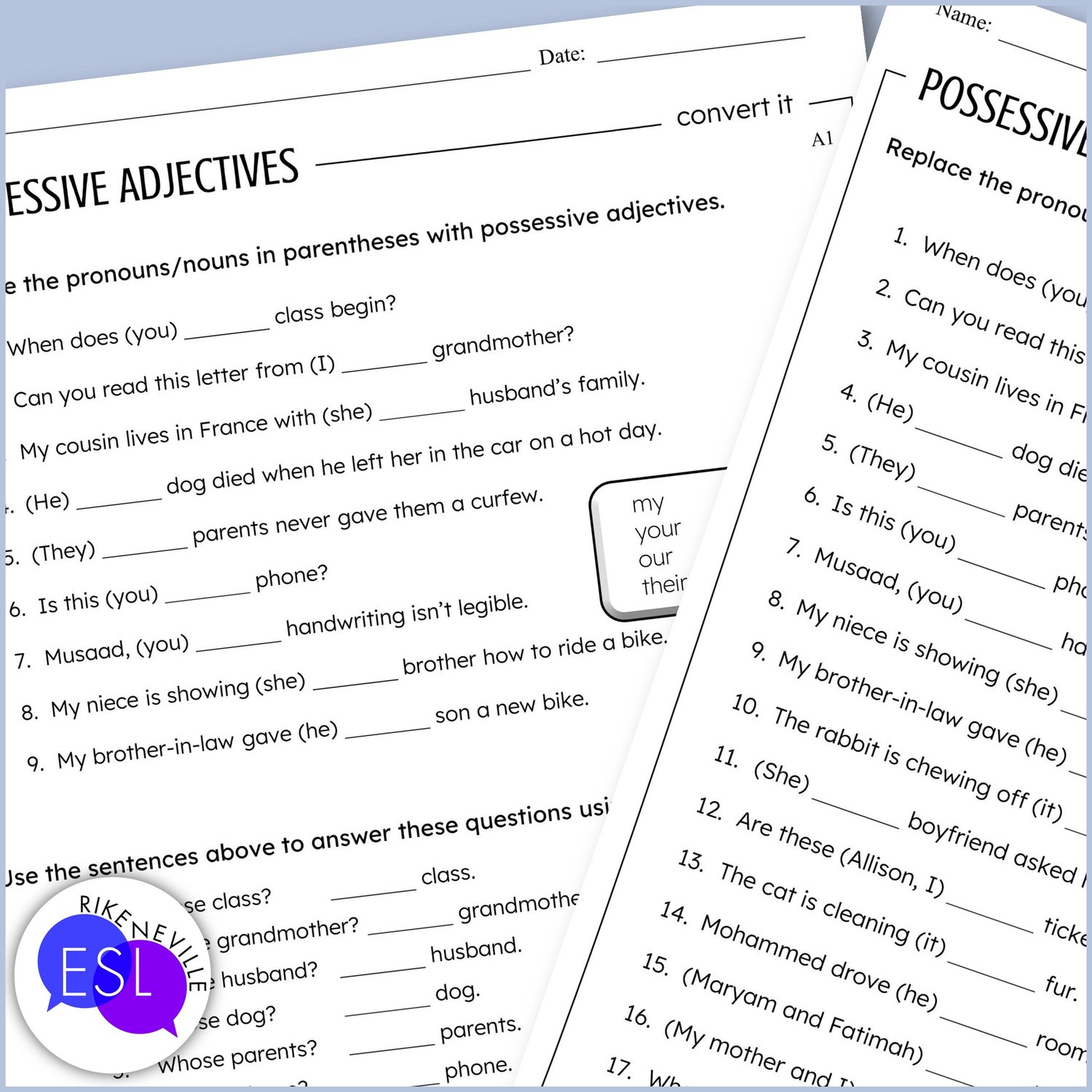
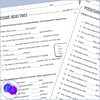
✅ Convert It and Add It practice worksheets
✅ Partner discussion activities
✅ Your Turn creative sentence writing activity
✅ Whose Is It? visual comprehension activity
✅ Mini-book comparing subject pronouns, object pronouns, possessive pronouns, and possessive adjectives
✅ Simple reinforcement game
✅ Answer keys (of course)
HOW TO USE THIS
Start with the grammar guide. Your adult ESL students read through the explanation of possessive adjectives, then you review it together. Move to the worksheets. Students work through Convert It and Add It to practice using possessive adjectives in context. Use these as classwork, homework, or assessment...whatever fits your lesson.
Add the partner activities and Your Turn for speaking and writing practice. Students discuss questions using possessive adjectives, then create their own sentences. The Whose Is It? activity gives them visual practice identifying possessive adjectives in real-world scenarios. The mini-book becomes their reference tool. Students keep it to compare possessive adjectives with subject pronouns, object pronouns, and possessive pronouns whenever confusion hits. Use the game for review or as a warm-up in future lessons.
THIS WAS CREATED FOR ADULT ESL STUDENTS
Your beginner adult ESL students need grammar instruction that builds their confidence in daily communication. Possessive adjectives show up all the time when they’re talking about family, describing belongings, and navigating basic conversations. When students master possessive adjectives, they stop hesitating mid-sentence trying to remember whether to say "my," "your," or "his."
The activities respect their intelligence while giving them the repetition beginners need. They're doing more than filling in blanks. They're creating sentences, having conversations, and making connections between different pronoun types through the mini-book comparison.
This also works well for secondary students who need to fill gaps in their grammar foundation, whether they're ESL learners or native English speakers.