
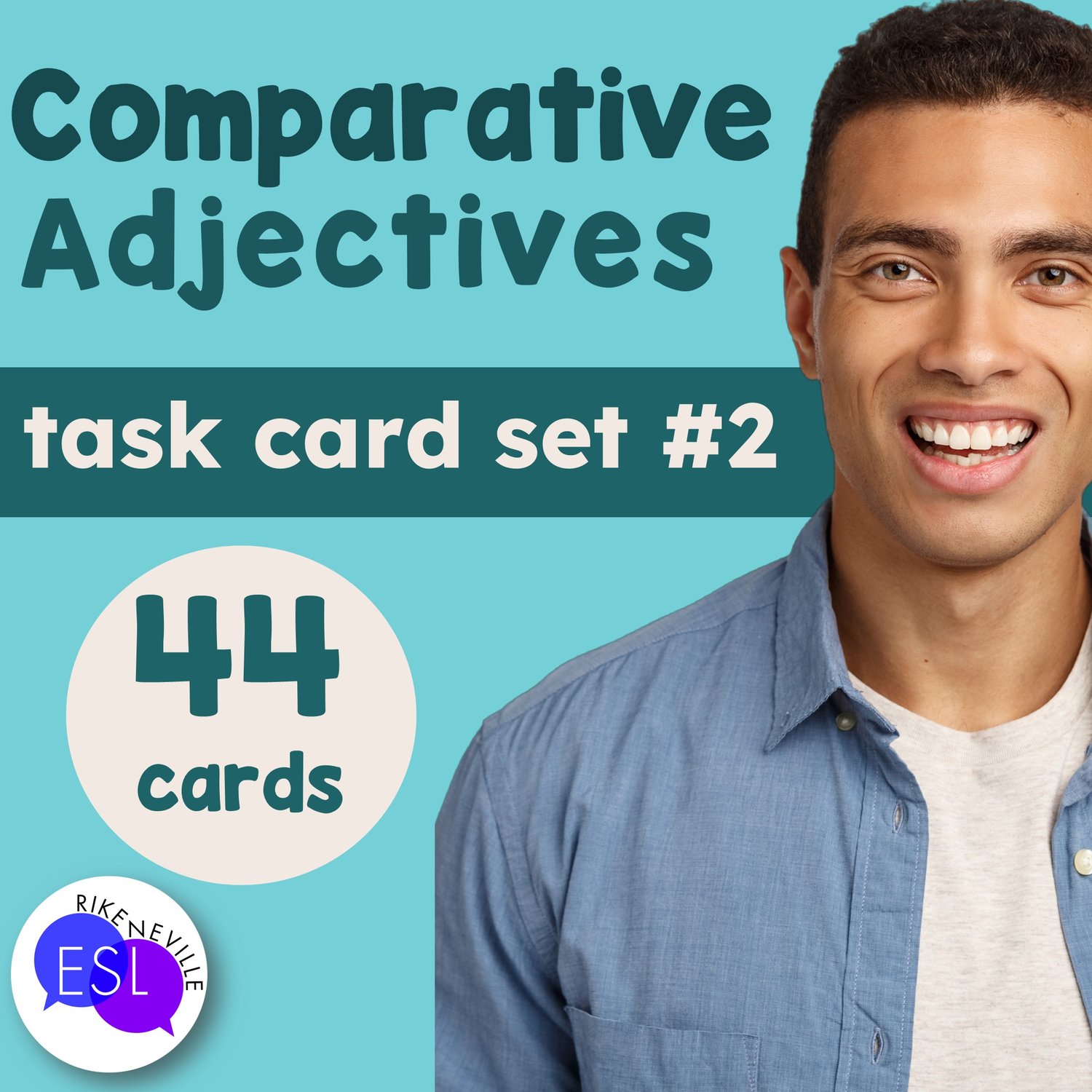
Comparative Adjectives GRAMMAR TASK CARDS - Review, Remediation, & Adult ESL #2
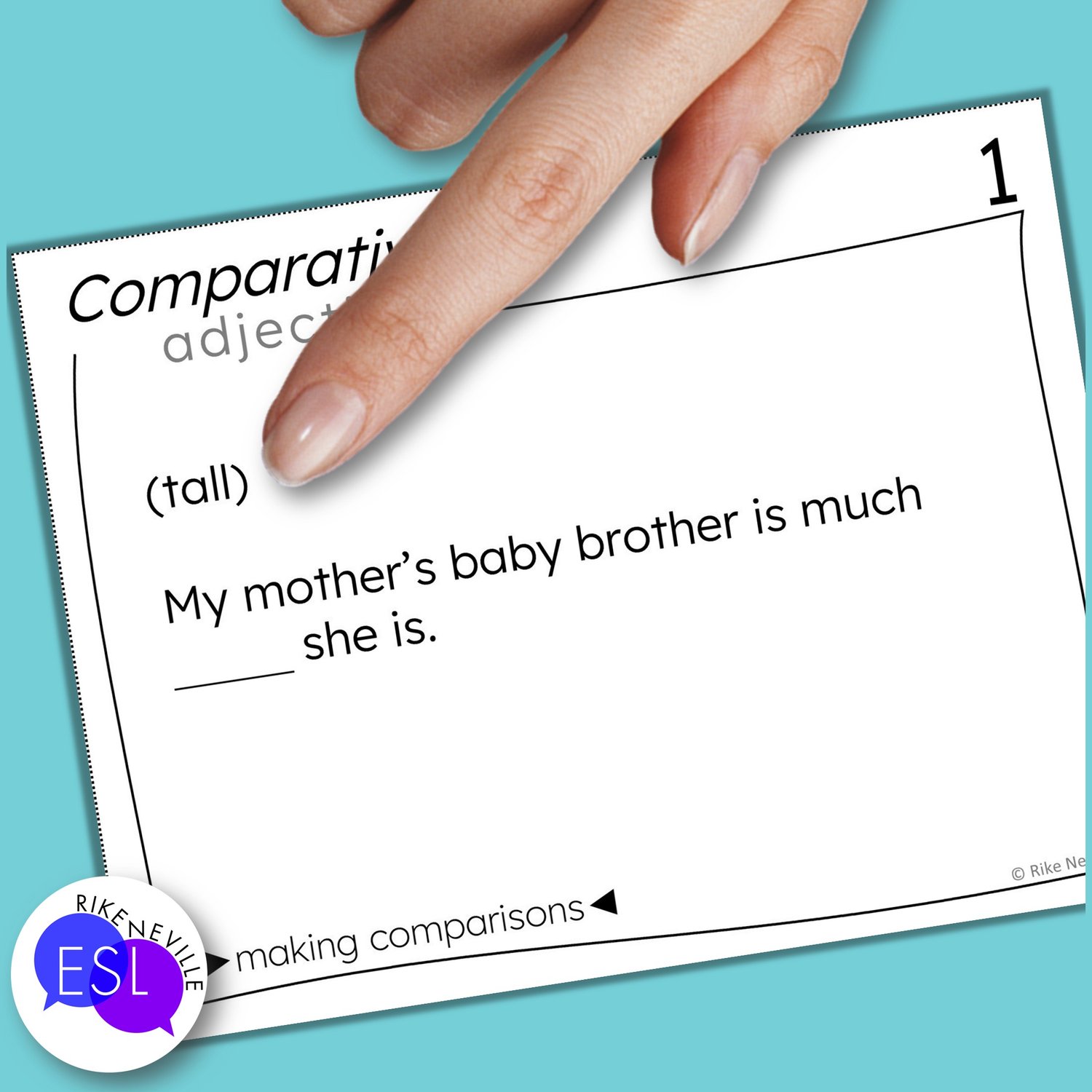
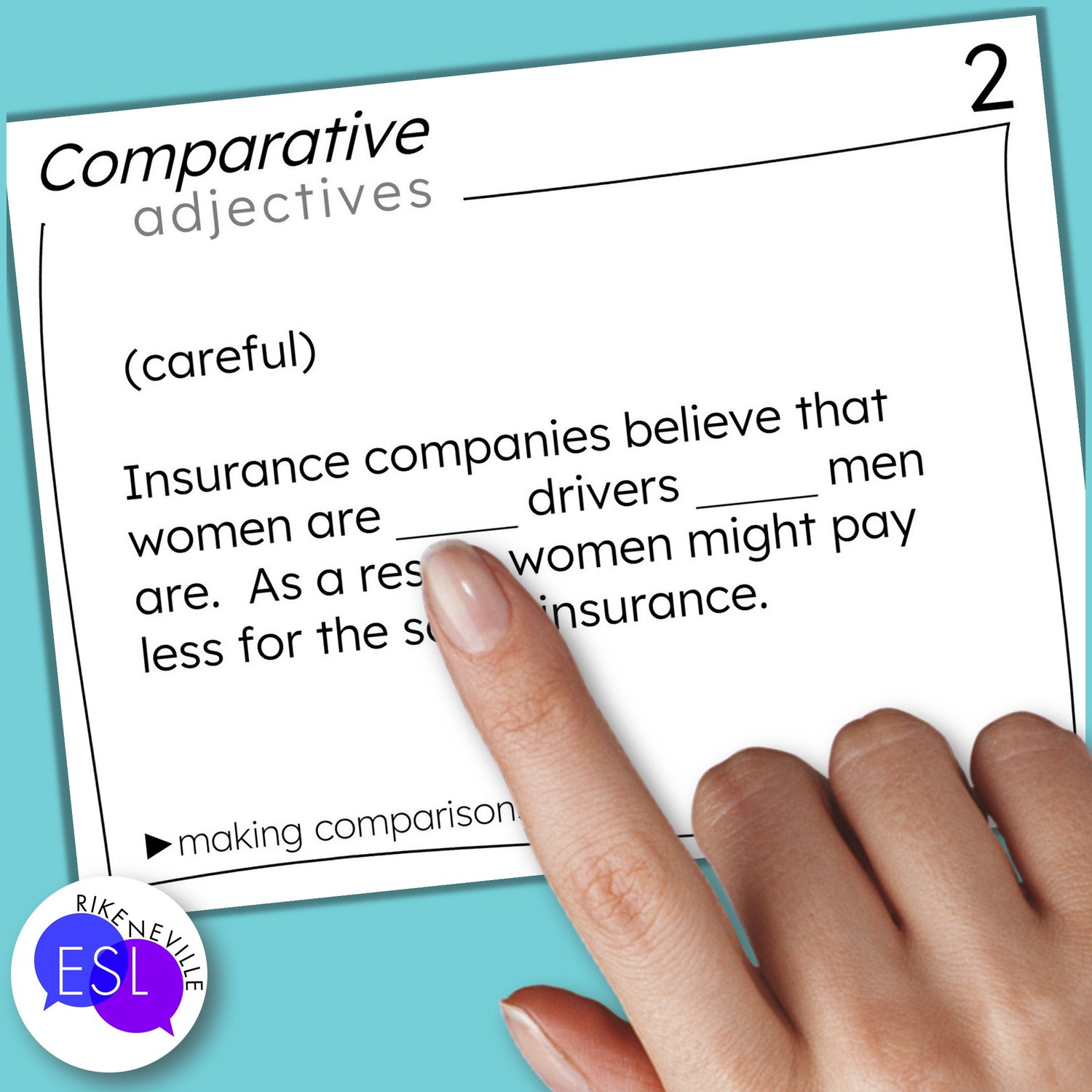
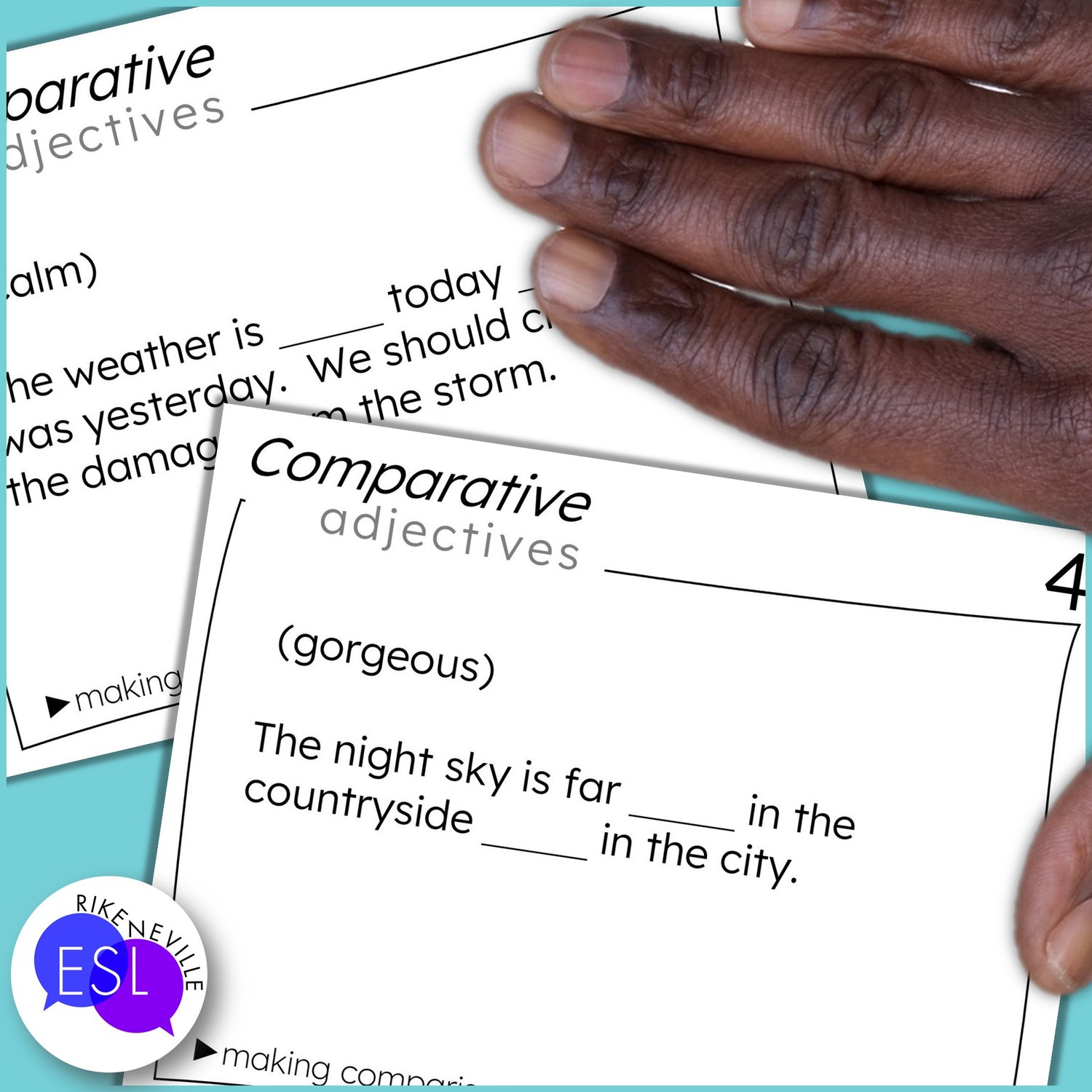
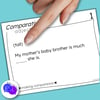
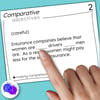
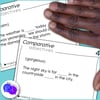
Your adult ESL students will use this set of 44 comparative adjective task cards to improve their understanding of this grammar concept. Students already familiar with comparative adjectives get focused practice transforming adjectives into comparative forms through context-based sentences where they have to figure out whether they need a positive or negative comparison and if "than" belongs in the sentence.
You want this because 44 cards mean serious practice volume. Your beginner to low intermediate adult ESL students are ready for more than just memorizing "bigger" and "smaller". With these cards, they're reading context, making grammar decisions, and building the muscle memory they need for real conversations.
WHAT'S INSIDE this PDF:
✅ 44 black and white task cards with comparative adjective practice
✅ Answer key (of course)
THE CHALLENGE
Students get an adjective and a sentence (or two) with blanks. Their job? Create the comparative form that fits the context. Sometimes they need "more expensive than," sometimes just "cheaper,” and sometimes “less boring.” The context tells them which way to go, positive or negative comparison, and whether "than" belongs in the sentence.
Some cards have one right answer. Others have multiple possibilities. That's intentional. Adult ESL students need to think, not just memorize patterns.
HOW TO USE THIS SET
Use it as task cards around the room for movement and partner work. Keep them at a center for independent practice. They can be exit tickets or bell ringers, whatever you want!
Mix them up or use them in order. Your call.
THIS WAS CREATED FOR YOUR ADULT ESL STUDENTS
These sentences were written for adults, not children. Your beginner to low intermediate students will practice comparative adjectives through scenarios relevant to their lives.
This set also works well for secondary ESL students and native English speakers who need to fill gaps in their grammar knowledge. The content respects their intelligence while giving them the repetition they need to master comparative forms.