
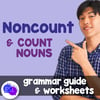

Count & Noncount Nouns Grammar Guide with Worksheets for Remediation & Adult ESL
Your students keep saying "I need an advice" and "I bought a new furniture," and you're running out of ways to explain why that's wrong.
Count vs. noncount nouns are one of those grammar concepts that seem simple until you try to teach them. Why can we count peas but not rice? Why is "furniture" always singular but "chairs" can be plural? The rules feel arbitrary, and grammar textbooks don't always help much. They give students a list to memorize without enough practice.
This resource breaks down the concept in plain English, then gives them tons of practice applying what they've learned. Your students need strong grammar skills for everything. English proficiency tests test it. College writing requires it. Even everyday emails and conversations depend on getting these basics right.
WHAT’S INSIDE:
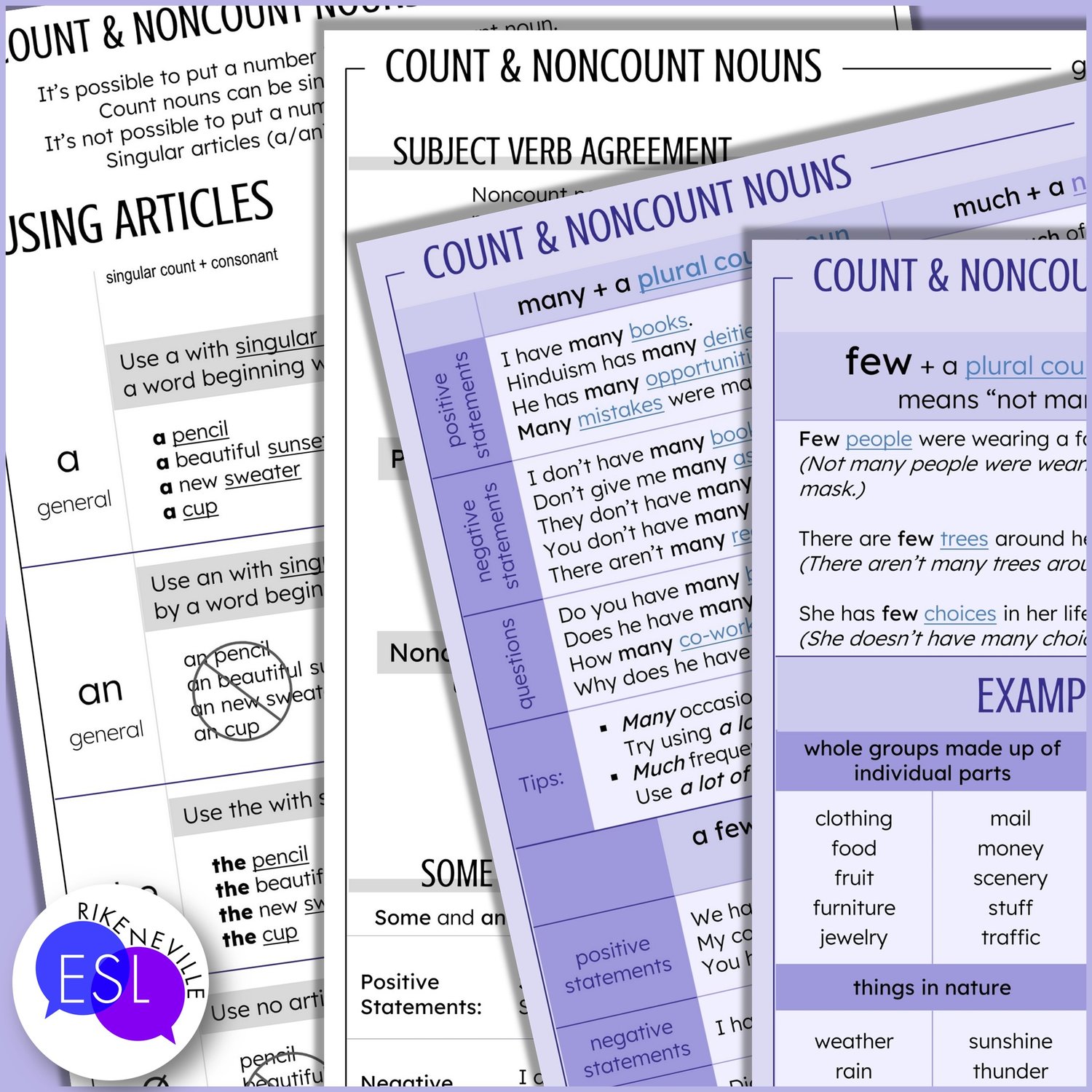
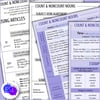
- ✅ 4-page grammar guide (color + B&W versions)
- ✅ General practice: a/an vs. some (90 questions total, with answer keys). Two format options for the same practice (4-page version or 2-page front/back version)
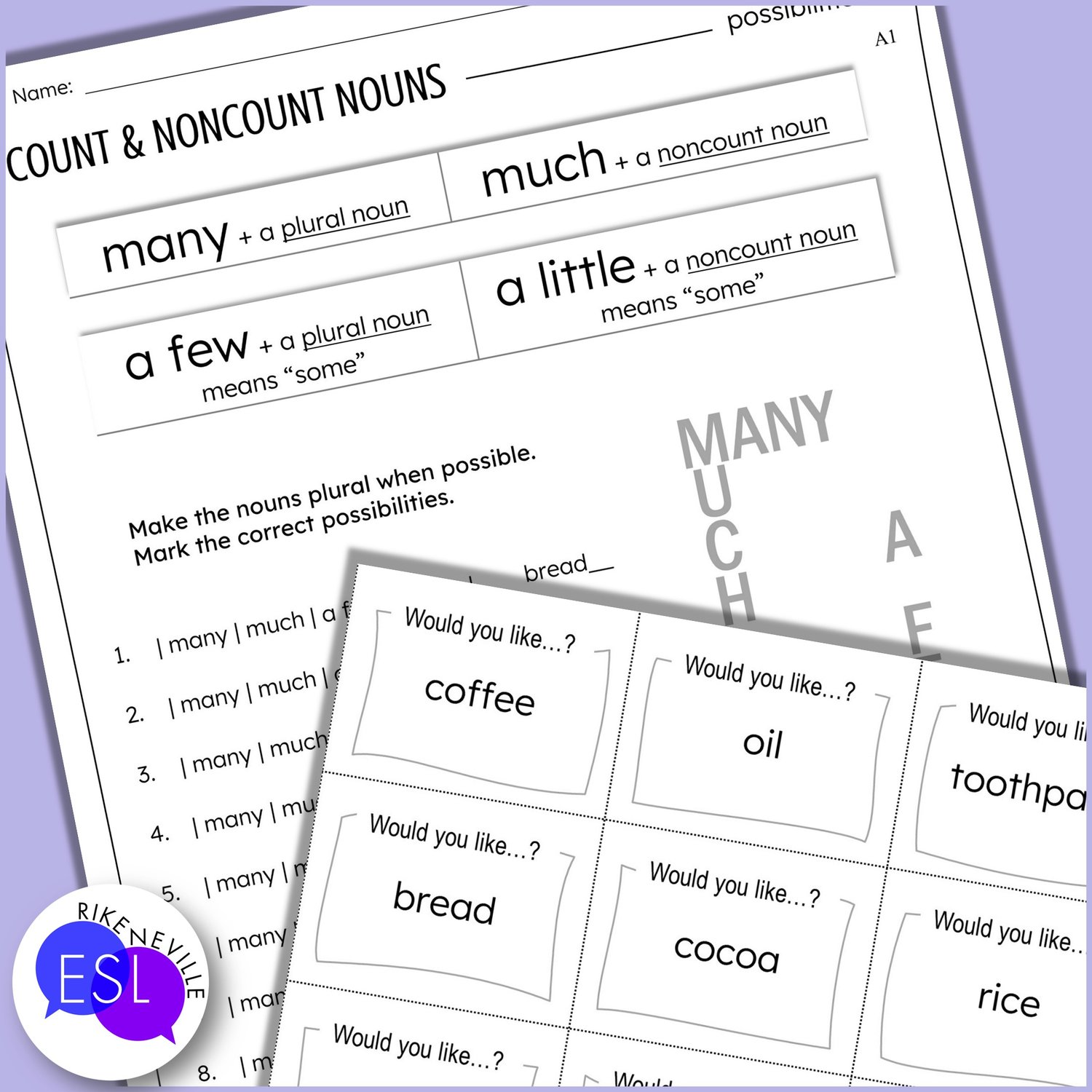
- ✅ "Possibilities" practice: making nouns plural + choosing many/much/a few/a little (with support and answer keys)
- ✅ Condensed "Possibilities" version (1 page, no support scaffolding, answer key included)
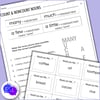
- ✅ Measurements with noncount nouns (labeling images like "a box of pasta," answer key included)
- ✅ "Oh! the Possibilities!" activity in two levels (Level A: 1-2 nouns, Level B: 1-3 nouns, sample answers included)
- ✅ Speaking activity with teacher guide and cards
How It Works
Almost everything here is print-and-go. The only prep is cutting out the speaking activity cards, and if you're really short on time, students can do that themselves. Start with the 4-page grammar guide. It explains the difference between count and noncount nouns without grammar jargon your students won't understand.
Then move into practice. There are 90 questions just on a/an vs. some, so students get the repetition they need to internalize the pattern. The "Possibilities" pages build on that, having students figure out which quantifiers (many/much/a few/a little) work with which nouns.
Finish with the speaking activity so they're using this in conversation, not just filling in blanks on a worksheet.
Why This Works for Adults
Your students are adults preparing for English proficiency tests, college classes, or just trying to communicate more accurately in their daily lives. They don't need examples about teddy bears and cookie dough. This resource uses vocabulary appropriate for adults with real-world goals.
The grammar guide doesn't assume students already know terms like "quantifier" or understand why some nouns work differently than others. It explains what they need to know in straightforward language. Then the practice worksheets reinforce it until using the right article or quantifier becomes automatic instead of something they have to stop and think about every single time.