



/v/ vs /w/ Pronunciation: Minimal Pairs for Adult ESL /æ/ vs /ɛ/
Did someone just complain that their socks got “vet”? /v/ vs. /w/ minimal pairs are what helped some of my adult ESL students really hear and finally pronounce the difference between /v/ and /w/. Minimal pairs can help your adult ESL students improve their pronunciation AND their listening skills as well.
This (mostly) print-n-go pronunciation pack gives your adult ESL students focused /v/ and /w/ practice so they can stop mixing up words like “vest” and “west” and start hearing the difference. You get a presentation, an activity pack, flashcards (with bonus cards), and an “I Have... Who Has...?” game.
THE SOUND PAIR: /v/ vs. /w/
For students whose first language doesn’t distinguish between /v/ and /w/, the two sounds are really one. In German, for example, the letter “w” is pronounced /v/, so German speakers often say “veer” when they mean “we’re.” The same thing happens with many speakers of Hindi, Urdu, and other South Asian languages, which have a single sound in between the two.
The result can be confusing, or just plain funny. “Wet” becomes “vet.” “Worse” becomes “verse.” “While” becomes “vile.” Students don’t always know they’re saying the wrong word, and that’s the part that gets them. Other times they know exactly what they want to say, but they’re trying to get their mouth to produce a sound it hasn’t needed before.
Luckily, the two sounds are made in completely different places, which does make teaching the difference a heck of a lot easier. /v/ uses the top teeth on the bottom lip, while /w/ uses rounded lips with no teeth contact at all.
Still, placing /v/ and /w/ words side by side with real photos, repetition, and structured listening practice might be just what your students need to feel and hear that difference. That’s what this pronunciation pack is made for.
WHAT’S INSIDE:
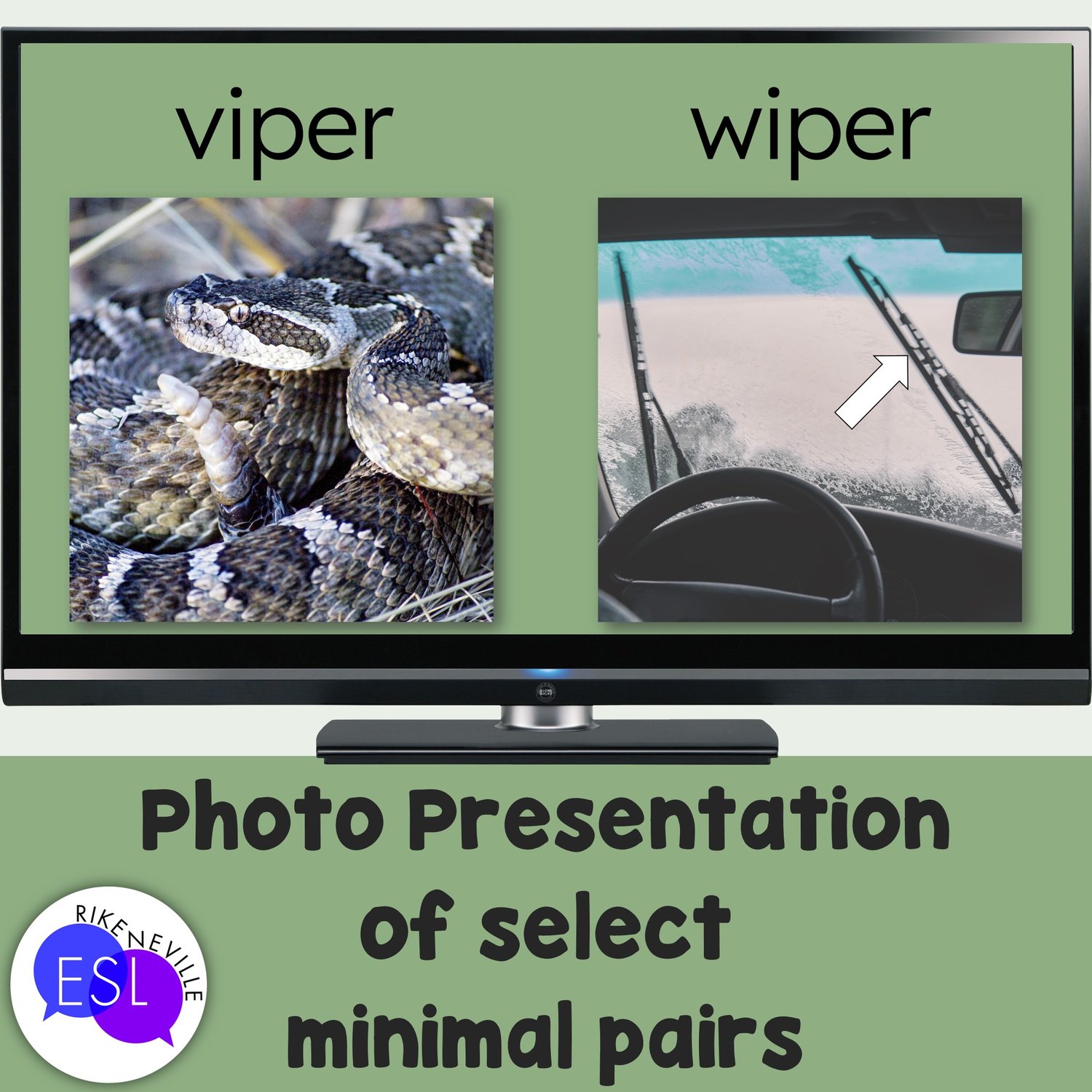
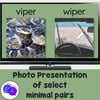
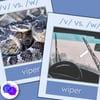
✅ Photo Presentation
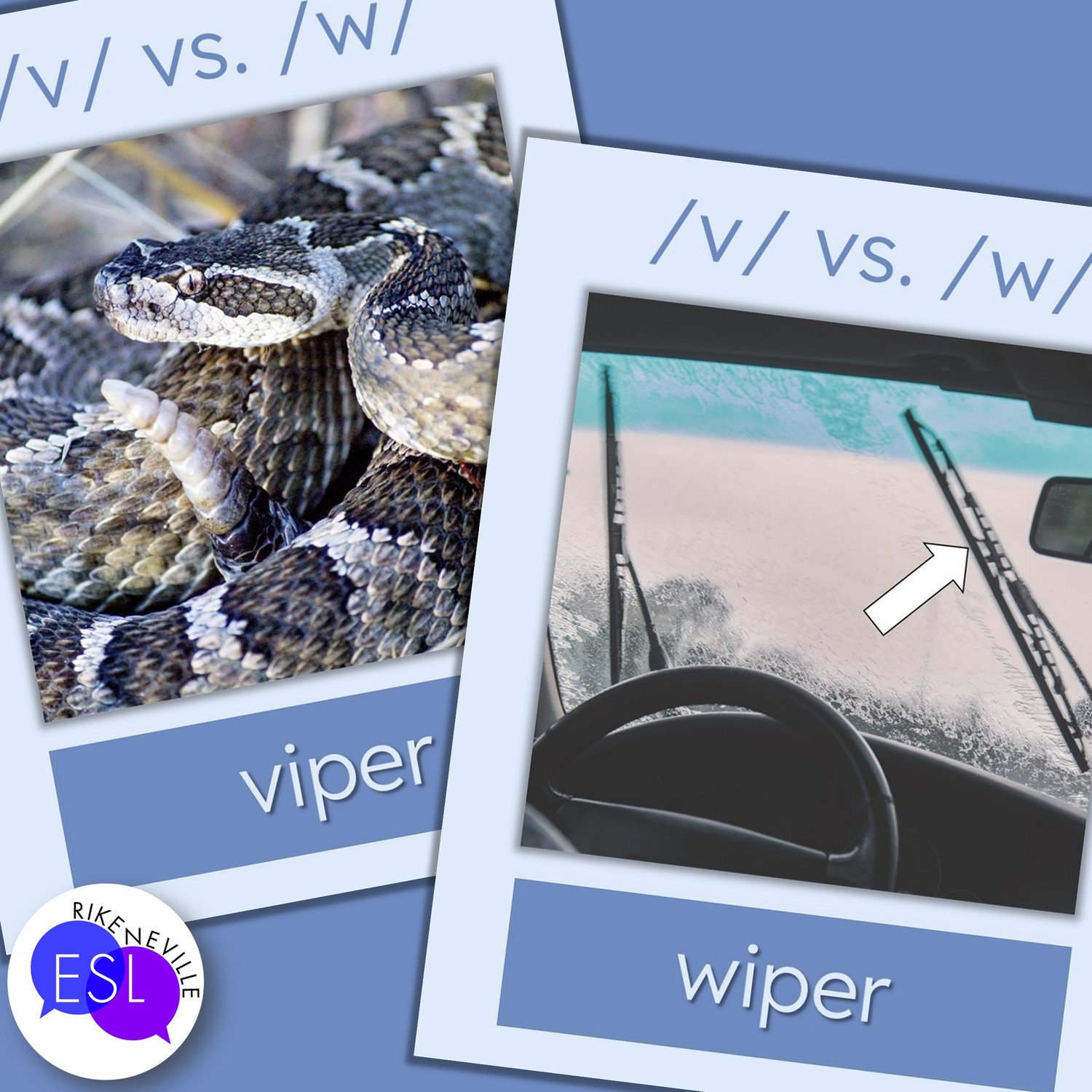
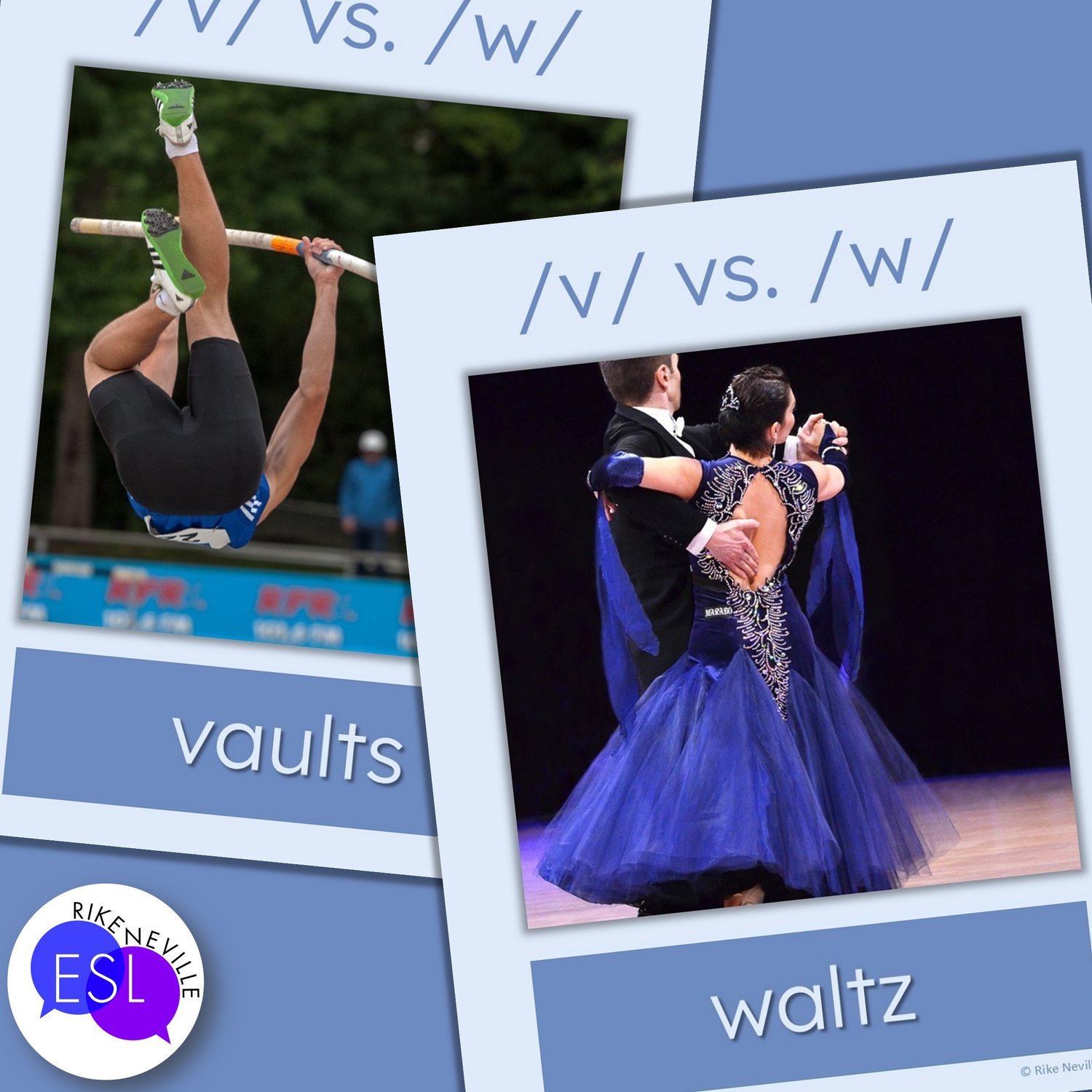
- Full-color real photos illustrate 19 minimal pairs
- One pair per slide to keep the focus on the target sounds
- BONUS: 7 words that include both /v/ and /w/, 22 extra /v/ words, 22 extra /w/ words, and the all-time German favorite /w/ word, “squirrel”. (If you know, you know.)
- Perfect for whole-class presentations, small group work, or individual review
✅ Activity Pack
- Teacher’s Guide & Table of Contents: a clear outline of all materials, with suggestions on how to adapt activities for different student needs
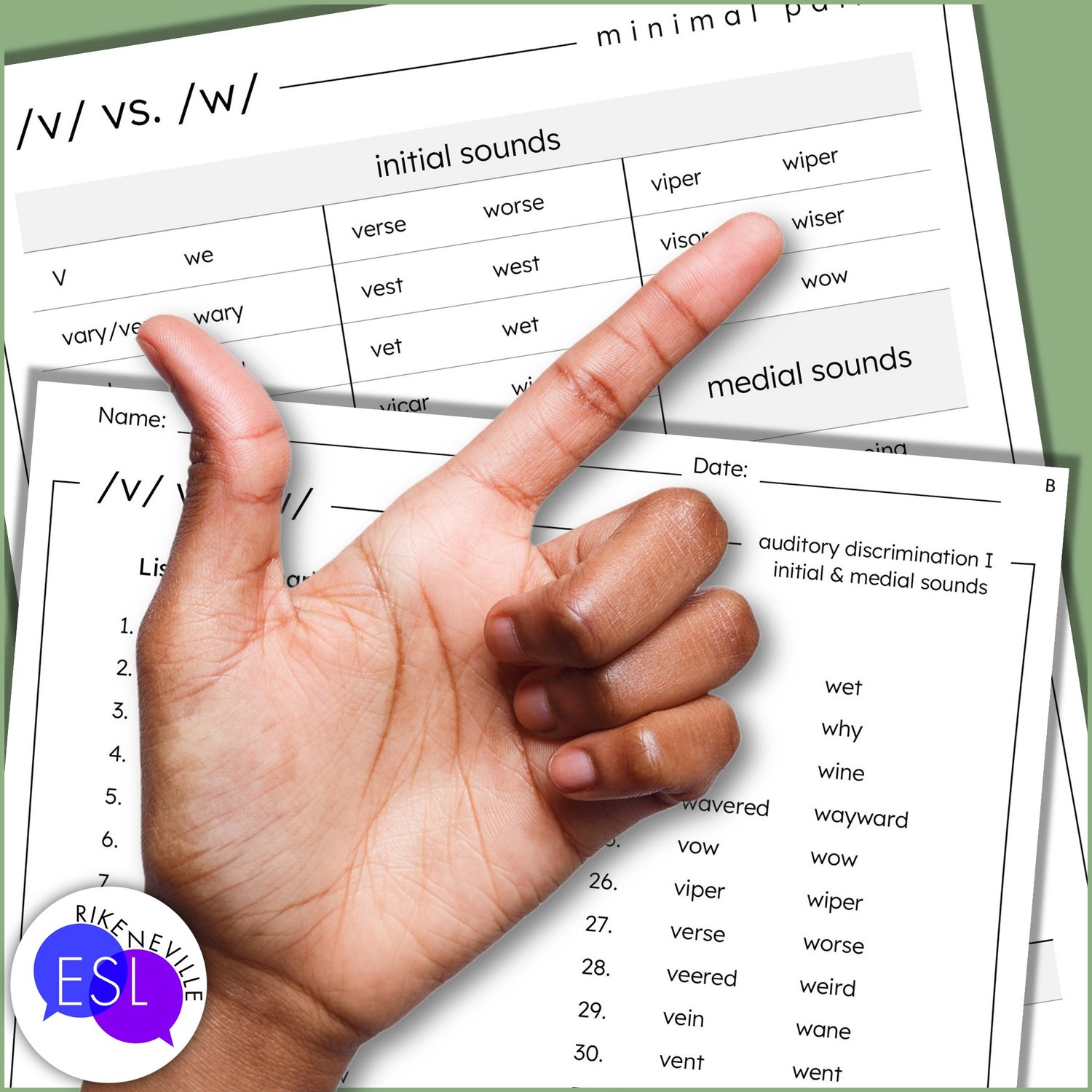
- Minimal Pair Handouts (multiple versions): perfect for introducing the sound contrast and giving students a take-home reference
- Auditory Discrimination Worksheet #1: students hear one word and mark which word they heard from the pair
- Auditory Discrimination Worksheet #2: students hear word pairs and decide if they are the “same” or “different” words
- Listening Labyrinth Activity: an interactive listening activity where students follow a path through a grid of minimal pairs. Includes a teacher’s guide and answer key.
- Whole-Class Assessment Ideas + Mini Posters & Word Cards: easy-to-use materials for informal assessment and reinforcement. Great for substitute plans or group warm-ups.
The listening activities are teacher-led. You read the words aloud, so you can adjust the speed and repetition to fit your students.
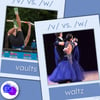
✅ Photo Flashcards
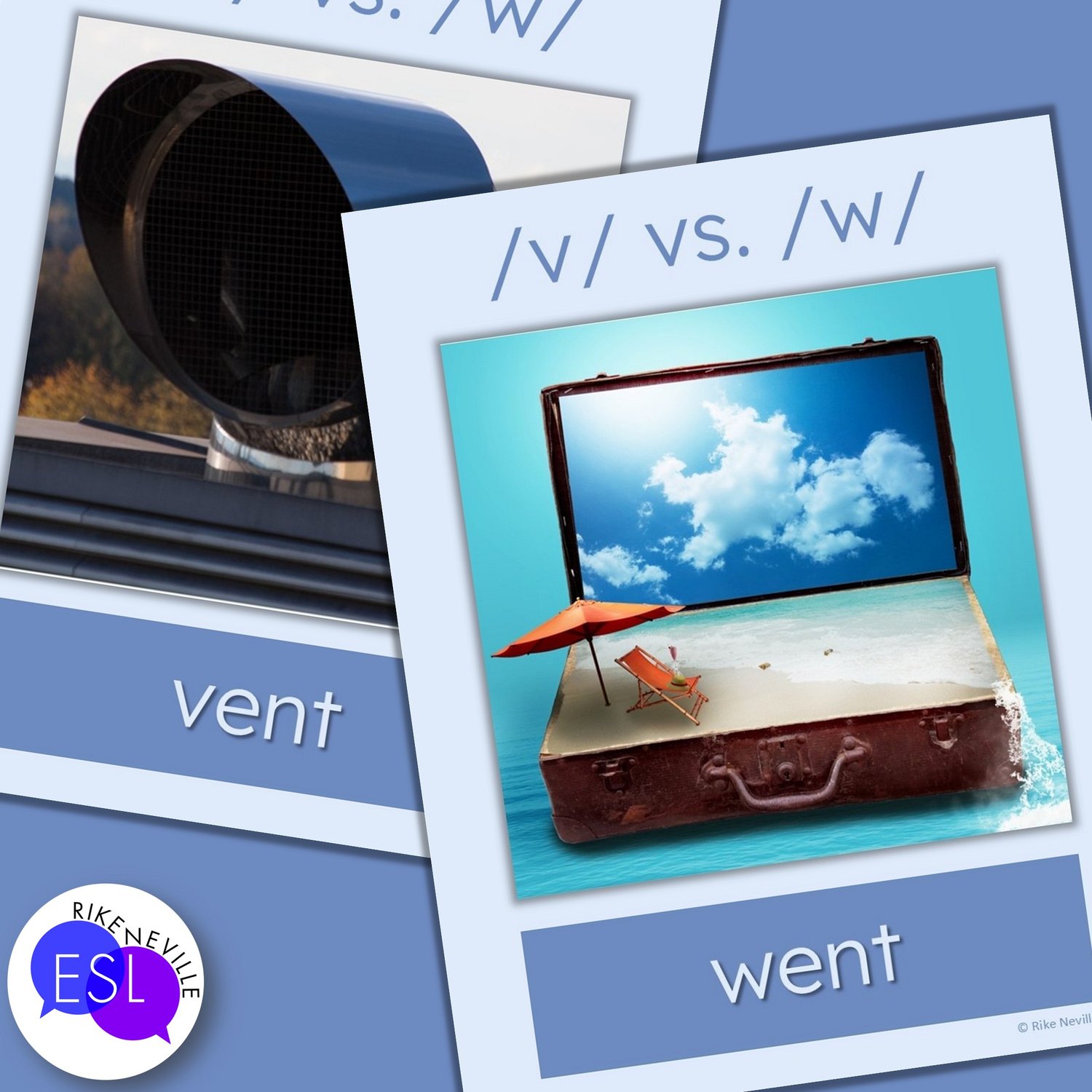
These low-prep flashcards target the /v/ and /w/ contrast. They’re no-tech, hands-on, and easy to use in individual, partner, or small-group settings. Great for pronunciation workshops!
- 38 cards featuring 19 minimal pairs with /v/ and /w/
- Bonus cards: 8 extra /v/ words and 10 extra /w/ words for additional practice, sorting, and vocabulary work
- Printed four per page for easy cutting and classroom use
- All cards are in full color, and each features a photograph with a word.
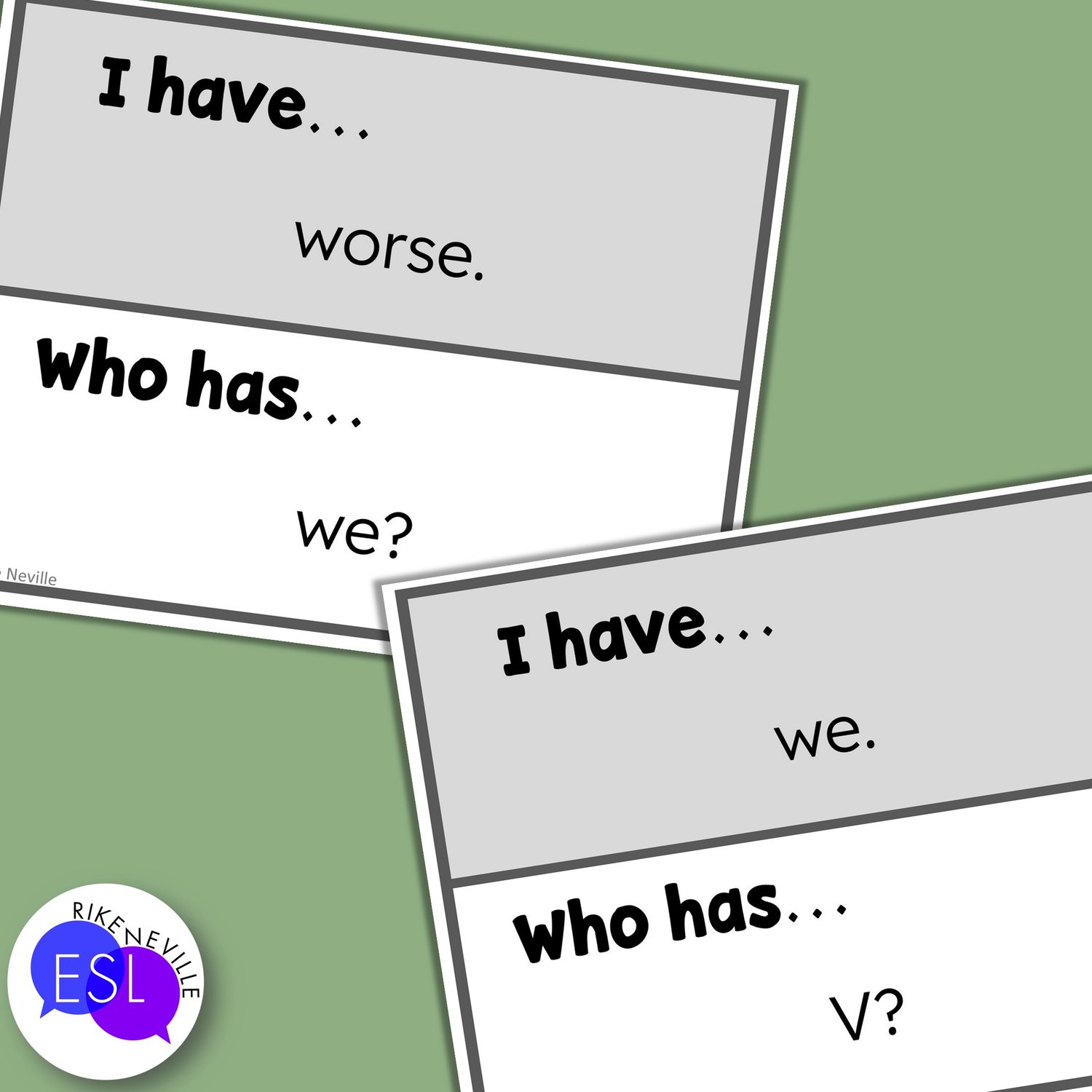
✅ “I Have... Who Has...?” Game
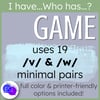
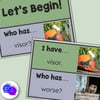
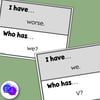
The difference between /v/ and /w/ is subtle in articulation but significant in meaning, and it rewards focused minimal pairs practice. This I Have... Who Has...? game gives adult ESL students 19 minimal pairs to sharpen their pronunciation in an interactive, whole-class format.
This game is one of those pronunciation resources you’ll be glad you have in your back pocket. It covers the same ground as traditional drilling, but students are usually so caught up in the game that they don’t notice how much focused practice they’re getting.
- 38 cards built around 19 minimal pairs
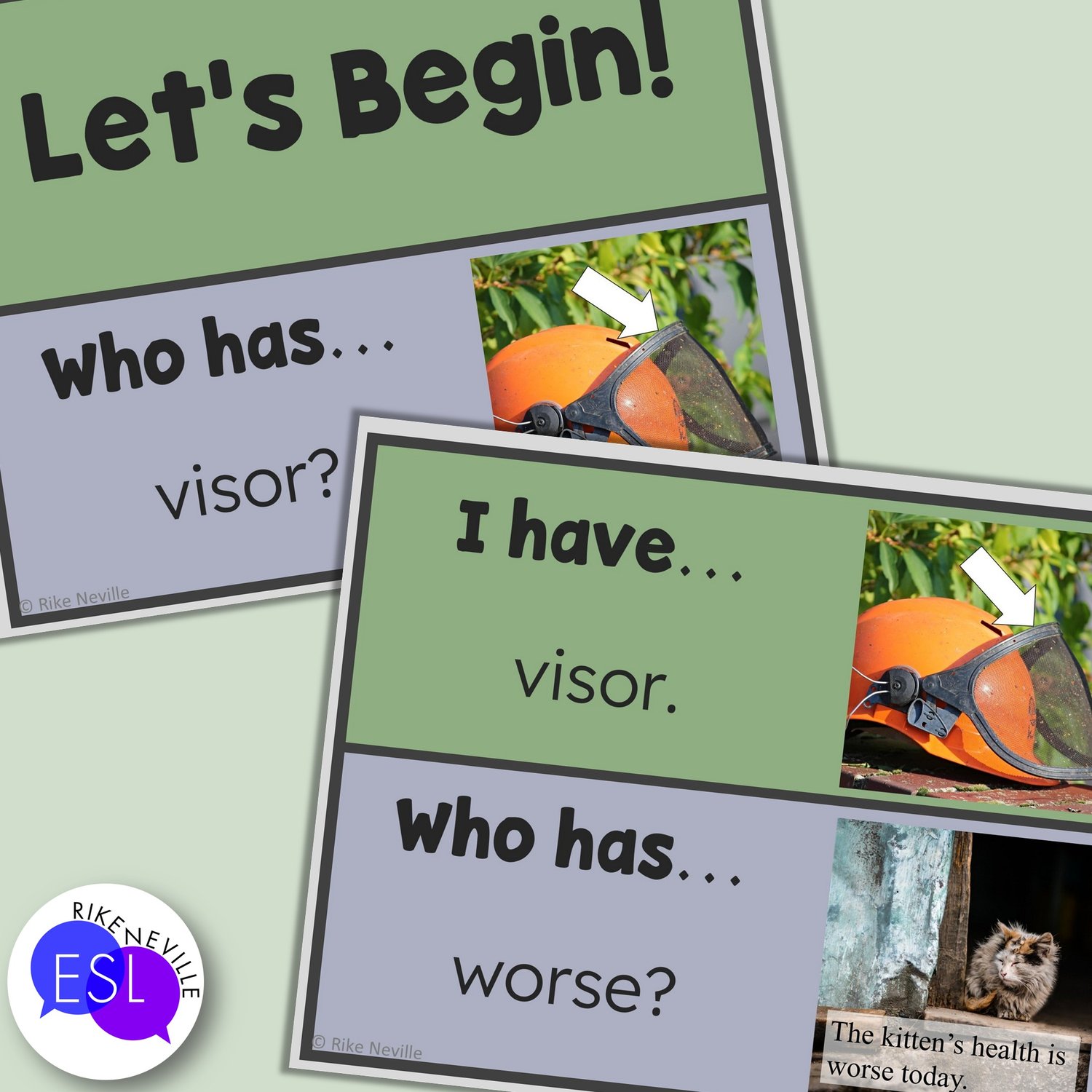
- Two versions: a simple black-and-white, text-only version (easy on the printer budget) and a color version with real photos. The color one is great for visual learners who feel like they need to know the meaning of the words. The B&W version is perfect for students ready to focus entirely on their pronunciation of the targeted sounds.
- Reference pages so you, or a sub, can follow along, catch pronunciation errors as the game moves, and make sure no one mishears something and derails the game.
WHY REAL PHOTOS?
When students know what a word means, pronunciation practice stays on track. A quick glance at the photo is all it takes. No stopping to explain or look things up, because students get the meaning right away and can stay focused on the sound.
Adults notice when they’re practicing with made-up words, and it can undermine the whole exercise. Every word here is real and many are photo-supported, so students stay focused on the sound instead of wondering whether what they’re practicing is even a real word. Some words will be more familiar to your students than others, but every word they’re listening to and repeating exists in English.
THIS WAS CREATED FOR ADULT ESL STUDENTS
I created this with adult students in mind. These are the activities I’ve used with my own students, refined after they told me (bluntly at times) what wasn’t working and what was. The practice is focused on the exact point of confusion: two sounds your students may have been producing identically without knowing it, with real consequences when they do.
No cartoonish clipart, no children’s content. The images are real photographs, not kiddie clipart, so it never feels condescending or juvenile. The clean, photo-based format respects your students’ life experience. Because the design is age-neutral and the photos show everyday objects and situations, this pronunciation pack works well across a wide age range, from teens to senior citizens, without anyone feeling talked down to.
Every activity is designed with flexibility in mind. You can adjust the speed of word delivery, choose whether or not to repeat, and modify how much support you provide, which means this pronunciation pack works across a range of levels and classroom contexts.
It works well in adult ESL classrooms, intensive pronunciation workshops, small groups, and one-on-one tutoring. Older secondary students with the same pronunciation goals will find it just as useful.
⚠️ Please review the cards and images before use and set aside any that may not be appropriate for your specific students or teaching context. You know your students best.