


Adjectives Task Cards for Adult ESL Grammar
With 80 adjective task cards, your adult ESL grammar students will get varied, structured practice with adjectives through eight different question types. They’ll be building vocabulary and grammar skills at the same time. Designed for beginner to intermediate levels, the cards move them through everything from sentence completion to connotation to participial adjectives.
Eight question types mean students aren't doing the same thing over and over. Each card type brings a fresh angle on adjectives, which keeps practice from feeling like a drill and builds flexible understanding.
WHAT'S INSIDE this 47-page PDF:
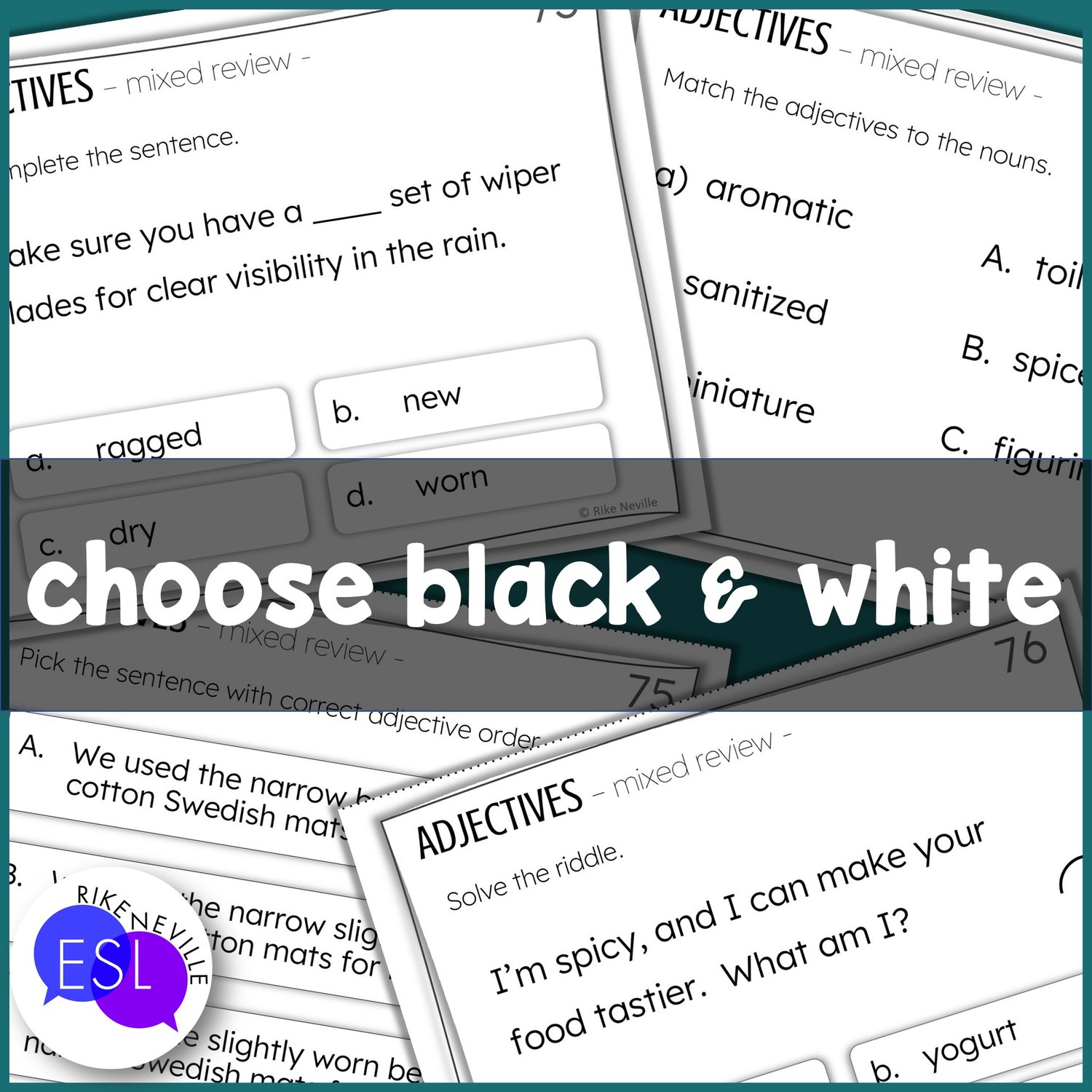
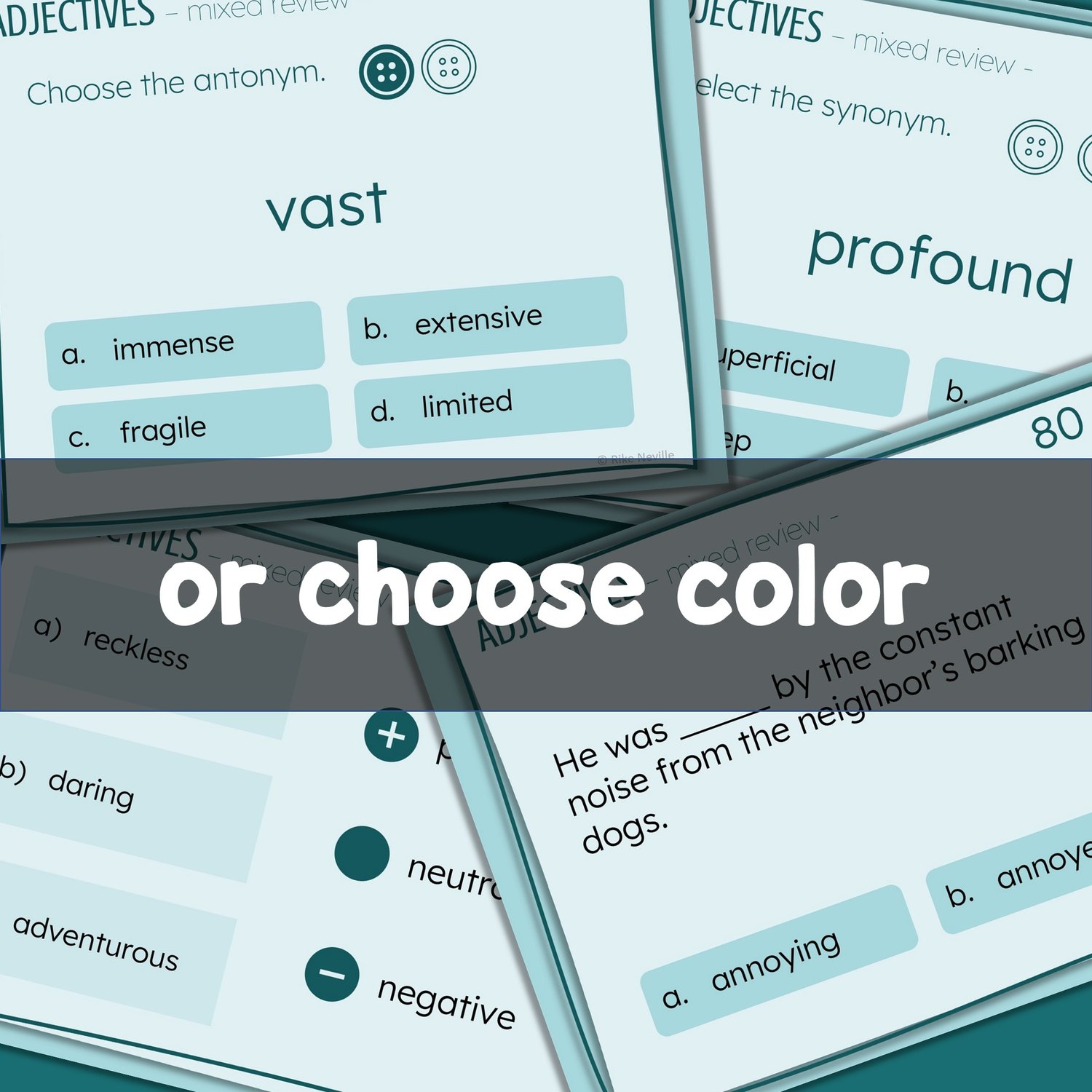
✅ 80 color task cards + the same set in black and white
✅ Answer sheet for students
✅ Answer key
EIGHT QUESTION TYPES
- complete the sentence: Fill in the blank with the correct adjective.
- match adjectives to nouns: Connect three adjectives to their corresponding three nouns.
- adjective order: Pick the sentence with the correct adjective order.
- riddle: Answer a riddle that uses adjectives as clues.
- antonym: Choose the opposite of the given adjective.
- synonym: Select the word closest in meaning to the given adjective.
- connotation: Label the connotation of three given adjectives as compared to each other.
- participial adjectives: Complete the sentence with the correct participial adjective.
HOW TO USE THESE CARDS:
Use the cards for warm-ups, quick reviews, or early finisher activities. These can be bell-ringers or exit tickets. They work well for individual practice, partner work, or small group stations. The variety of question types makes them easy to mix and match depending on what your class needs on a given day.
THIS WAS CREATED FOR YOUR ADULT ESL STUDENTS
The sentences throughout these cards were written with adult students in mind. The contexts are relevant and appropriately mature, so students are practicing adjectives using language they'll come across in real life. Secondary ESL students and secondary native English speakers filling grammar gaps will also find these useful, but adults are the primary audience.
At the beginner to intermediate level, adjective work goes well beyond basic description. Synonym and antonym practice builds vocabulary range, connotation practice sharpens word choice, and participial adjectives prepare students for more complex reading and writing tasks.