



Participial Adjectives Grammar for Adult ESL | LINGUISTIC INVESTIGATION
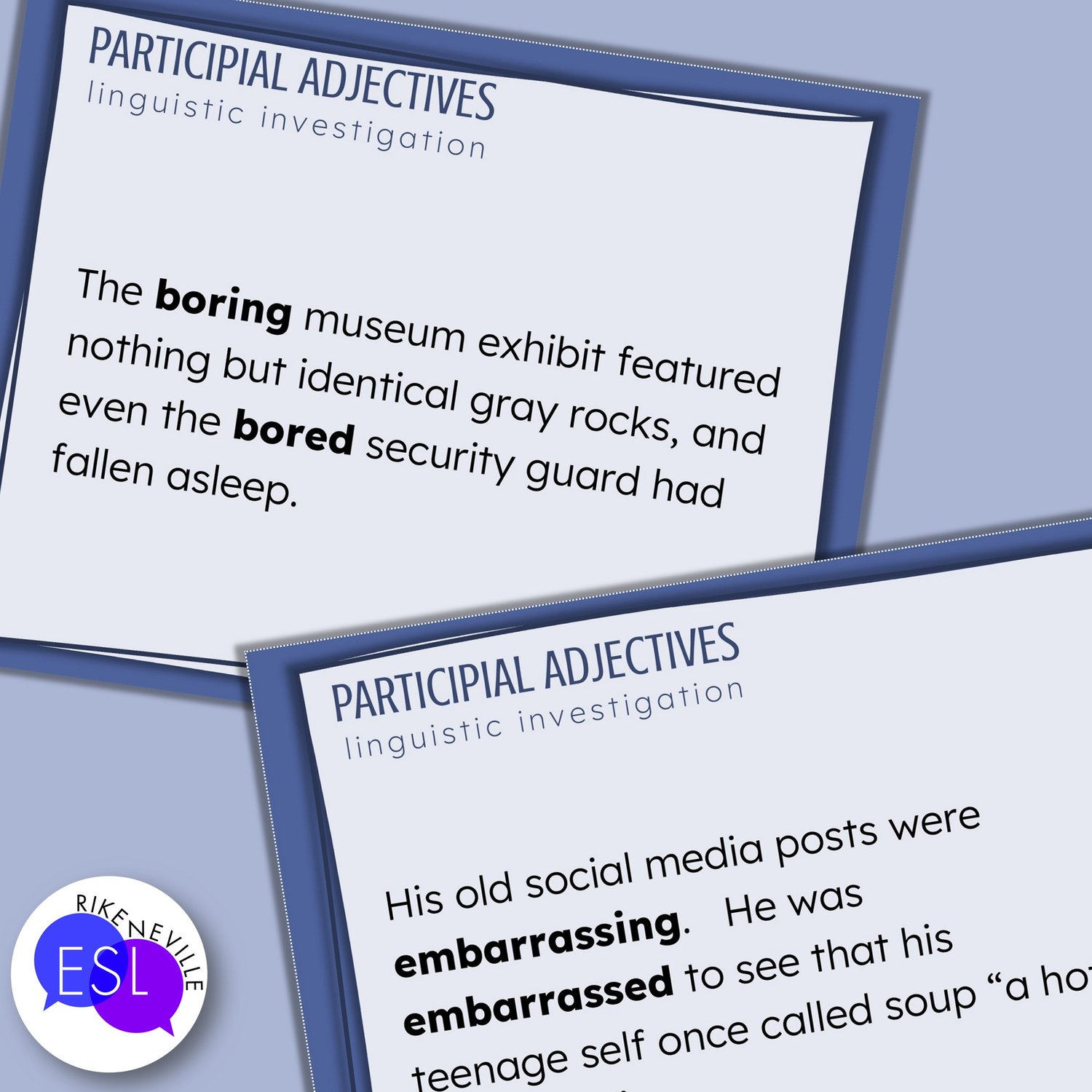
Your adult ESL grammar students will figure out the rules for participial adjectives (-ing and -ed forms) themselves in this hands-on linguistic investigation activity. Working in pairs or small groups, they analyze real sentence examples with bolded participial adjectives, look for patterns, and build their own understanding of how these adjectives work before moving on to structured practice.
This is how you get students talking and thinking instead of copying rules off the board. The inquiry-based format works just as well for secondary ESL students and native English speakers who need to fill in grammar gaps.
WHAT'S INSIDE this 17-page PDF:
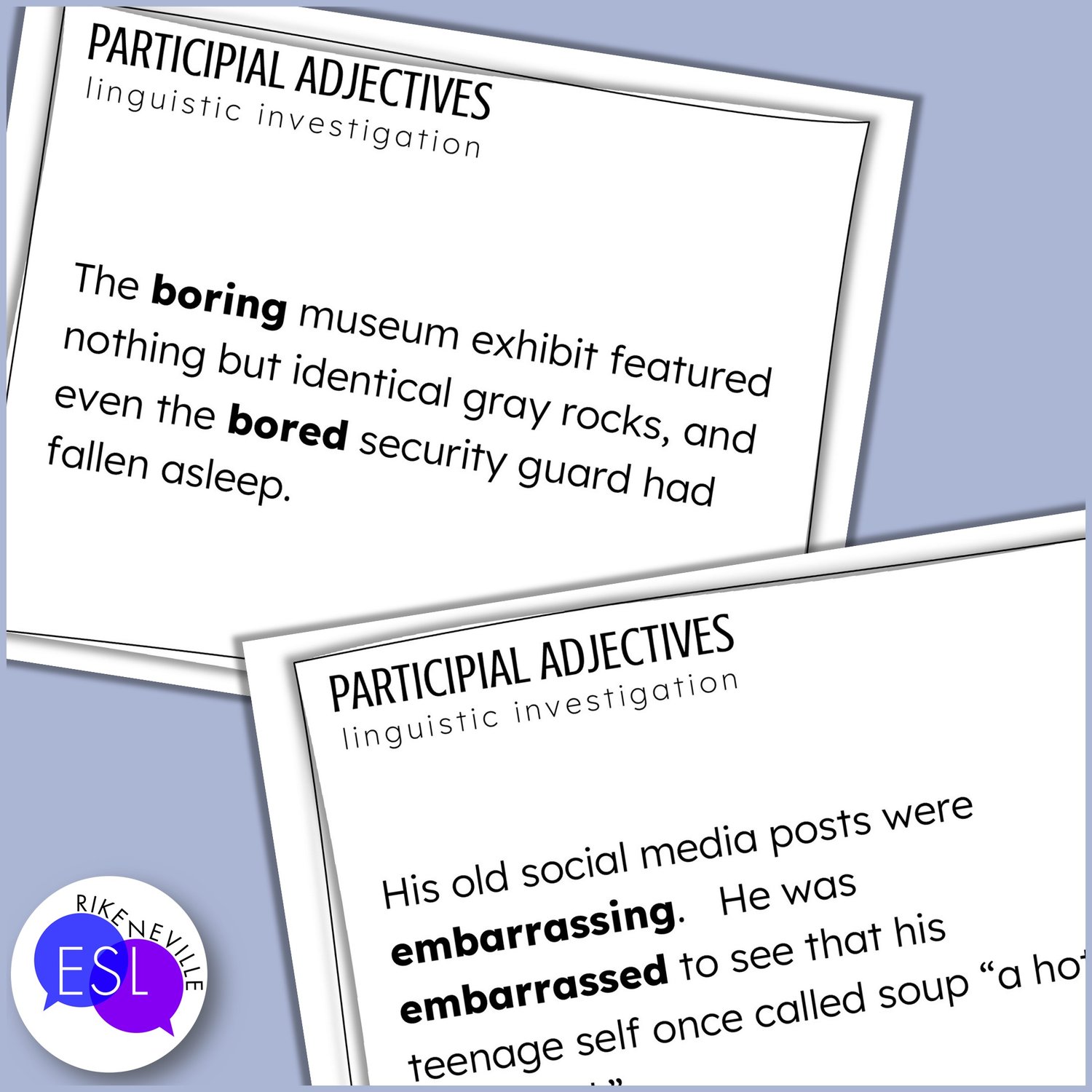
- ✅ Two card sets — a full-color set and an ink-friendly black-and-white set (both use the same 1–2 sentences per card with bolded participial adjectives)
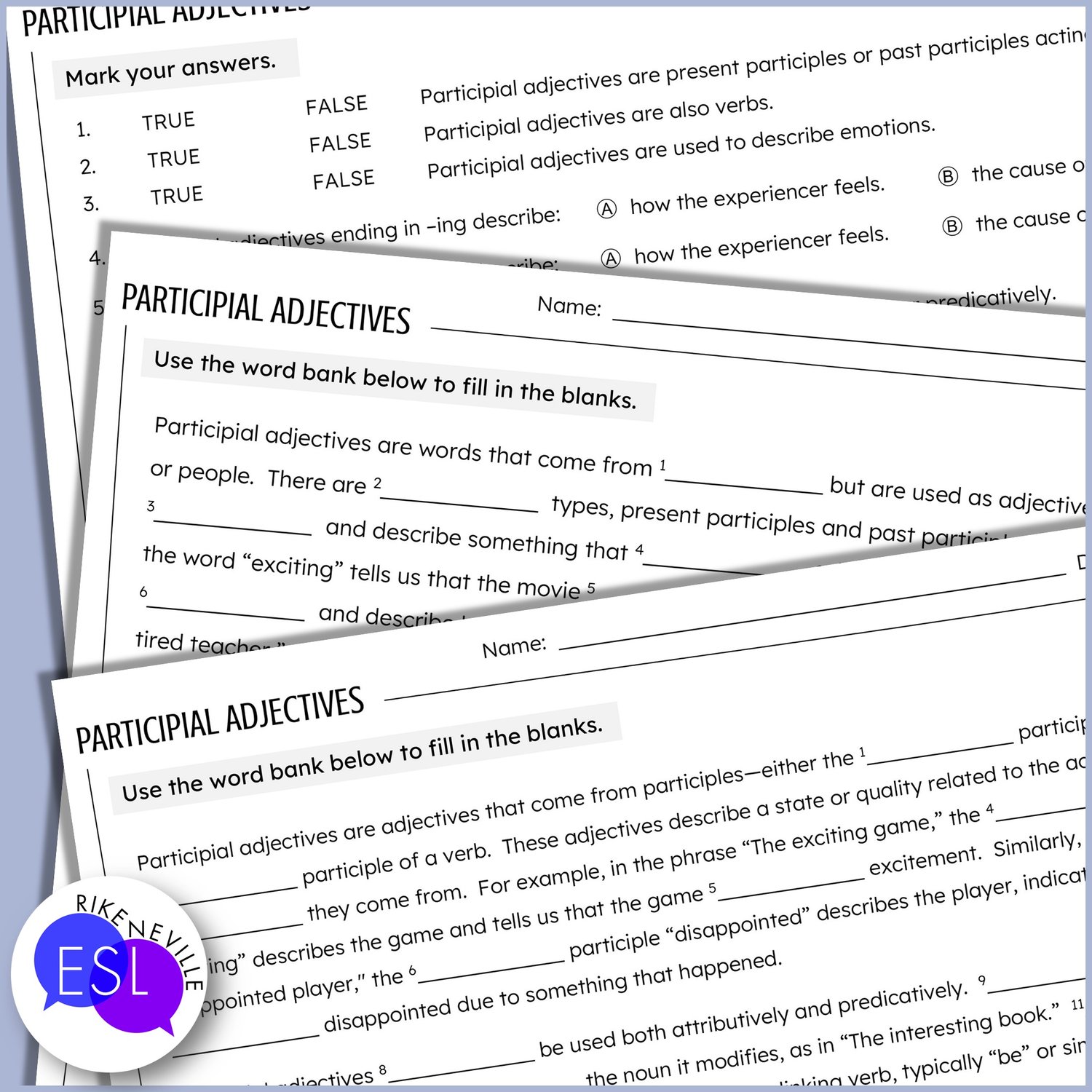
- ✅ 3 differentiated worksheets: true/false and multiple-choice (Worksheet 1), fill-in-the-blank easier (Worksheet 2), and fill-in-the-blank challenging (Worksheet 3)
- ✅ Word banks in multiple versions for differentiation
- ✅ Answer keys for all worksheets
- ✅ Teacher instructions with setup steps and scaffolding options for different student levels
HOW TO USE THIS GRAMMAR ACTIVITY:
Start with the card sets. Print each group's set on different colored paper so cards don't get mixed up. Or don’t. That’s optional. Students work in pairs or small groups to examine the sentences, analyze the bolded adjectives, and figure out the patterns.
You have two investigation routes depending on your students' level. The guided discovery path gives students scaffolded questions to focus their thinking as they look at how participial adjectives modify nouns. The open-ended inquiry path asks students to analyze the examples and write their own grammar rules without hand-holding.
Follow up with whichever worksheet fits your class...or all three if you have a mixed-level group. Use them as classwork, homework, or partner practice.
THIS WAS CREATED FOR YOUR ADULT ESL STUDENTS
Mid-beginner and higher adult ESL grammar students can handle this kind of thinking. They just need the right structure. The two investigation levels mean you're not choosing between challenging your stronger students and supporting your lower-level ones. Everyone is working with the same card sets and the same real examples; the scaffolding is what’s different.
The differentiated worksheets extend that flexibility into the practice stage, so you can assign based on what each student needs without managing three completely different lessons.
This also works well for secondary ESL students and native English-speaking students who have grammar gaps and benefit from inquiry-based instruction over traditional drills.