
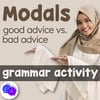
Modals for Advice GRAMMAR ACTIVITY for Remediation, Review, & Adult ESL
Teaching modals? These 32 situation cards get adult ESL students debating, justifying, and laughing together as they figure out which modal verbs, should, could, must, don't have to, and have to, best fit each scenario. This modal verbs grammar activity is genuinely fun, and the conversations it sparks are the kind that students remember.
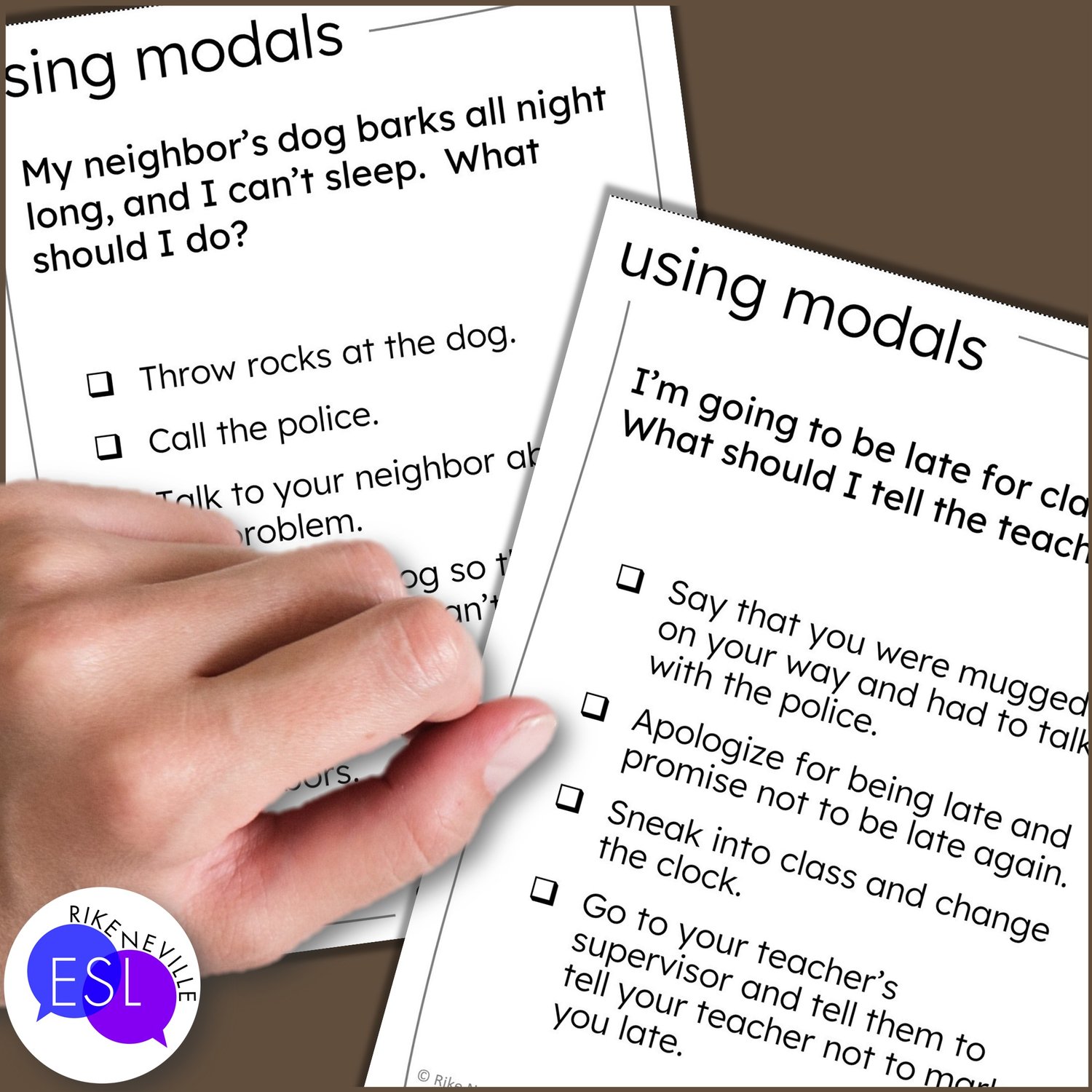
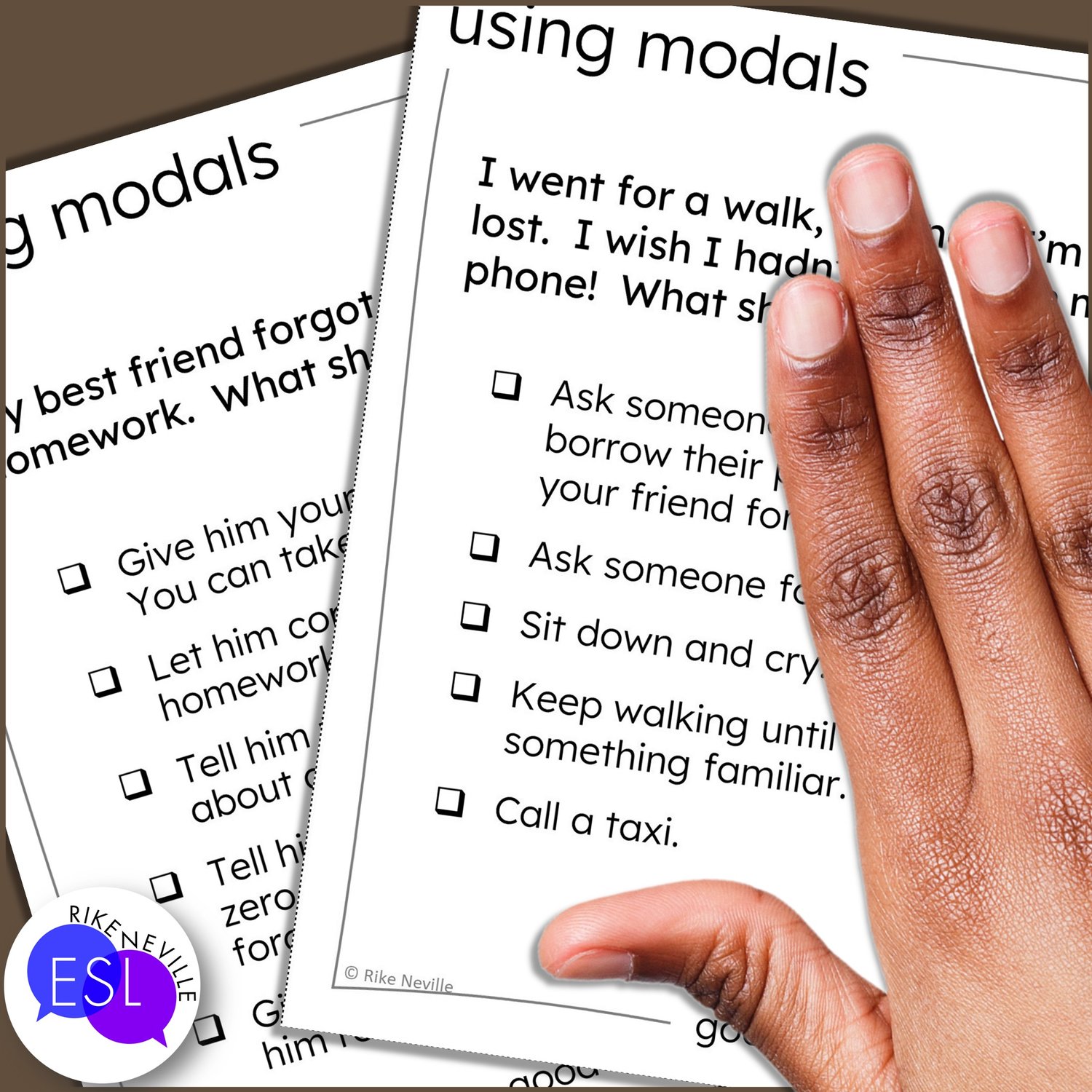
Modals are one of those grammar points that make perfect sense in context and fall apart in isolation. This activity puts them squarely in context. Your students will read a situation, weigh four pieces of advice (some sensible, some outrageous), decide which is best and which is worst, and then defend their choices. The discussion does the teaching.
WHAT'S INSIDE this 10-page PDF:
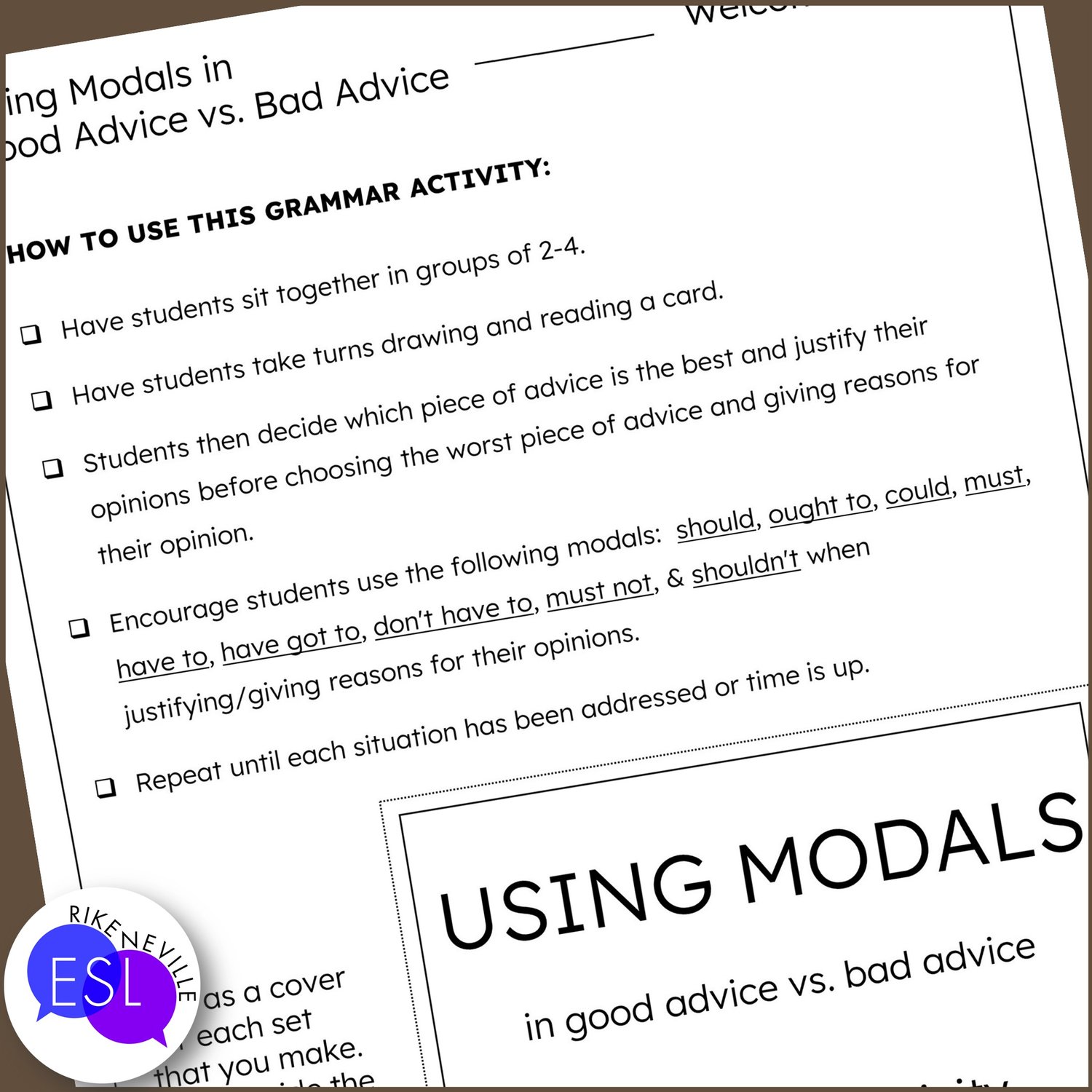
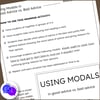
- ✅ 2 teacher pages with instructions and implementation tips
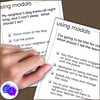
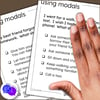
- ✅ 32 situation cards for speaking practice with modal verbs
- ✅ A mix of practical and hilariously bad advice options on each card
HOW TO USE THIS ACTIVITY:
Print and cut the cards, then put students in small groups. Each card presents a scenario and four pieces of advice. Students decide which advice is best (and worst), justify their reasoning using modal verbs, and debate with their group.
You can run it as a whole-class discussion, a small-group rotation, or a quick warm-up…whatever fits your lesson.
Your students will be explaining their thinking in English, which means they're getting real practice using modals in the way they really function: to express degrees of obligation, possibility, and advice.
WHY THIS WORKS FOR ADULT ESL STUDENTS
Adult ESL students at the high-beginner to intermediate level are ready to move beyond fill-in-the-blank exercises. They need practice making and defending judgments in English. That's exactly what this activity asks them to do.
Because the situations here are concrete and the wrong answers are sometimes deliberately absurd, students have something real to react to. That reaction of "no, that's terrible advice because you have to..." is authentic language use.
This activity works well for students preparing for academic study, for those building confidence in conversation, and for mixed-motivation classes where engagement can be hard to sustain. The humor helps. So does the fact that there's no single right answer, just better and worse ones, with reasons.