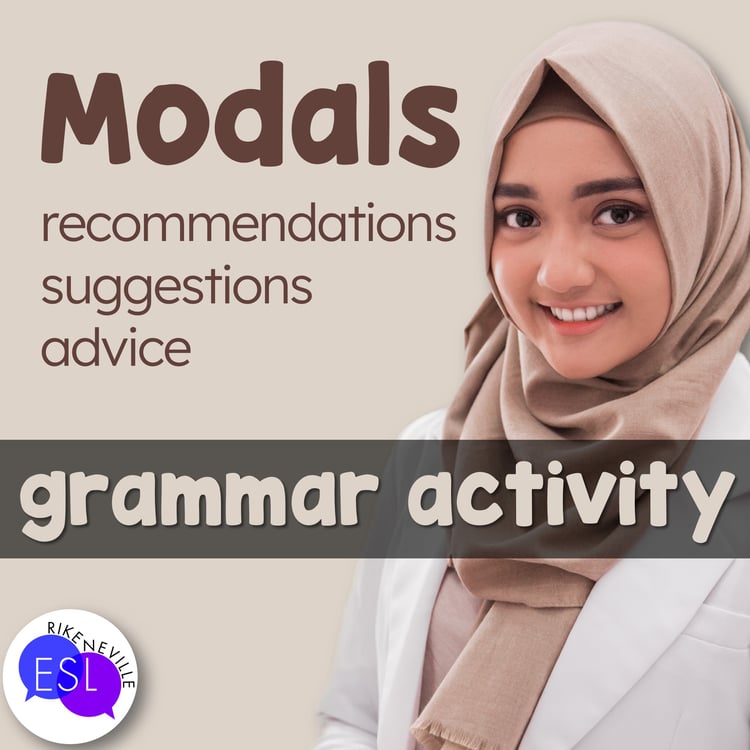

MODALS Grammar Activity with Logical Conclusions using MUST for Adult ESL
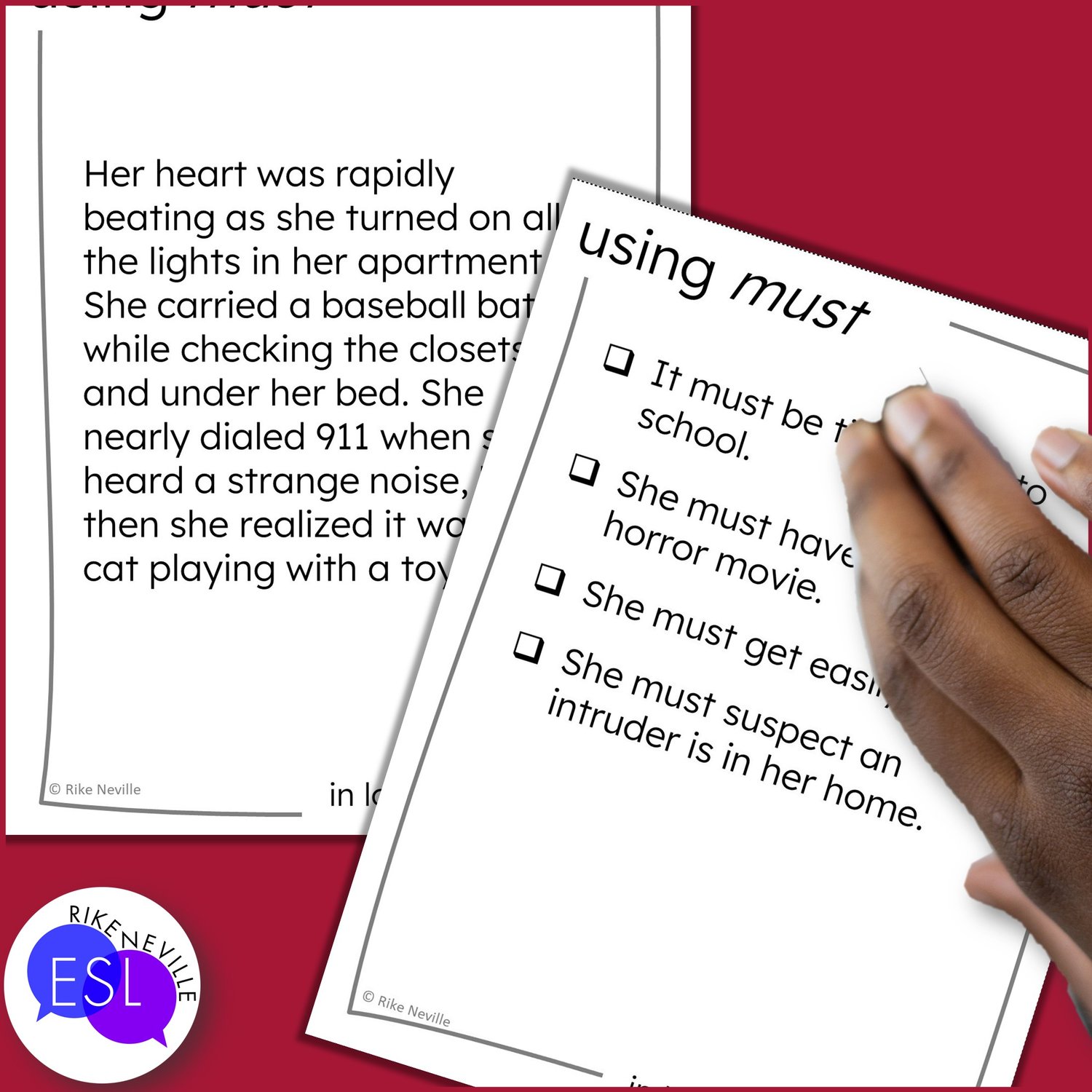
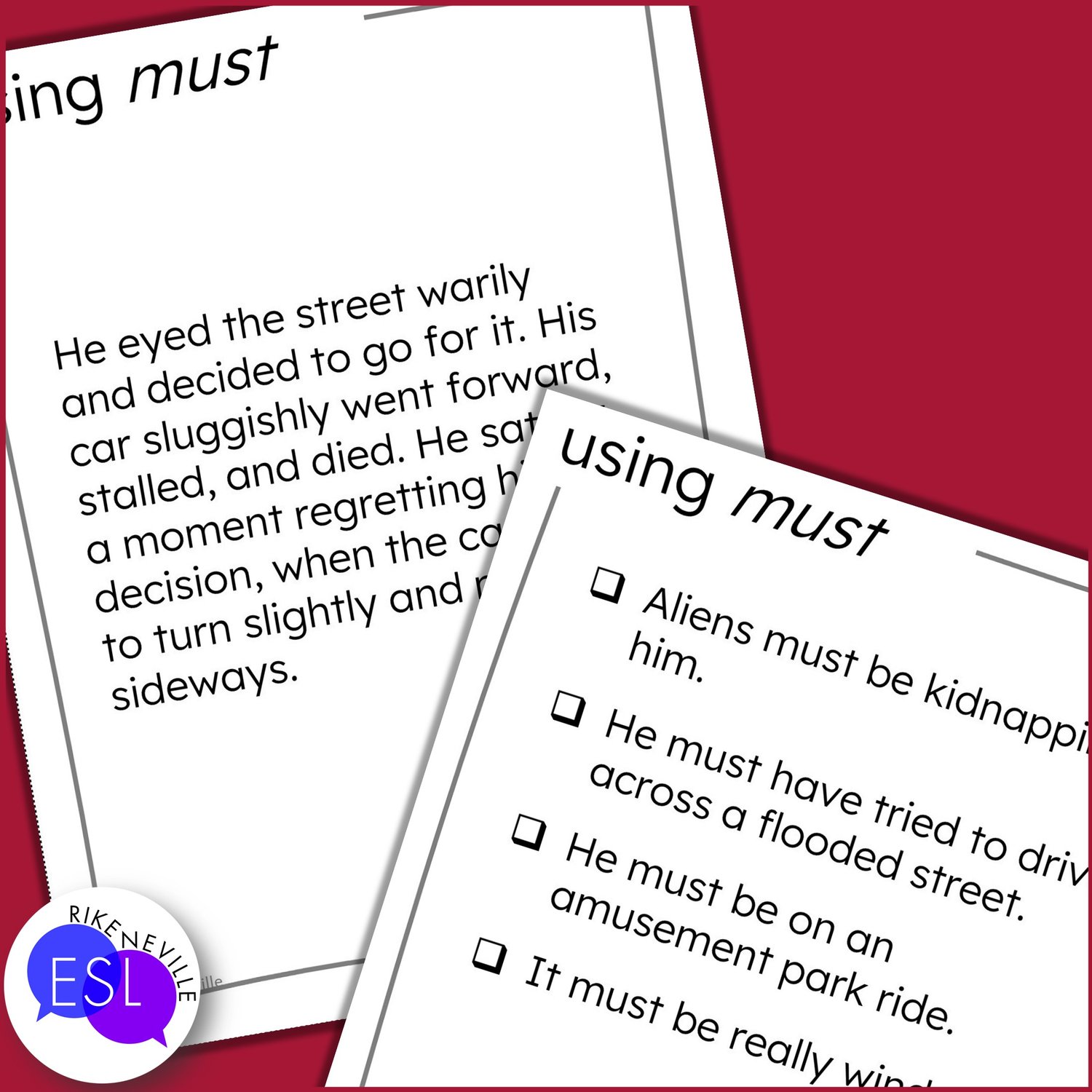
Teaching modals? Your adult ESL grammar students will read a scenario, weigh possible conclusions, and argue for the one that makes the most sense, all using the modal must. This 11-page group activity gives students 18 real-world scenario cards and a reason to talk to each other in English.
When grammar practice requires reasoning out loud, students aren't just filling in blanks. They're building the kind of judgment that helps them read carefully, speak persuasively, write clearly, and understand the English they hear around them every day. That's a lot of mileage from one stack of cards.
WHAT'S INSIDE this 11-page PDF:
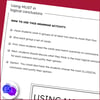
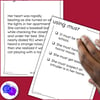
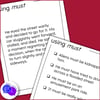
- ✅ 18 scenario cards, each presenting a situation with conclusions for students to evaluate and defend
- ✅ Teacher's guide with facilitation instructions
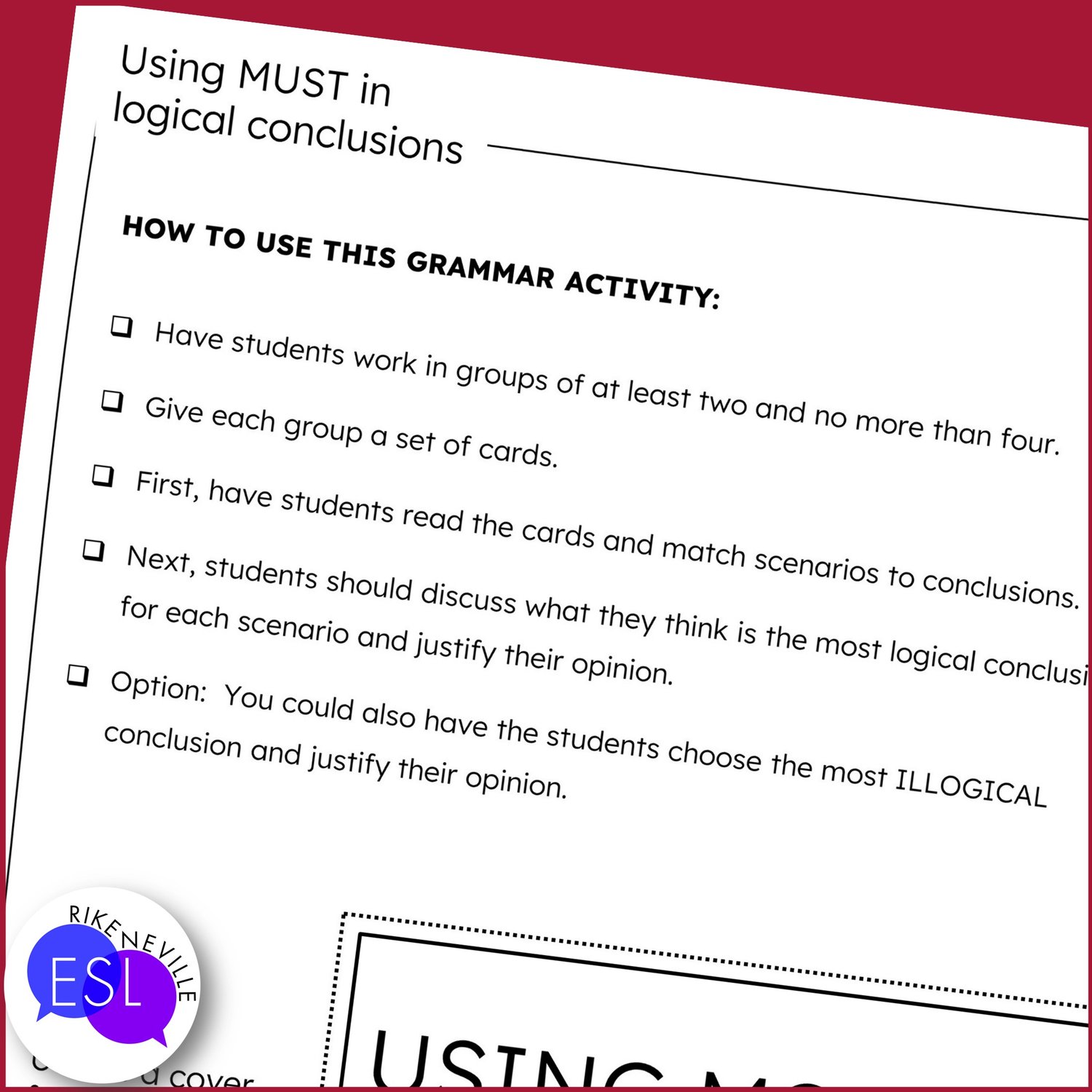
HOW TO USE THIS ACTIVITY:
Put students in groups of 2–4 and hand each group a set of scenario cards. They read the situation, consider the conclusions, and decide which one must be right. Then they have to defend their reasoning using must in context ("She must be exhausted; she's been studying for hours"). The defending is the point.
Groups can work through cards at their own pace, or you can run it as a whole-class discussion where groups share their conclusions and push back on each other.
Works well as a warm-up, a mid-lesson change of pace, or a full speaking activity. Low prep: print, cut, go.
WHY THIS WORKS FOR ADULT ESL STUDENTS
Adult ESL students, whether they're preparing an English proficiency exam, building professional skills, or just trying to communicate more confidently in daily life, need grammar practice that asks something more of them than the typical worksheet. This activity does that.
The modal must for logical conclusions is one of those grammar points that makes more sense when students are in the middle of a real reasoning task. By the time they've argued through a few scenarios, they're not thinking about the grammar rule anymore. They're just using it.
This activity also works well with secondary ESL students and secondary native English speakers filling grammar gaps.