
Causative Verbs TASK CARDS - Review, Remediation, & Adult ESL
Ever had an adult ESL student question the relevance of causatives, claiming they've never heard native speakers use them? Yep, I've been there too! But here's the thing, after some focused practice, suddenly, like magic, those elusive causatives started popping up in conversations around my students. Funny how that works, isn't it? ;)
The 40 task cards in this set give your intermediate ESL students targeted practice with causative verbs through eight different question types.
You want this because your students need to see causatives in action before they'll recognize them in real conversations. Rotating through eight different question types means they're building understanding from multiple angles.
WHAT'S INSIDE this 15 page PDF:
✅ 40 task cards cycling through 8 question types
✅ teacher page with setup guidance
✅ answer key
EIGHT QUESTION TYPES
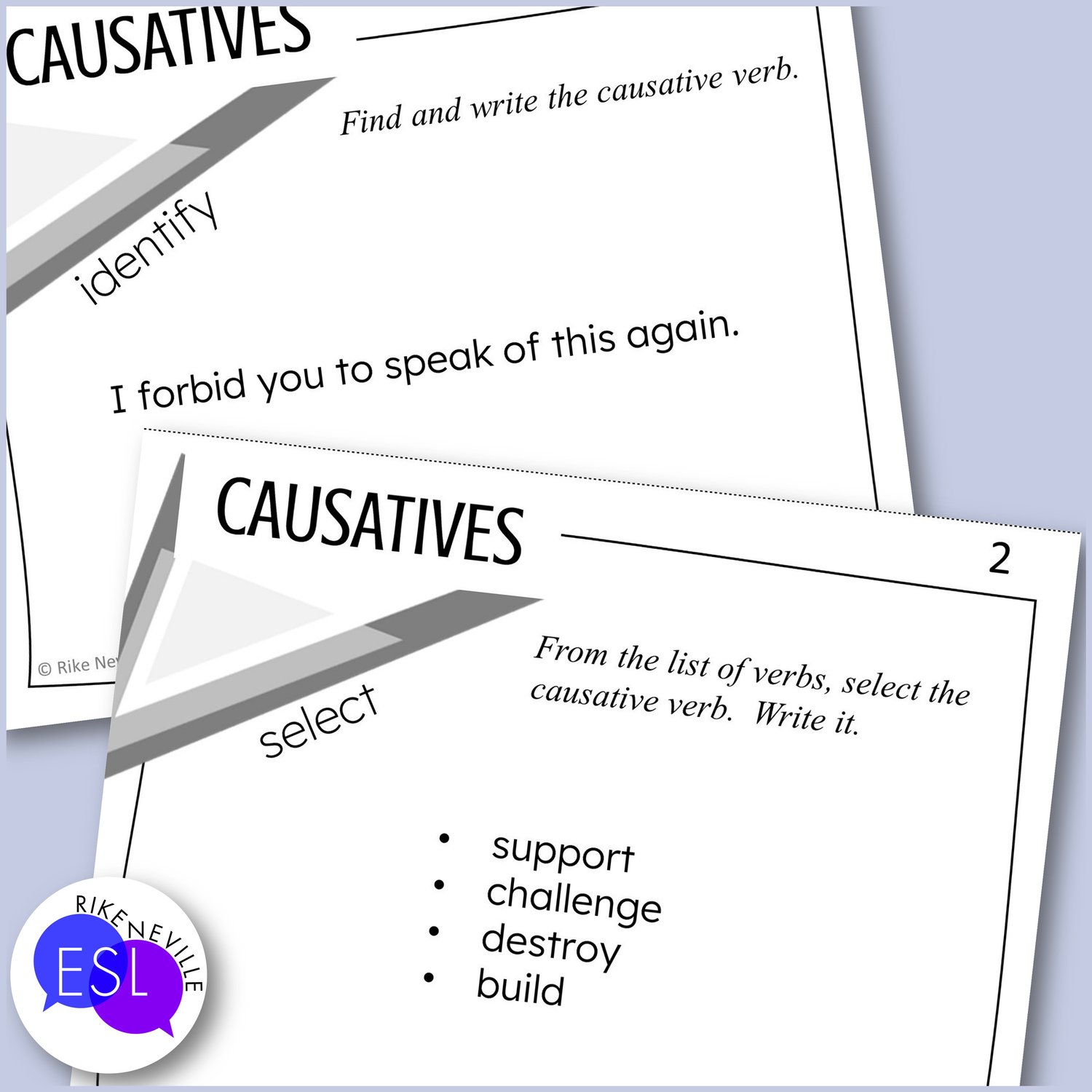
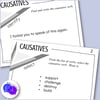
- IDENTIFY: Read a sentence and identify the causative verb.
- SELECT: Select the causative verb from a list of verbs.
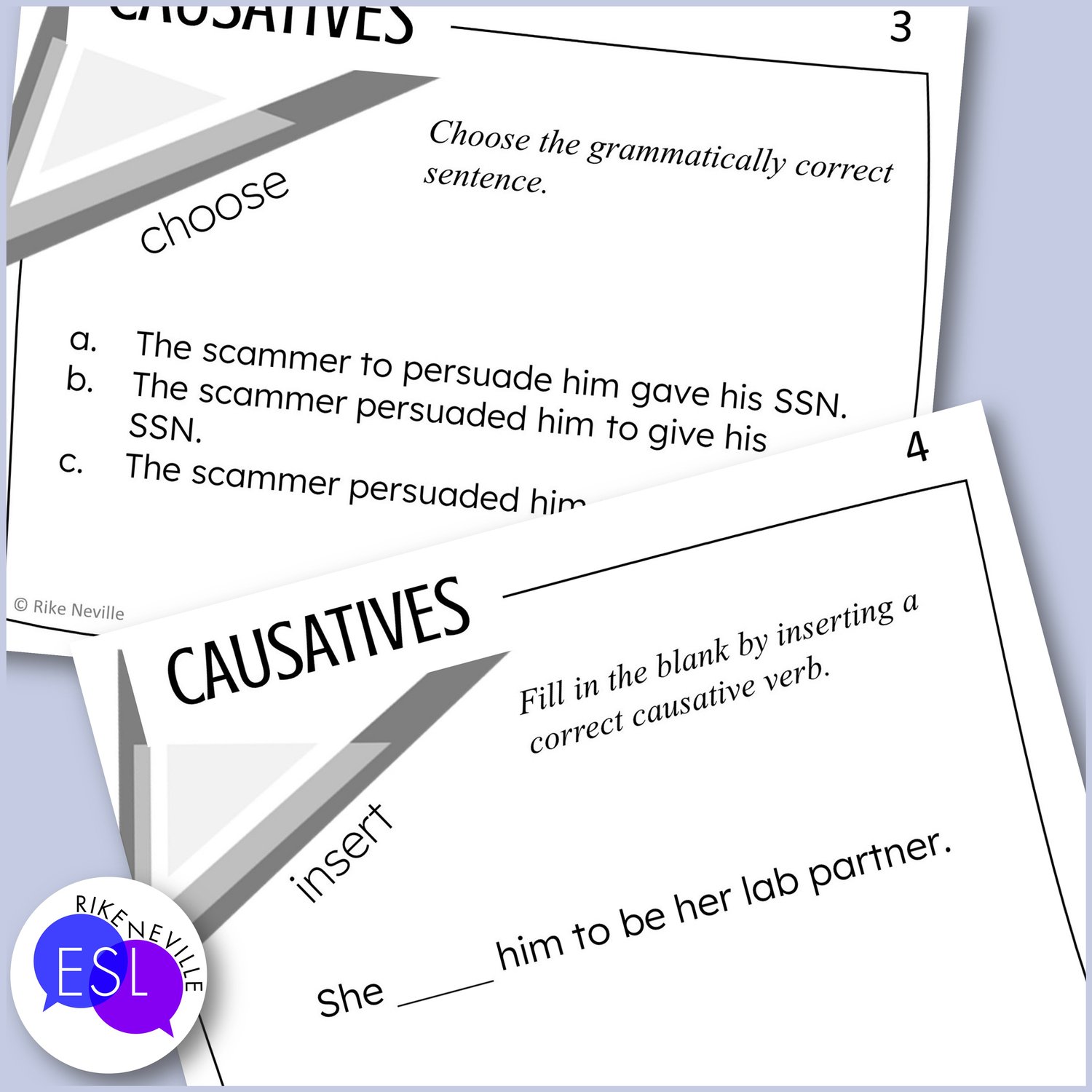
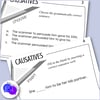
- CHOOSE: Read through three sentences and choose the grammatically correct one.
- INSERT: Insert a causative verb of their choice (that makes sense) into a given sentence.
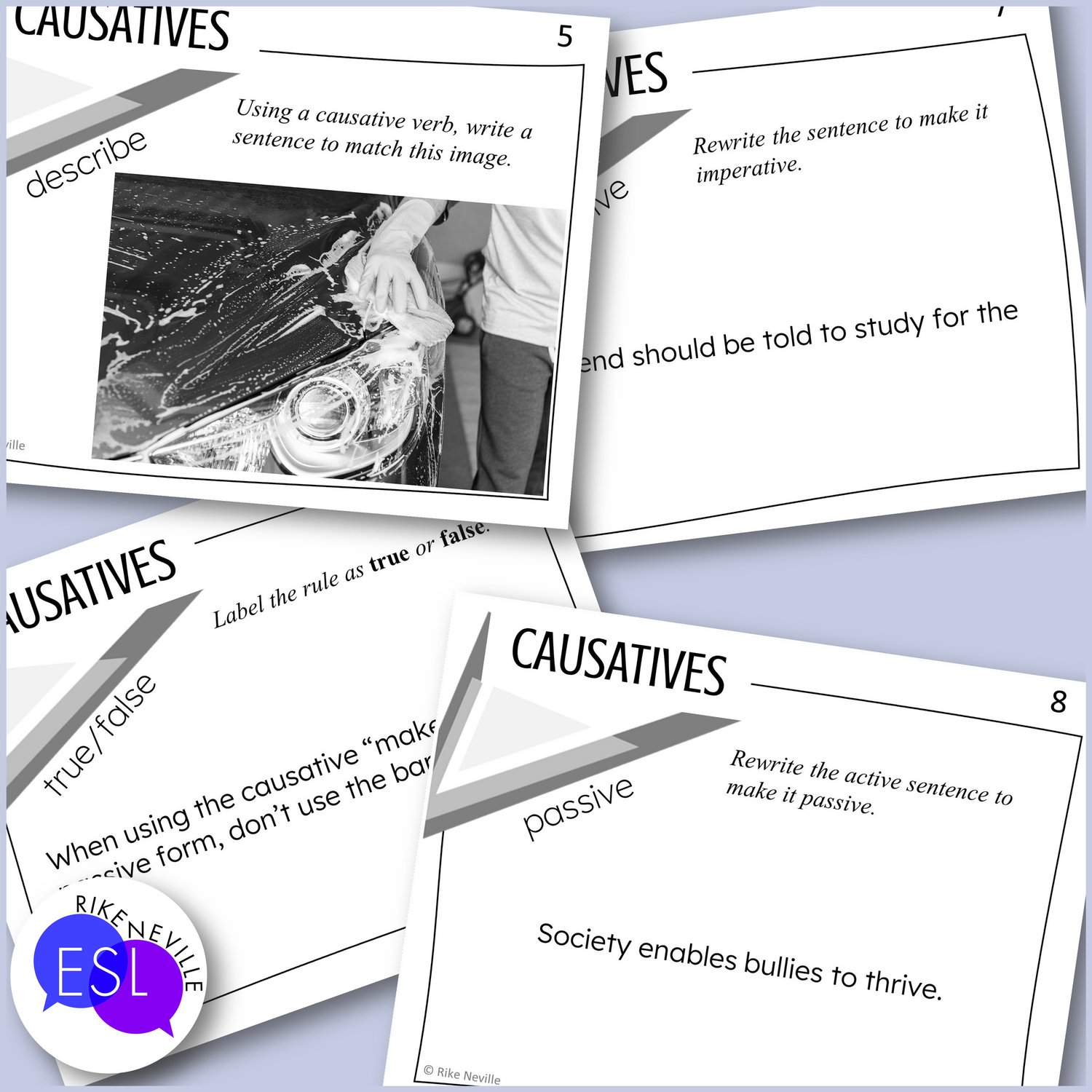
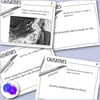
- DESCRIBE: Write a sentence about a given image using a causative verb.
- LABEL: Label a rule as true or false.
- IMPERATIVE: Rewrite a statement to make it imperative (but still with a causative verb).
- PASSIVE: Rewrite an active statement to make it passive (but still with a causative verb).
HOW TO USE THESE CARDS:
Print the cards and use them as station work, partner practice, or independent review, whatever fits your lesson flow. Students work through the cards at their own pace, getting exposure to causatives in different contexts.
Use the answer key yourself for quick assessment, or hand it to students for self-checking during practice rounds.
THIS WAS CREATED FOR YOUR ADULT ESL STUDENTS
Your intermediate students are ready to move beyond basic sentence structure. Causatives are in professional emails, workplace conversations, and everyday interactions. Once students start recognizing them, they'll hear causatives everywhere.
These cards respect your students' intelligence by asking them to apply grammar rules in context, not just memorize patterns. The variety of question types keeps the practice from feeling repetitive, and the open-ended questions let students show what they really understand.
This works well for older teen students too, especially those who need structured practice that doesn't feel like busywork.