



Causative Verbs GRAMMAR ACTIVITIES - Review, Remediation, & Adult ESL
This grammar speaking activity pack gives intermediate ESL students six different ways to practice causative verbs through conversation and discussion. Students predict partner preferences, discuss who does various tasks, and use causatives in real conversations.
You want this because your intermediate students are ready for authentic communication practice. They have the vocabulary and grammar foundation to speak without scripts, so these activities let them use causatives naturally while building fluency.
WHAT'S INSIDE this 13-page PDF:
✅ The Millionaire's Vacation (students create outlandish vacation plans using causatives)
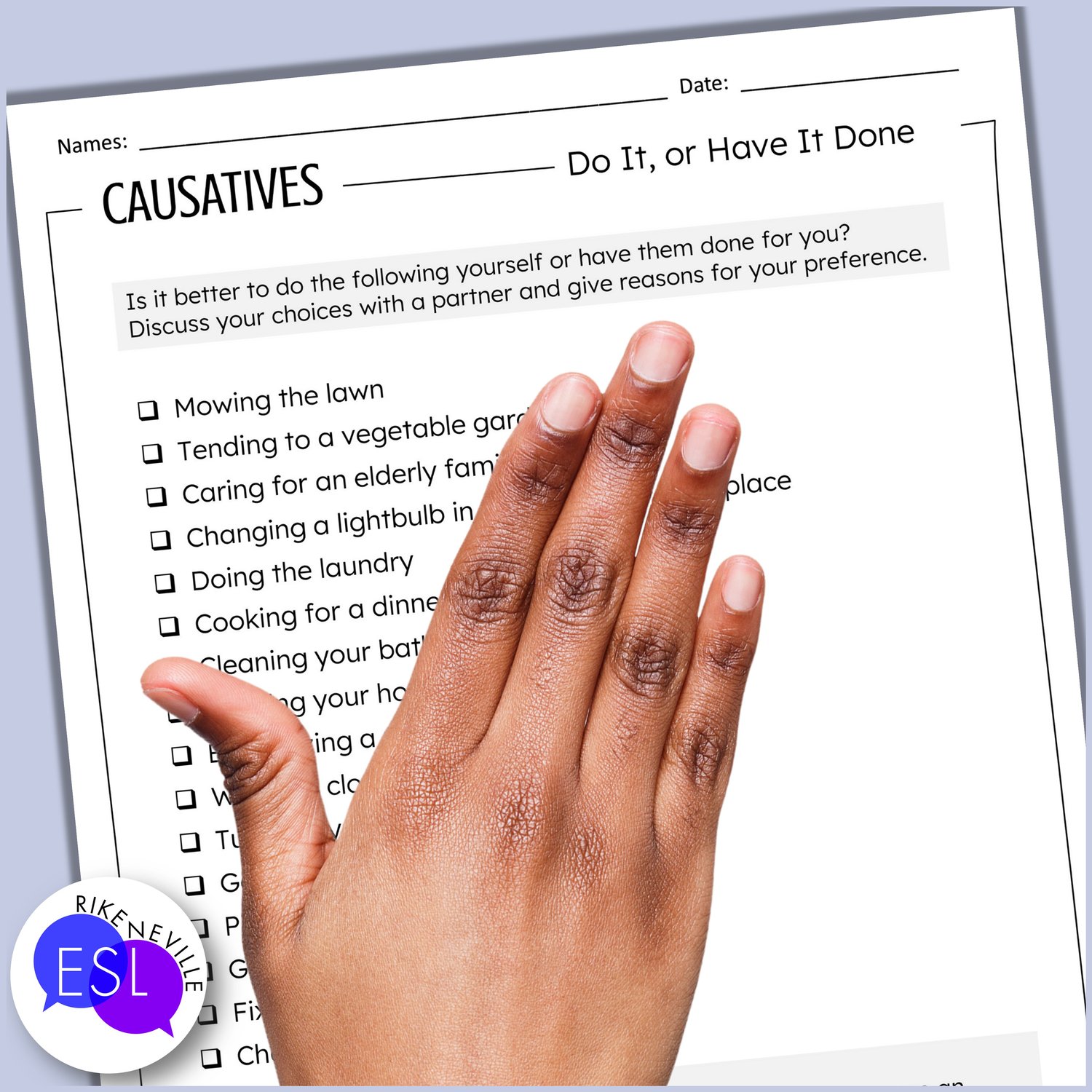
✅ Do It, or Have It Done (partner discussions with follow-up questions)
✅ Let, Make, Have, Get (discovery activity where students analyze examples to figure out how each causative verb works) + answer key
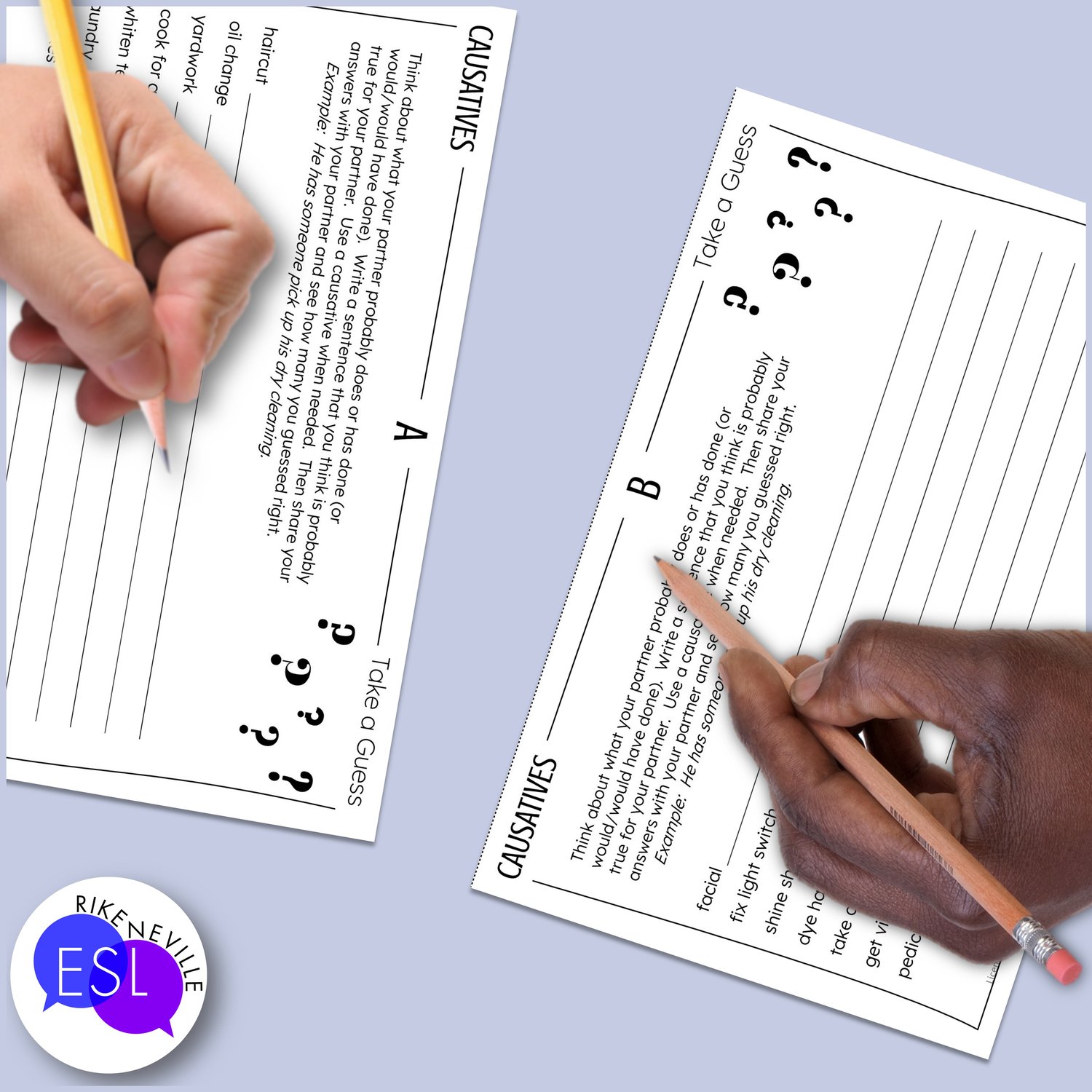
✅ Take a Guess! (students predict whether partners would do tasks themselves or have them done)
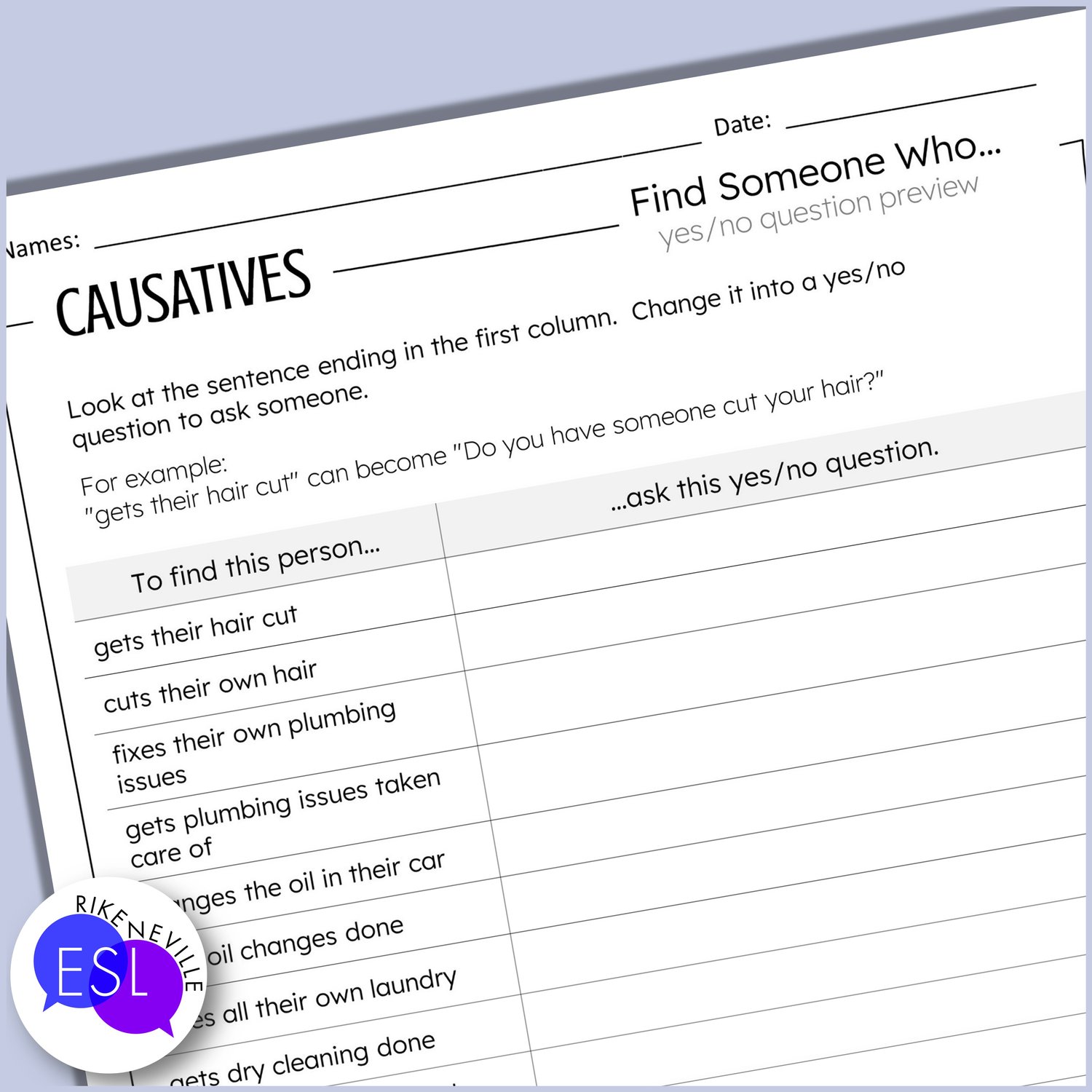
✅ Find Someone Who... (mingling activity for question-making practice)
✅ Let's Talk! (16 discussion topics for pair or group work)
HOW TO USE THIS
Pick the activity that fits your lesson. The Millionaire's Vacation works great as a warm-up or reward activity. Do It, or Have It Done and Take a Guess! are perfect for partner work when you want focused causative practice.
Start with Let, Make, Have, Get if students need to sort out the differences between causative verbs. They'll examine examples and build their own understanding before jumping into speaking activities.
Use Find Someone Who... when students need to move around, or Let's Talk! when you want flexible discussion practice. Mix and match activities across multiple lessons, use them for early finishers, or pull them out for tutoring sessions.
THIS WAS CREATED FOR YOUR ADULT ESL STUDENTS
Intermediate students need speaking practice that respects their growing language skills. These activities give them real reasons to use causatives in conversation, like discussing preferences, making predictions, and sharing opinions while reinforcing causative structures.
The speaking focus helps students prepare for the conversations they'll have outside class - talking about getting things repaired, discussing household tasks, and explaining who does what. Because they're using causatives in authentic contexts, they’ll remember the structures better than if they’d had worksheet practice alone.
This also works well with secondary students who need interactive grammar practice.