
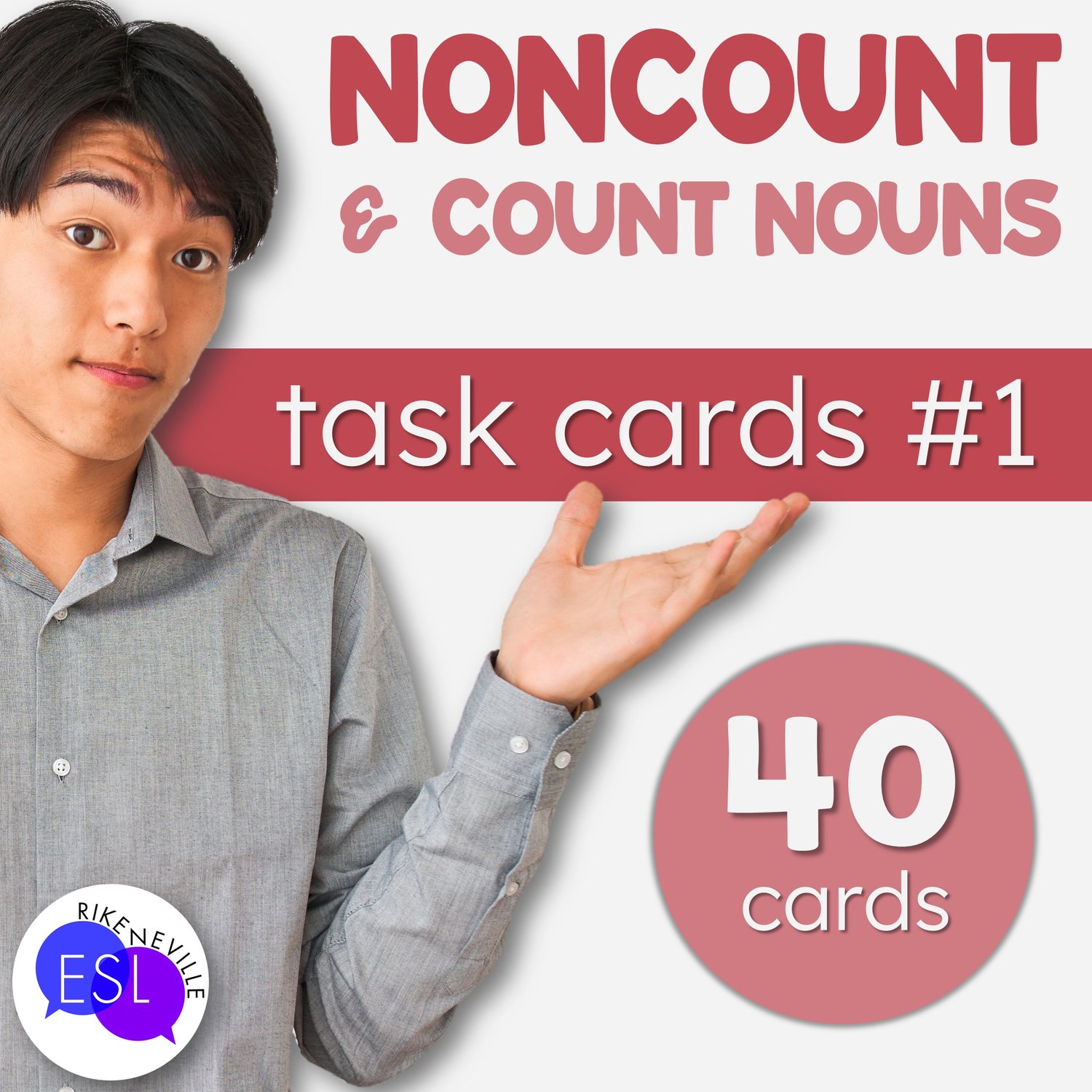
Count and Noncount Nouns Task Cards #1 for Review, Remediation, & Adult ESL
You've explained the difference between count and noncount nouns. Your students nod like they get it. Then they turn in work that says, "I bought two breads" and "She gave me a good advice."
Sure, they understand the concept in theory, but making it automatic? That takes repetition with different angles. Students need to practice identifying noncount nouns, correcting errors, choosing determiners, and making noncount nouns countable. One worksheet with twenty fill-in-the-blanks isn't always enough practice to internalize the concept.
That’s where this set of task cards comes in handy.
WHAT'S INSIDE:
✅ 16-page PDF with 40 task cards (4 cards per page)
✅ Color and black & white versions included
✅ Teacher instruction page with suggestions
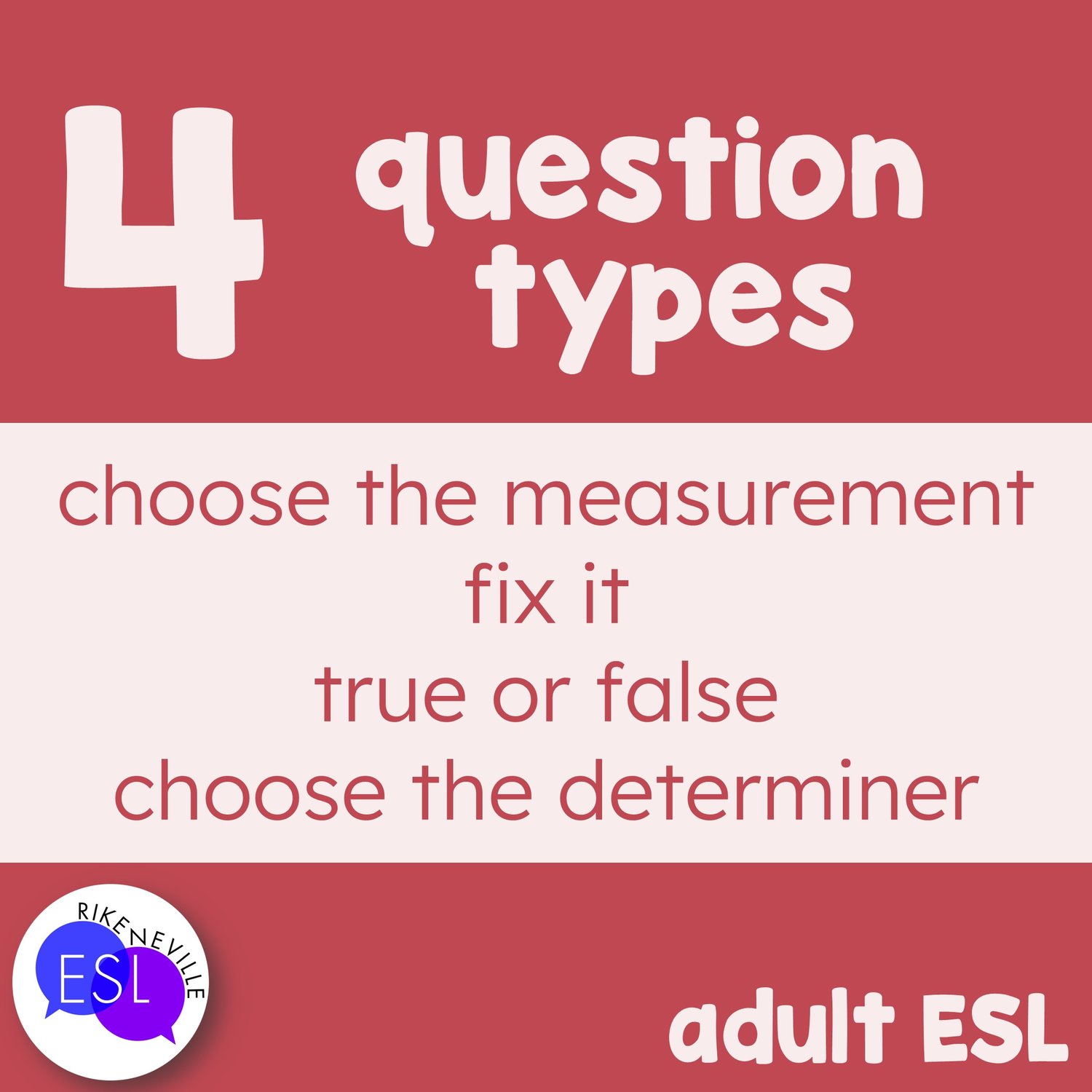
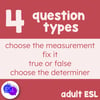
✅ Four different question types cycling through the cards:
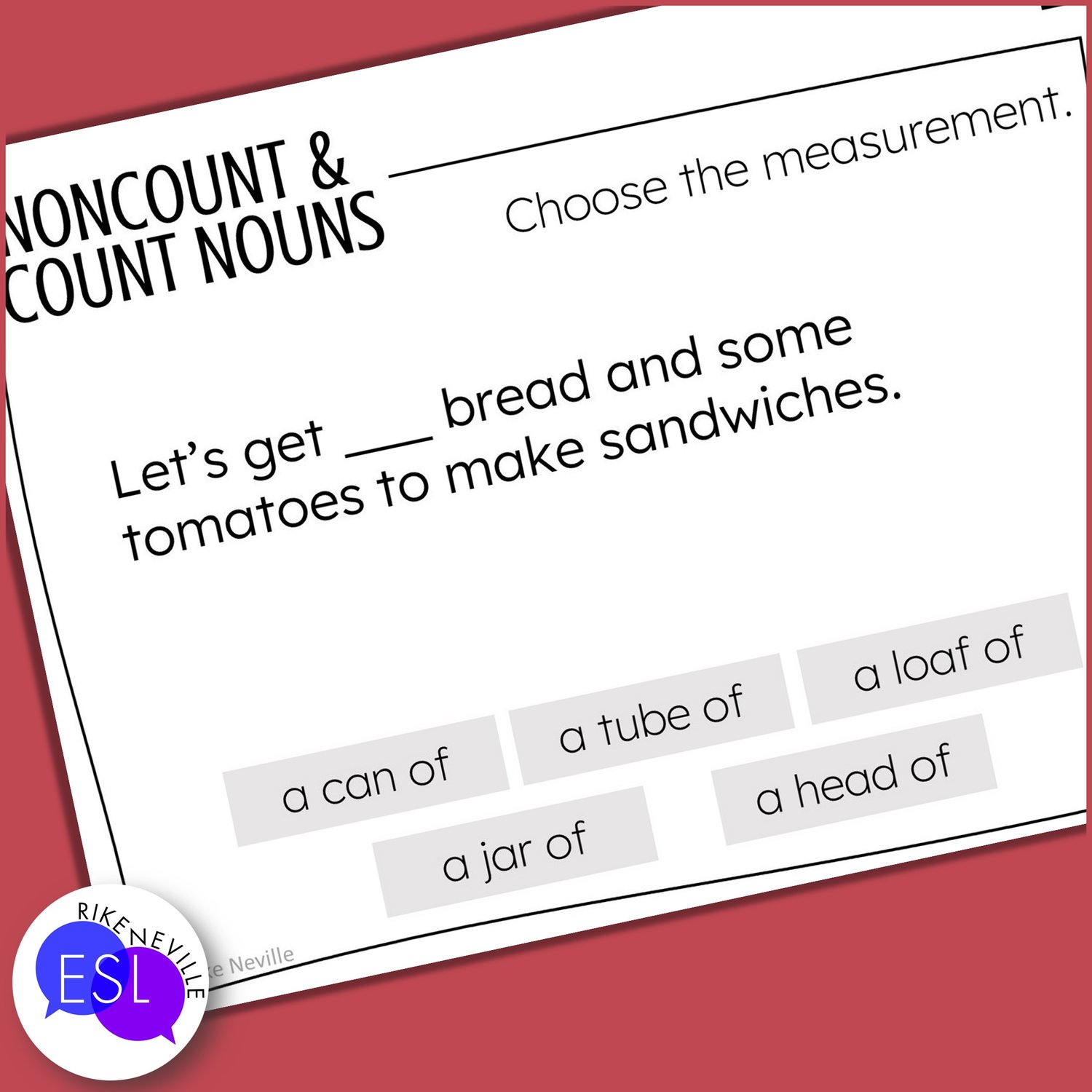
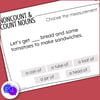
- Fill in the blank to make noncount nouns countable ("a loaf of bread").
- Spot and correct the error in a sentence.
- True/False statements about the rules
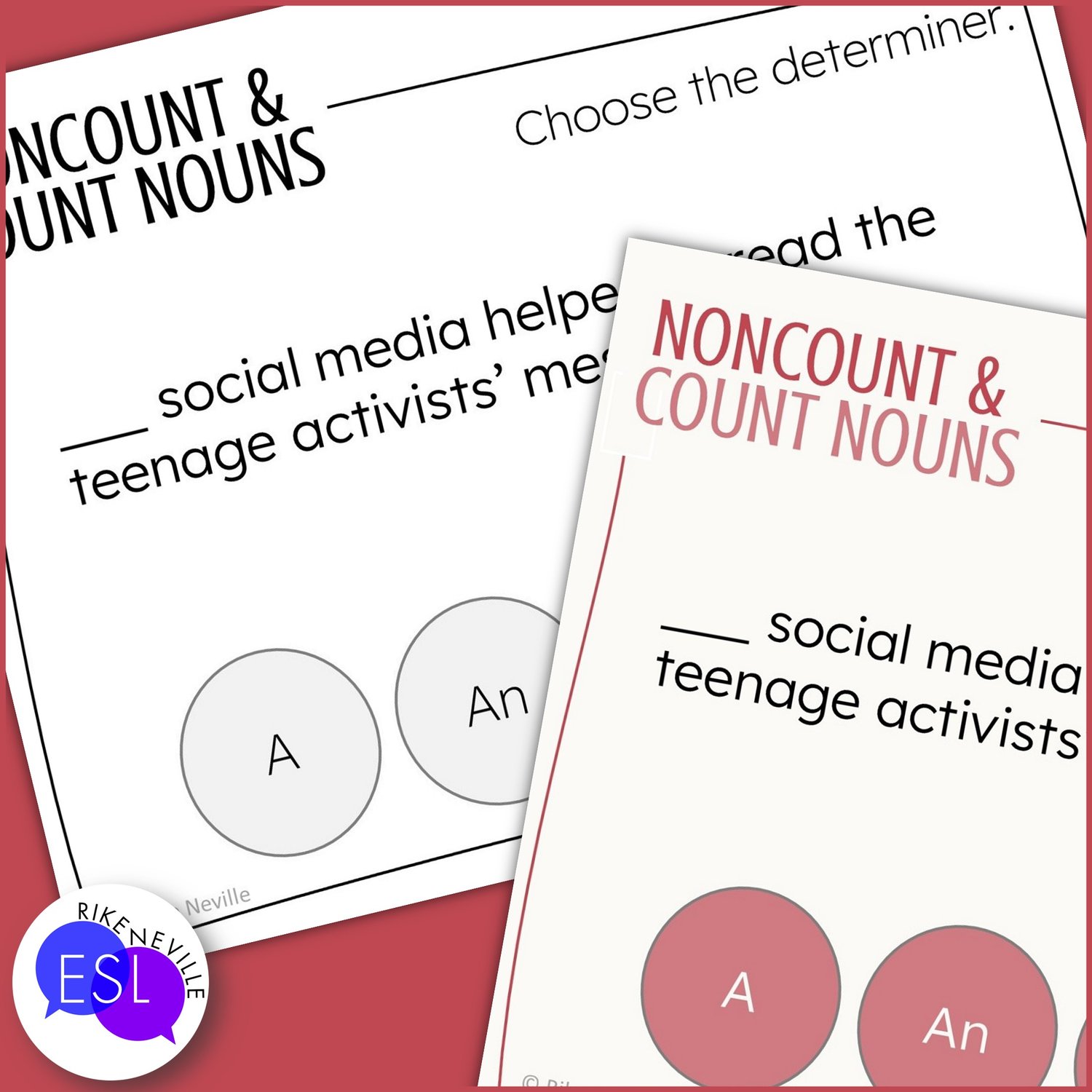
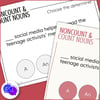
- Choose the correct determiner for given nouns.
✅ Answer key
✅ Student answer sheet
✅ Partner answer keys for oral practice
How to Use It:
Print the version that works for your budget: color if you've got the ink, black and white if you don't. Cut the cards, and that's your only prep. Students can work through them independently using the answer sheet, or use the partner answer keys for oral practice. The partner setup is like this: neither partner has all the answers on their answer key, so they have to switch back and forth to check their work. This keeps them both engaged instead of one person just reading answers.
The four question types rotate throughout, so students can't fall into that autopilot answering mode. They have to think about each card differently, which means the grammar pattern sinks in deeper.
If you've got a mixed-level class, you can differentiate by giving stronger students all four question types while beginners focus on just one or two question types.
This Works for Adult Learners:
These are task cards, which means students work at their own pace. No waiting for the whole class to finish or feeling rushed when they need more time. The partner option adds speaking practice without requiring you to manage every interaction. They're checking each other's work and discussing answers.
This is designed for mid to high beginner adults. No childish examples, no dumbed-down language. Just straightforward practice with grammar they’ll need for tests, college, and daily communication.