

M vs B Pronunciation: Minimal Pairs for Adult ESL
If your adult ESL students aren’t pronouncing /m/ vs. /b/ clearly, minimal pairs are what they need to help them improve their pronunciation AND their listening skills.
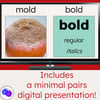
This (mostly) print-n-go pronunciation pack gives your adult ESL students the focused /m/ and /b/ practice they need to improve their pronunciation and to really hear the sounds. You get a presentation, an activity pack, flashcards, and an “I Have... Who Has...?” game.
THE SOUND PAIR: /m/ vs. /b/
Because /m/ and /b/ share the same lip position, students can’t go by visual cues to know what they’re hearing. They’ve got to really listen for that nasal resonance that separates them. The two sounds are made in nearly the same place, which makes this a surprisingly tricky contrast for some students to master.
With /m/ vs. /b/, you’ve got a sound pair that builds a core listening skill that transfers to other nasal/oral contrasts, while also targeting real minimal pairs (man/ban, mail/bail, mat/bat) that can cause confusion when the sound they hear is degraded, like in phone calls, video chats, and noisy rooms.
Some students don’t even know they’re saying the wrong word.
Placing /m/ and /b/ words side by side with real photos, repetition, and structured listening practice is what starts to pull those two sounds apart. Once they can hear the difference, they can begin to catch themselves. That’s what this pronunciation pack is created for.
WHAT’S INSIDE:
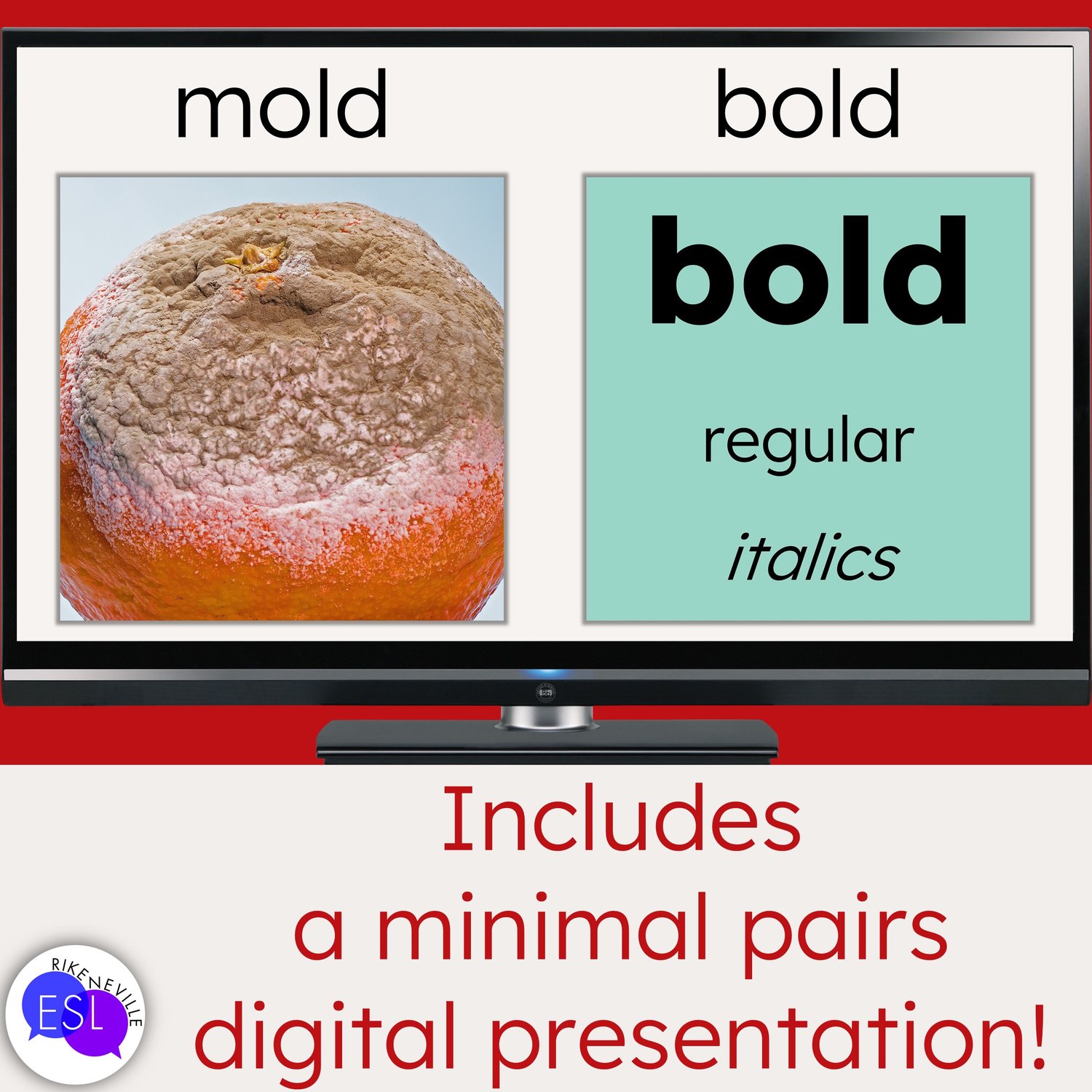
✅ Photo Presentation
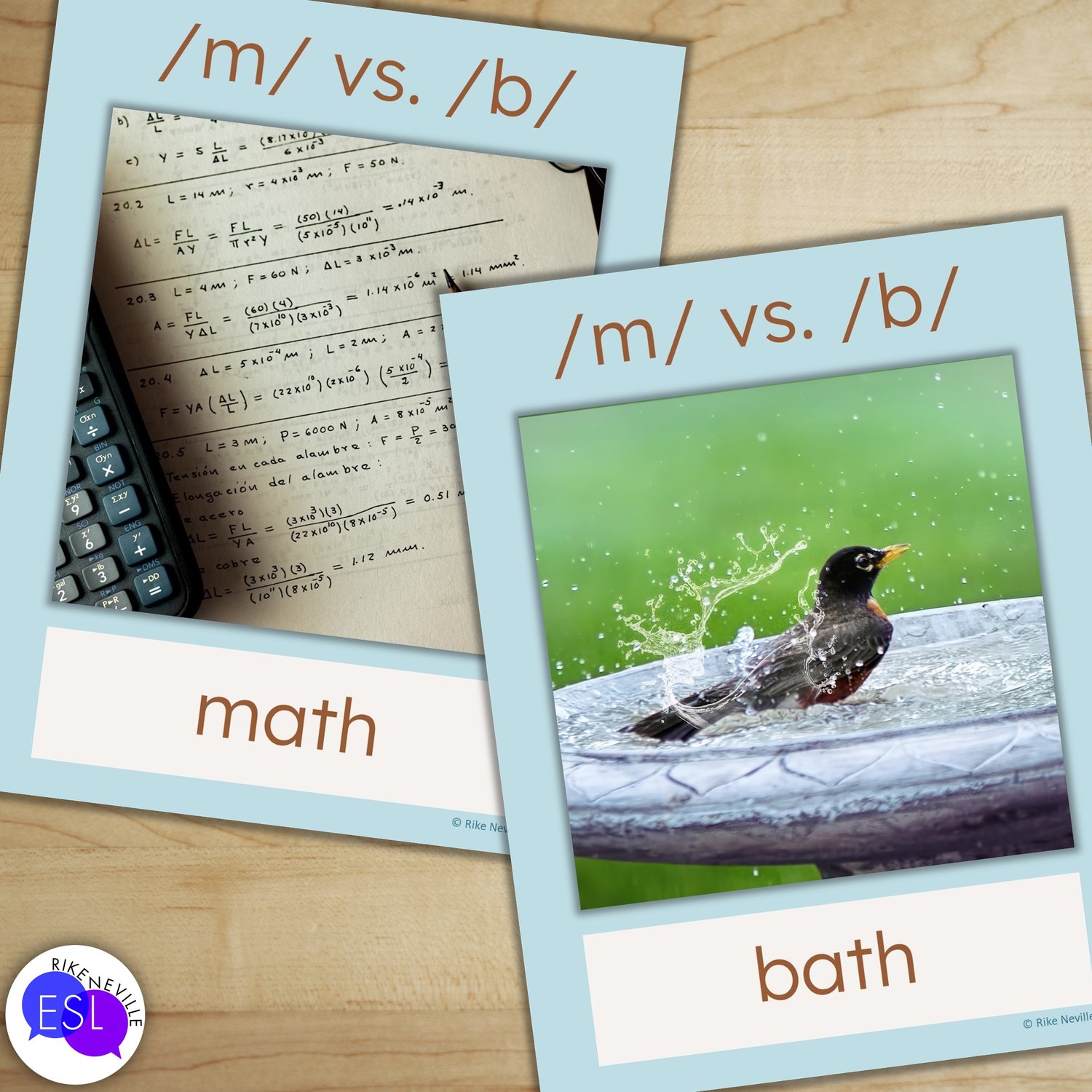
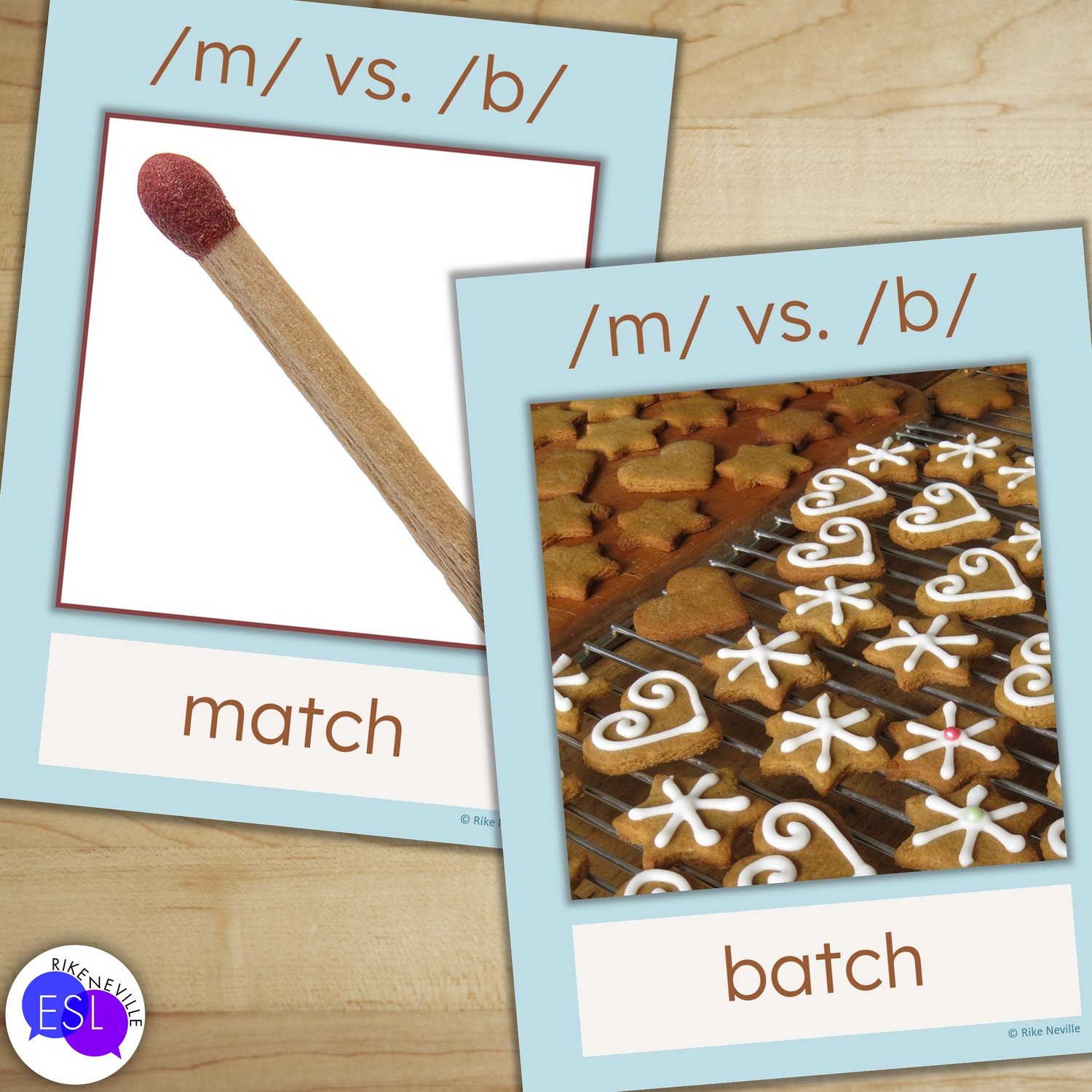
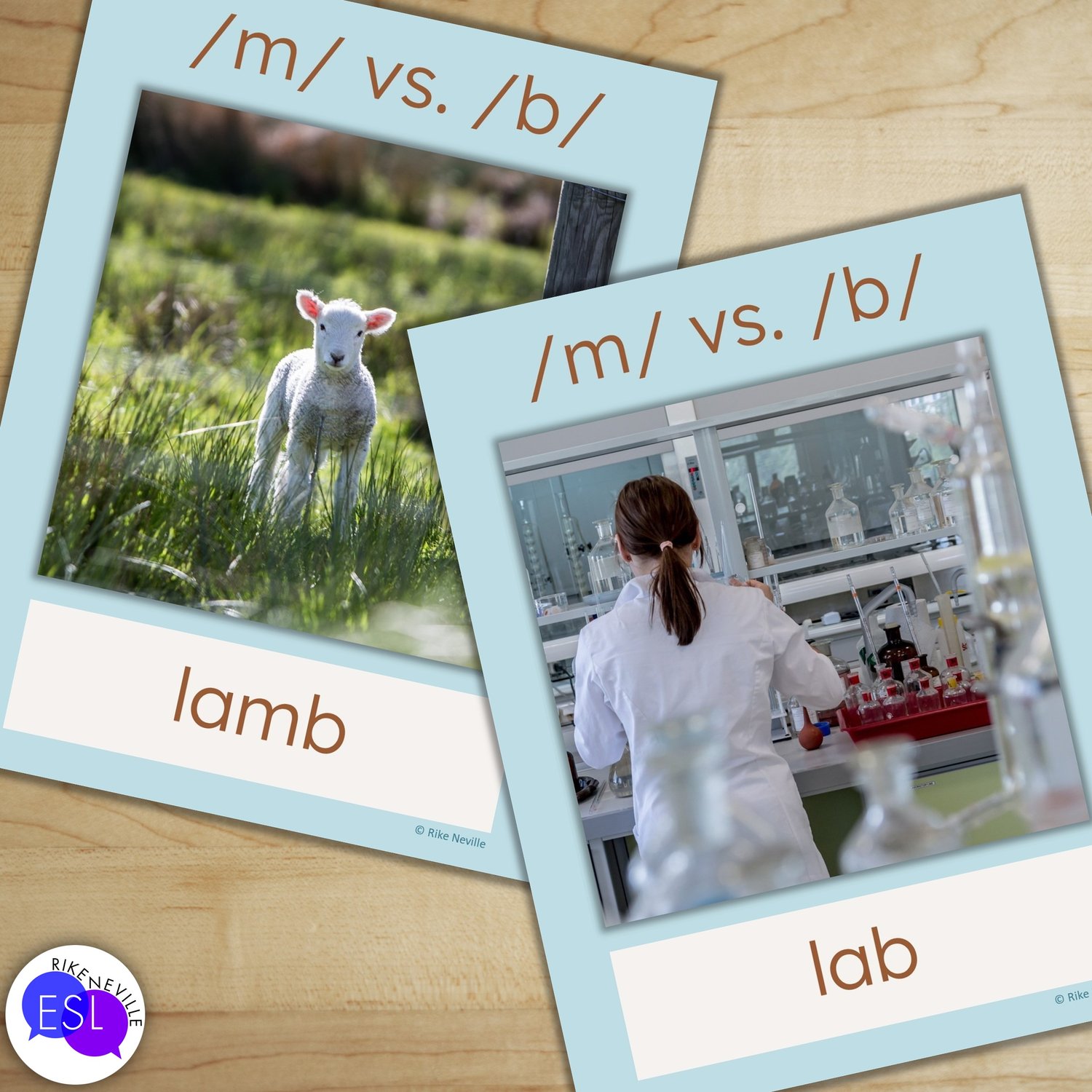
- Full-color real photos illustrate 65 minimal pairs
- One pair per slide to keep the focus on the target sounds
- Perfect for whole-class presentations, small group work, or individual review
✅ Activity Pack (covers more than 65 minimal pairs)
- Teacher’s Guide & Table of Contents: a clear outline of all materials, with suggestions on how to adapt activities for different student needs
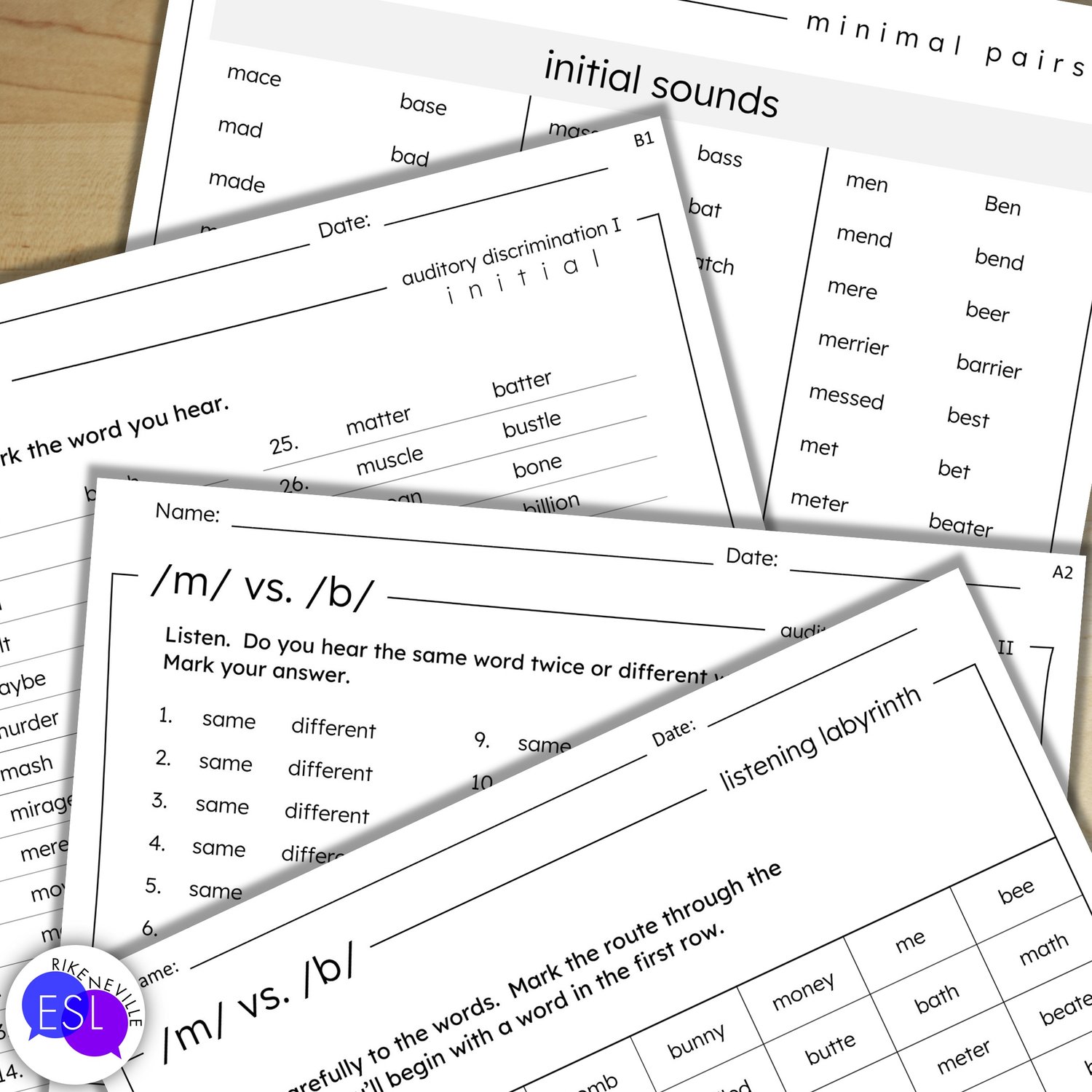
- Minimal Pair Handouts (multiple versions): perfect for introducing the sound contrast and giving students a take-home reference
- Auditory Discrimination Worksheet #1: students hear one word and mark which word they heard from the pair
- Auditory Discrimination Worksheet #2: students hear word pairs and decide if they are the “same” or “different” words
- Listening Labyrinth Activity: a fun, interactive listening activity where students follow a path through a grid of minimal pairs. Includes a teacher’s guide and answer key.
- Whole-Class Assessment Ideas + Mini Posters & Word Cards: easy-to-use materials for informal assessment and reinforcement. Great for substitute plans or group warm-ups.
The listening activities are teacher-led. You read the words aloud, so you can adjust the speed and repetition to fit your students.
✅ Photo Flashcards
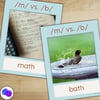
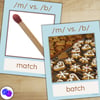
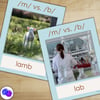
These no-tech pronunciation flashcards put 65 minimal pairs directly in students’ hands for low-prep articulation practice that works even when the internet is down.
- A set of 130 cards featuring 65 minimal pairs with /m/ and /b/
- Printed four per page for easy cutting and classroom use
- All cards are in full color, and each features a photograph with a word from the pair
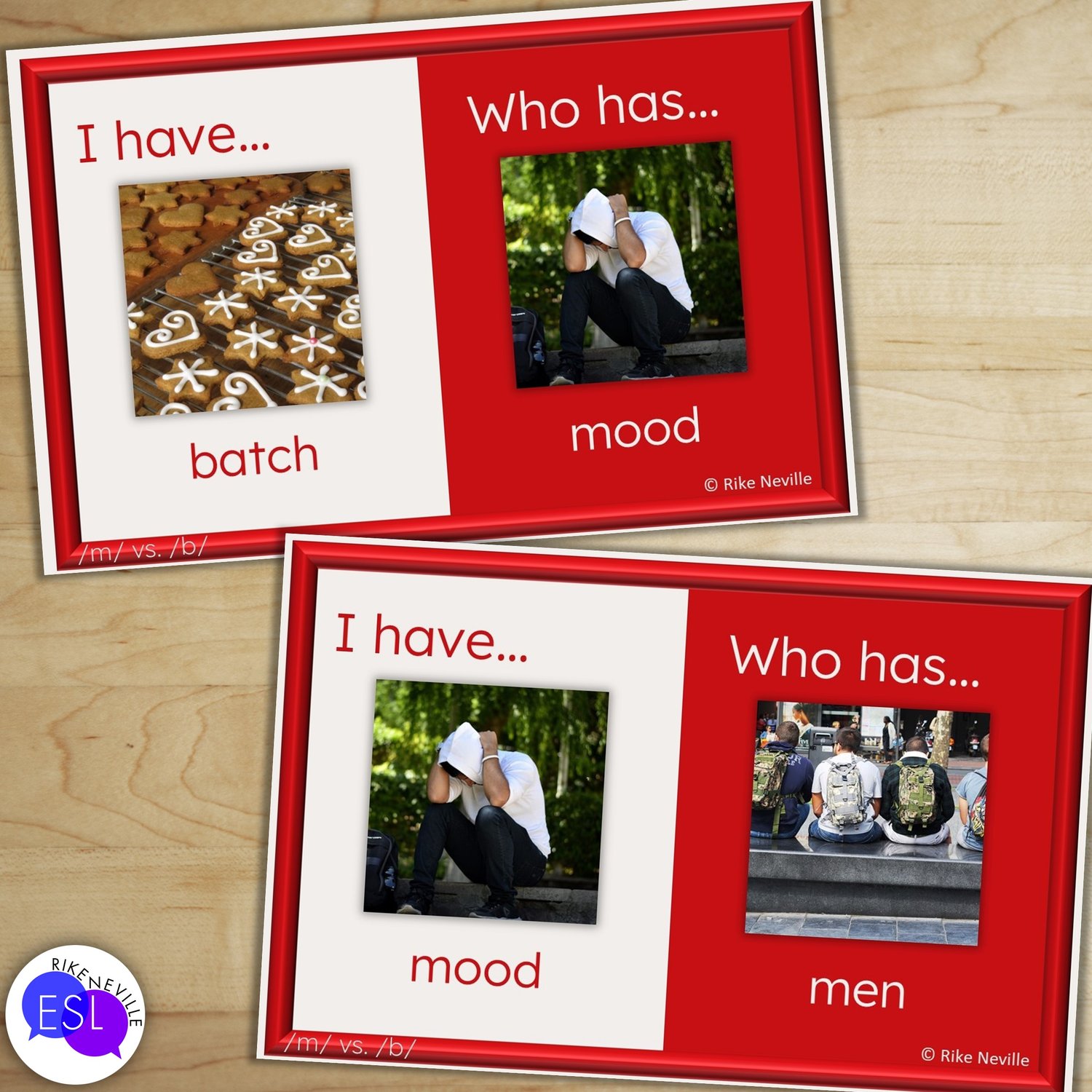
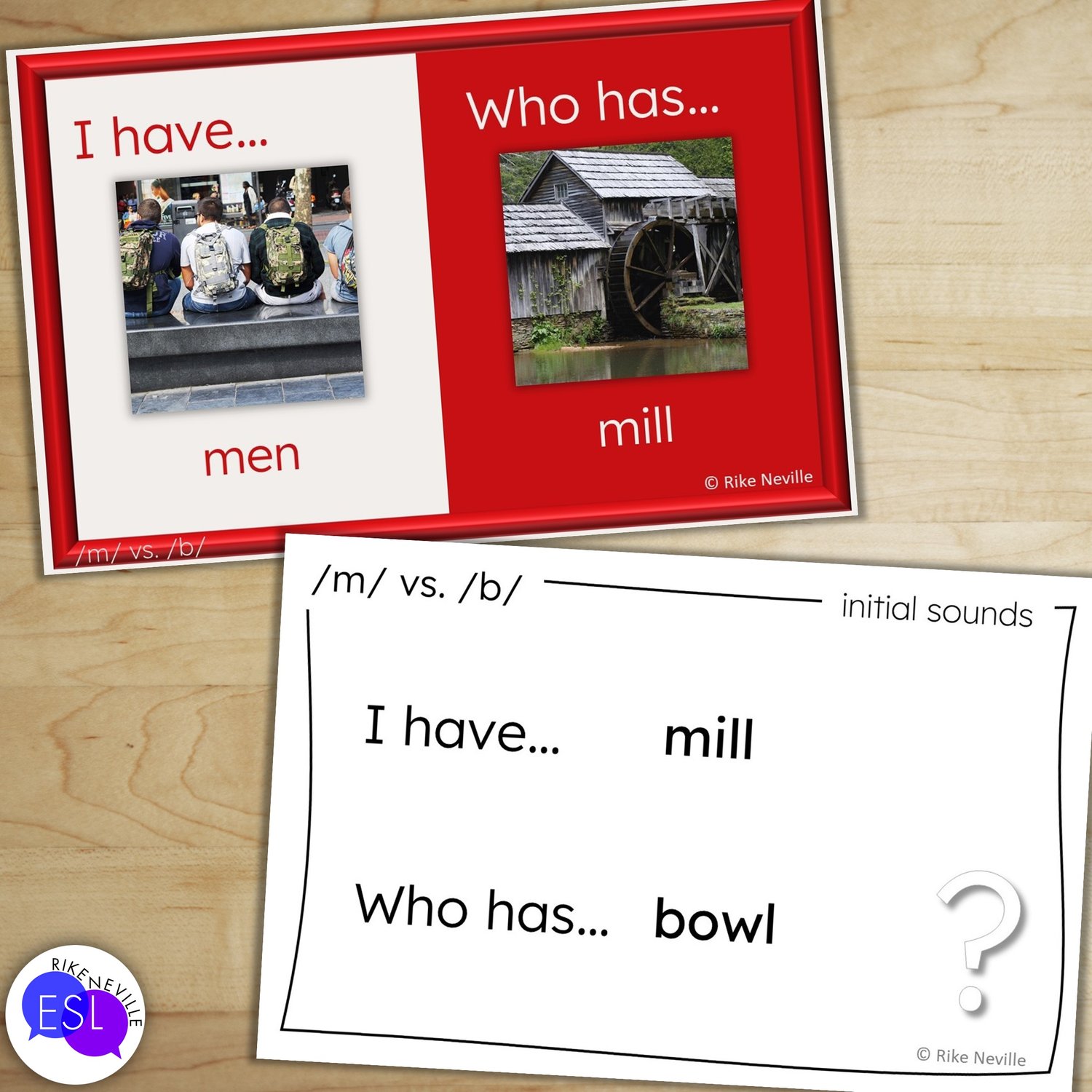
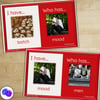
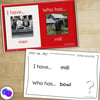
✅ “I Have... Who Has...?” Game
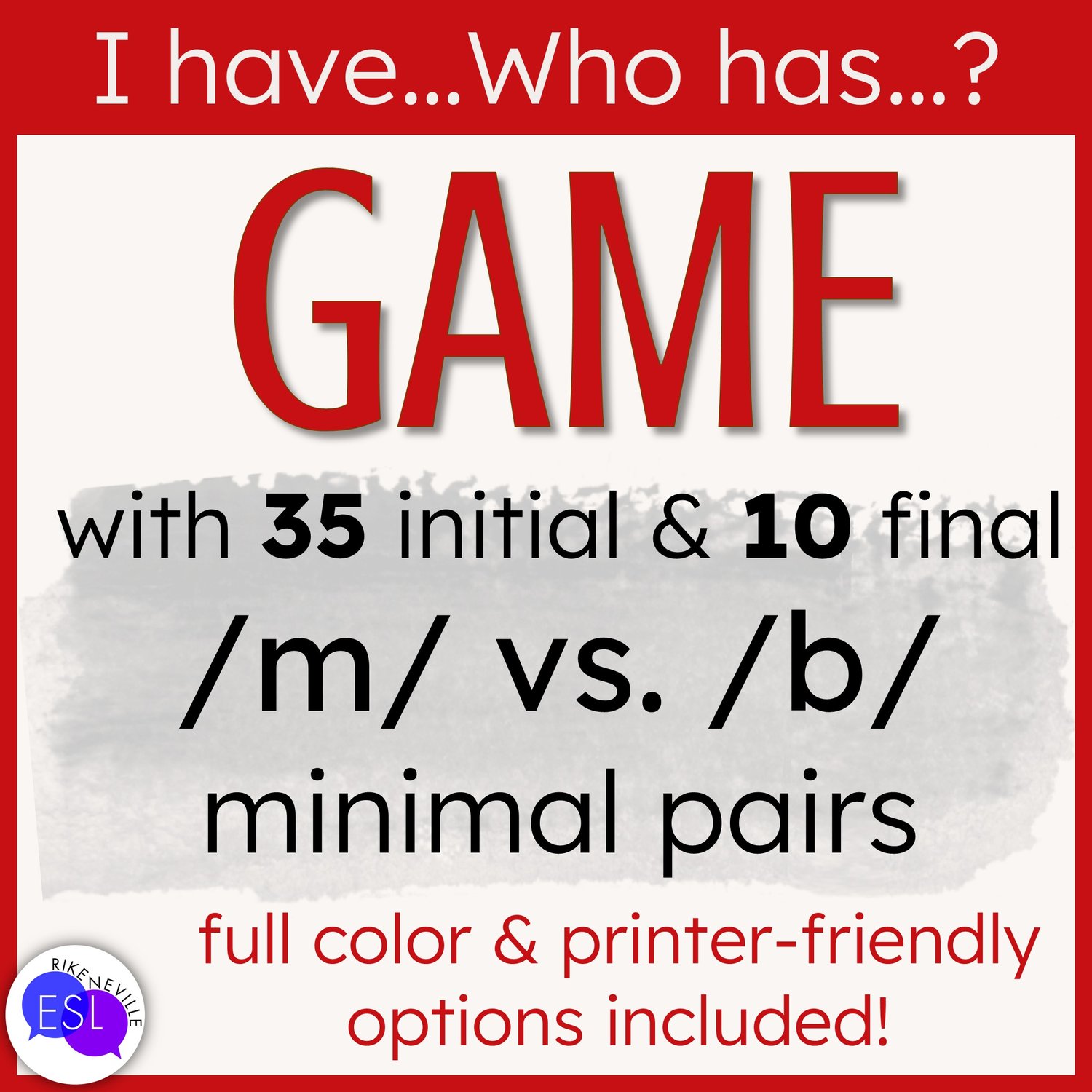
The /m/ and /b/ sounds are close neighbors in terms of articulation, making them easy to confuse for many adult ESL students. This /m/ vs. /b/ minimal pairs game builds the pronunciation awareness students need with 45 minimal pairs delivered through the always-popular I Have... Who Has...? format.
This game is one of those pronunciation resources you’ll be glad you have in your back pocket. It covers the same ground as traditional drilling, but students are usually so caught up in the game that they don’t notice how much focused practice they’re getting.
- 90 cards created around 45 minimal pairs
- Two versions: a simple black-and-white, text-only version (easy on the printer budget) and a color version with real photos. The color one is great for visual learners who feel like they need to know the meaning of the words. The B&W version is perfect for students ready to focus entirely on their pronunciation of the targeted sounds.
- Reference pages so you, or a sub, can follow along, catch pronunciation errors as the game moves, and make sure no one mishears something and derails the game.
WHY REAL PHOTOS?
When students know what a word means, pronunciation practice stays on track. A quick glance at the photo is all it takes. No stopping to explain or look things up, because students get the meaning right away and can stay focused on the sound.
Adults notice when they’re practicing with made-up words, and it can undermine the whole exercise. Every word here is real and photo-supported, so students stay focused on the sound instead of wondering whether what they’re practicing is even a real word. Some words will be more familiar to your students than others, but every word they’re listening to and repeating exists in English.
THIS WAS CREATED FOR ADULT ESL STUDENTS
I created this with adult students in mind. The practice is focused on the exact point of confusion: two sounds your students have been producing identically without knowing it.
The images are real photographs, not kiddie clipart, so it never feels condescending or juvenile. Because the design is age-neutral and the photos show everyday objects and situations, this pronunciation pack works well across a wide age range, from teens to senior citizens, without anyone feeling talked down to.
Every activity is designed with flexibility in mind. You can adjust the speed of word delivery, choose whether or not to repeat, and modify how much support you provide, which means this pronunciation pack works across a range of levels and classroom contexts.
It works well in adult ESL classrooms, intensive pronunciation workshops, small groups, and one-on-one tutoring. Older secondary students with the same pronunciation goals will find it just as useful.
⚠️ Please review the cards and images before use and set aside any that may not be appropriate for your specific students or teaching context. You know your students best.