




Present Perfect vs. Simple Past ACTIVITY | Linguistic Investigation
Adult ESL grammar students will compare present perfect and simple past sentences side by side in this discussion-driven, discovery-based investigation. Instead of sitting through a rules-first lecture, students analyze real sentence pairs to figure out the differences in form, time frame, and meaning themselves.
This works especially well after you've introduced the present perfect and students are ready to dig deeper. When that familiar confusion starts surfacing in class, this activity gives them the space to talk through it, notice the patterns, and build the rule themselves through language in context.
It supports all four language domains: students read sentences carefully, discuss their thinking with partners or small groups, listen to each other's reasoning, and articulate their conclusions out loud and in writing.
WHAT'S INSIDE this 8-page PDF:
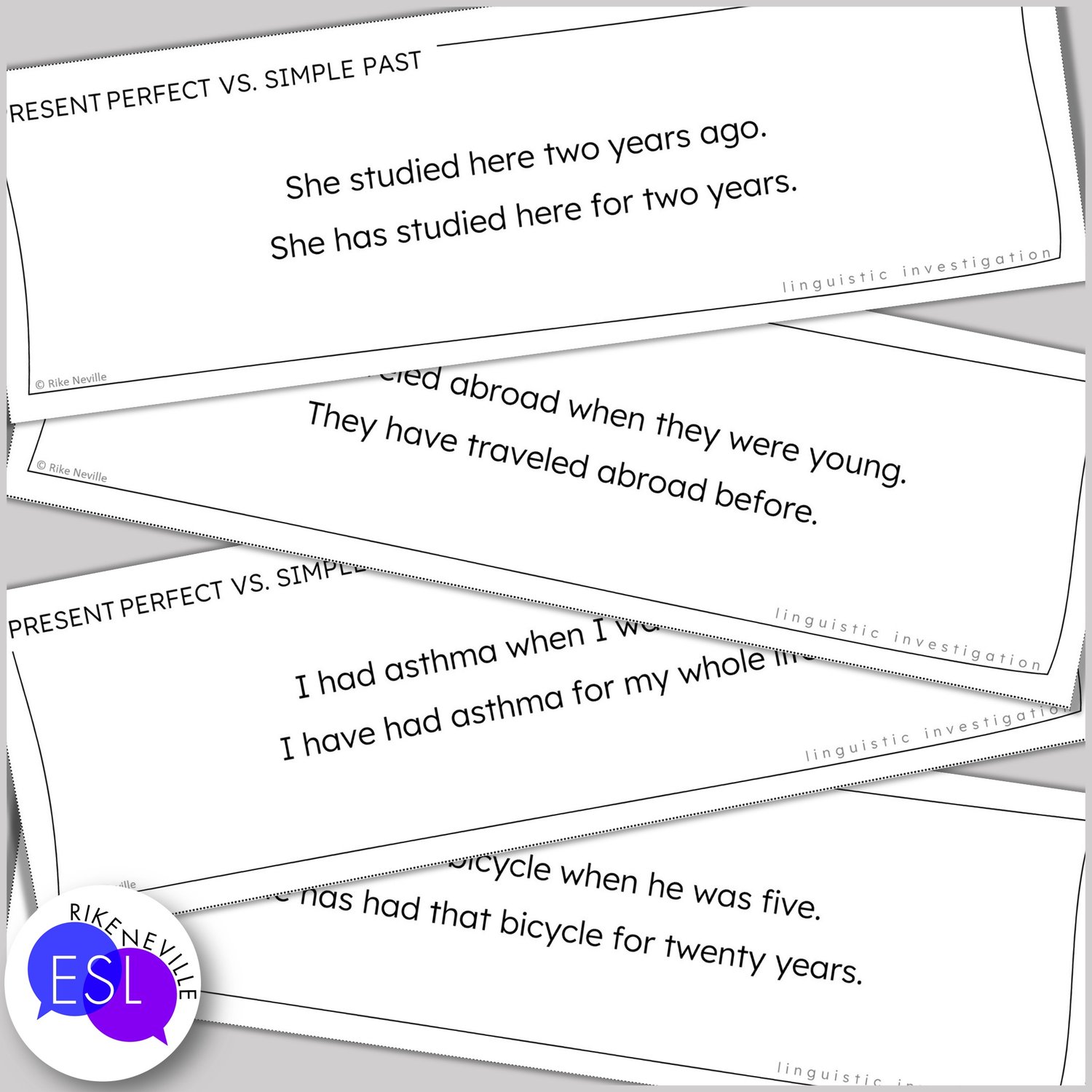
- ✅ 14 sentence cards, each showing a closely related sentence pair (one present perfect, one simple past) — printed 4 to a page in an ink-friendly format
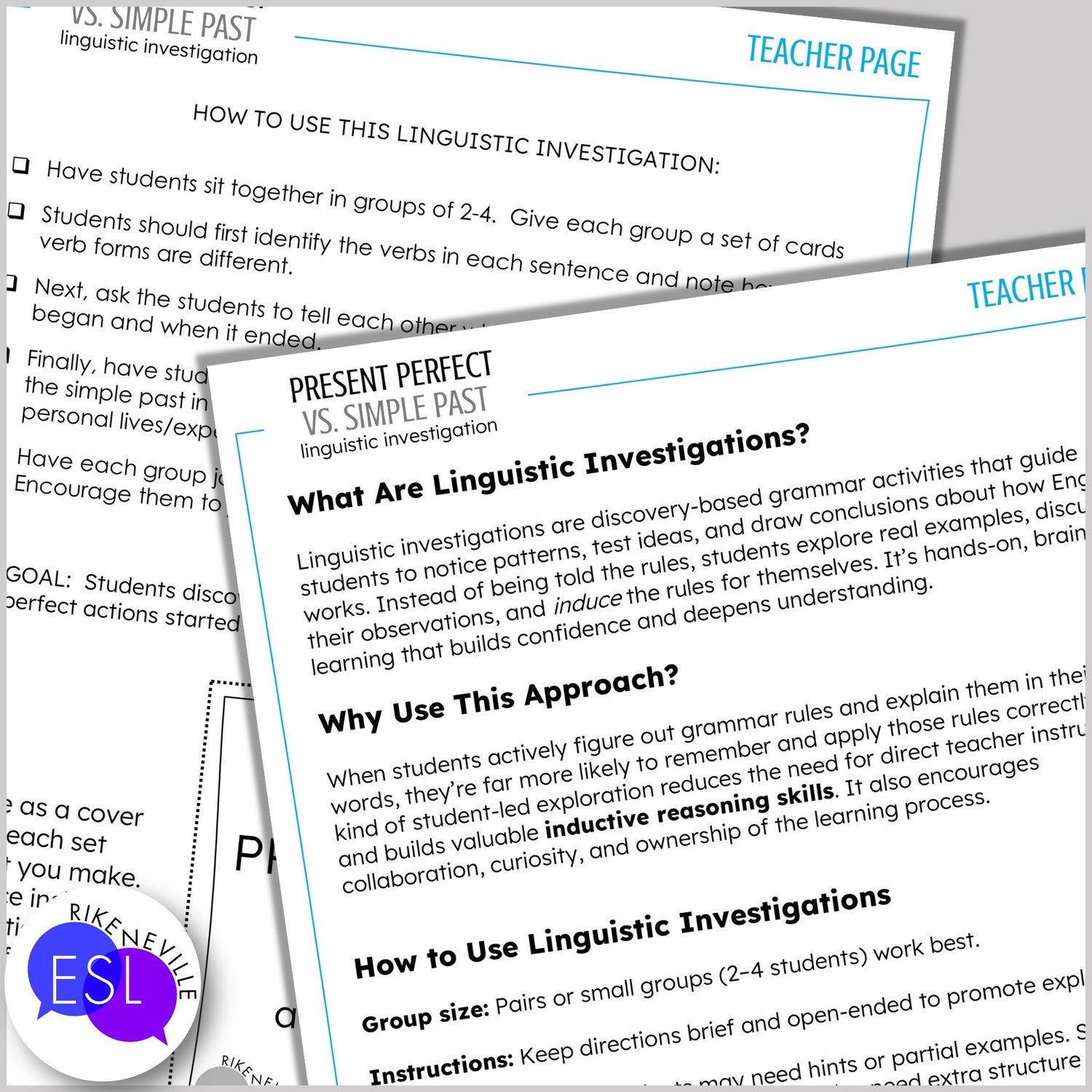
- ✅ Instructions card (helpful for students who arrive late or need extra support) + teacher page
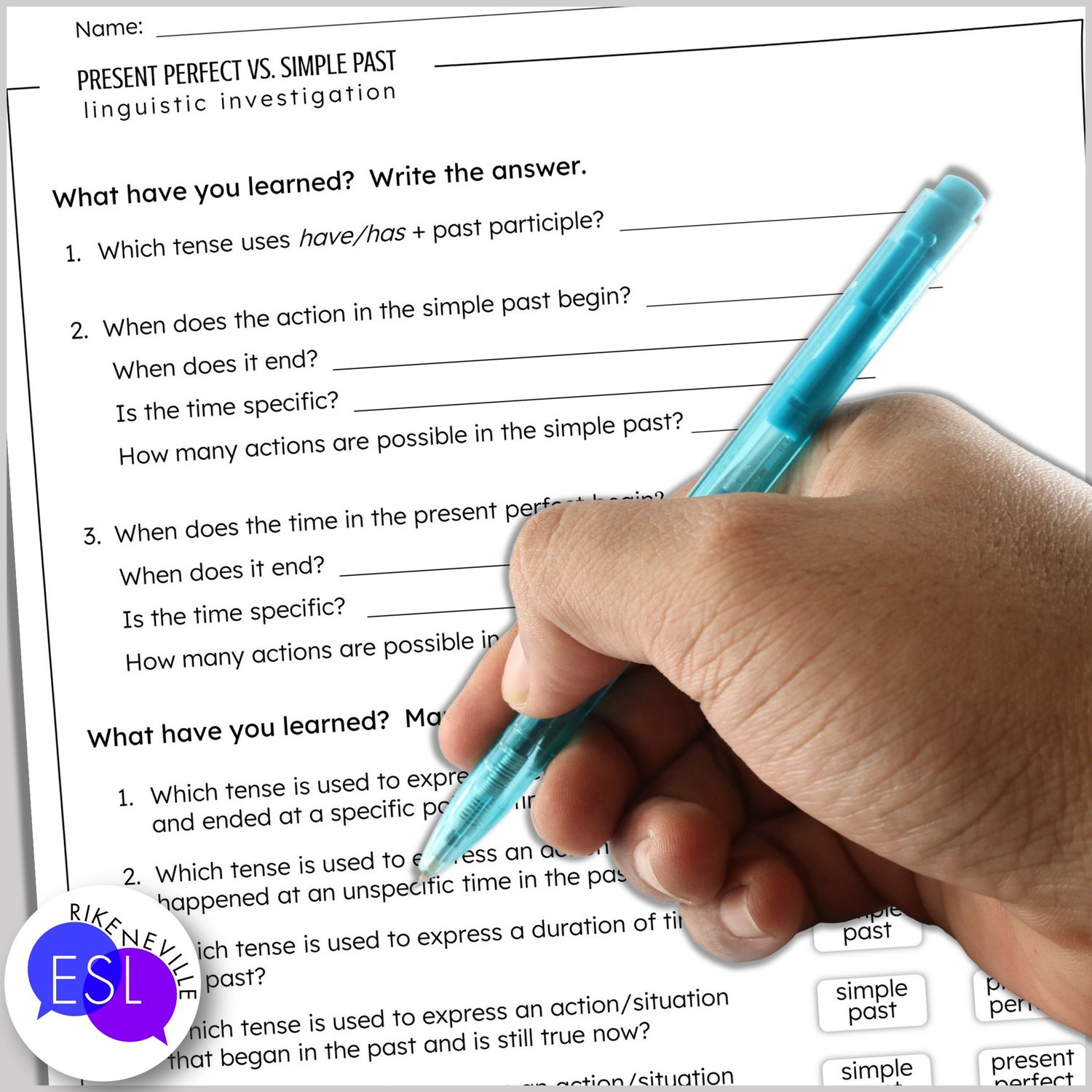
- ✅ Student worksheet to consolidate findings after discussion and reinforce the grammar point + answer key
HOW TO USE THIS ACTIVITY:
Set students up in pairs or small groups and introduce one step at a time. Students examine each sentence pair, identify the verb forms, discuss the time frames, and draw their own conclusions about how the present perfect differs from the simple past. Your job is to circulate, prompt, and let the "aha" moments happen organically.
Once groups have worked through the cards and compared their thinking, the worksheet helps consolidate what they discovered. Use it as an in-class wrap-up, a take-home assignment, or partner review, whatever fits your lesson flow.
THIS WAS CREATED FOR ADULT ESL STUDENTS
Your high beginner to intermediate adult ESL grammar students already know these tenses exist. What they need is a chance to slow down and really examine what sets them apart. Discovery-based learning puts students in the driver's seat: they're analyzing, discussing, and reasoning through the grammar instead of copying down rules they'll forget by Thursday.
This activity also works well for secondary ESL students and secondary native English-speaking students who have gaps in this area and need something more active than a grammar chart.