
Reflexive Pronouns Grammar Guide, Worksheets, & Activities for Adult ESL
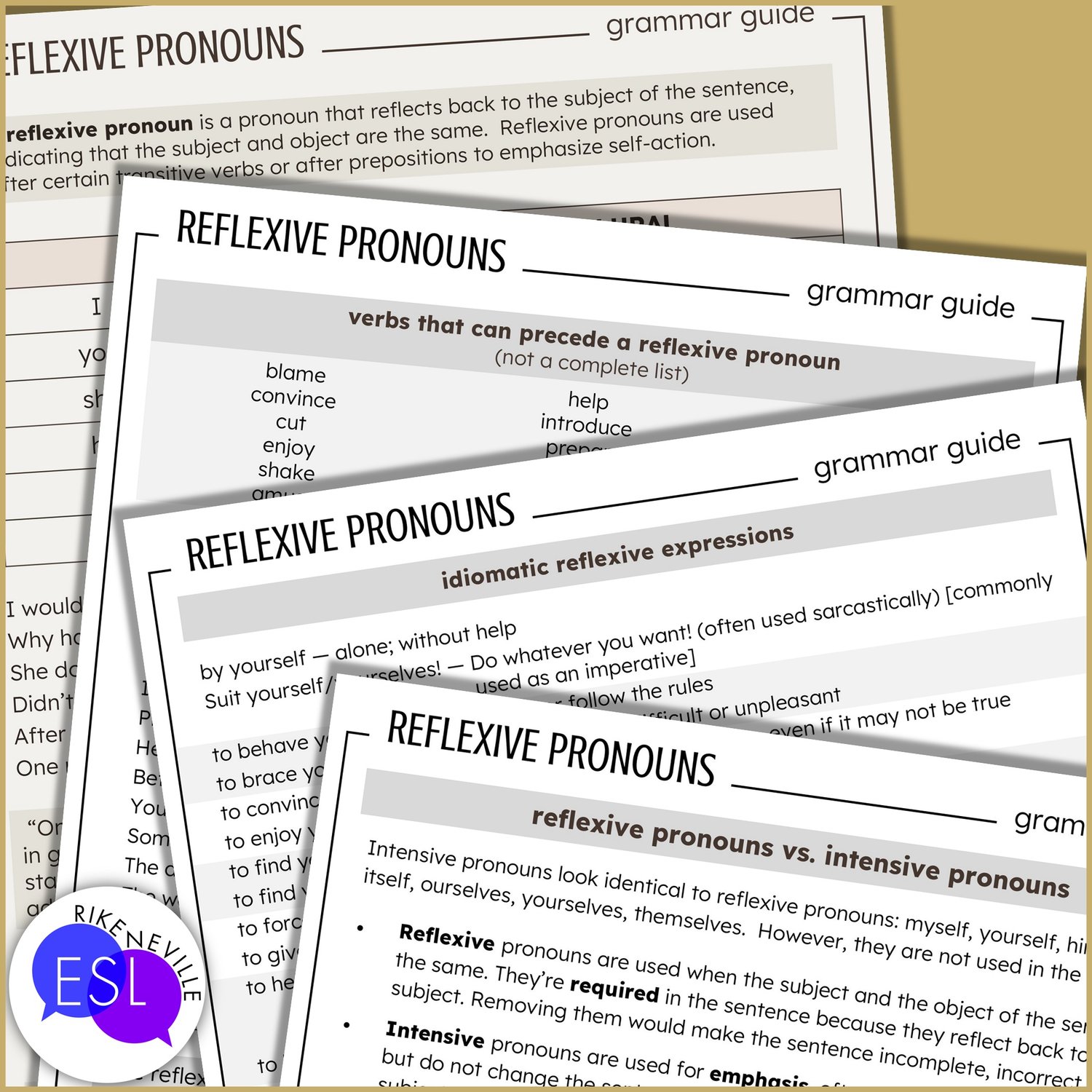
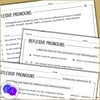
This adult ESL grammar pack tackles reflexive pronouns from the ground up. It opens with a four-page grammar guide that explains the structures clearly and provides plenty of example sentences. The pack then moves into seven worksheets that build from straightforward to more demanding and rounds out with three speaking activities that get students producing the forms out loud. High-beginning students get explanation, written practice, and spoken practice, all in one place.
Reflexive pronouns (myself, yourself, himself, herself, itself, ourselves, yourselves, themselves, oneself) are one of those structures students come across all the time in daily life but often produce incorrectly or avoid.
The grammar guide explains both reflexive and intensive pronouns clearly, including oneself, so students understand the full picture. The worksheets and activities then put the reflexive uses to work across all four language domains: reading, writing, speaking, and listening. There's also a dedicated section on reflexive idioms (like help yourself and make yourself at home), expressions students hear all the time but rarely get to study explicitly.
WHAT'S INSIDE this 41-page PDF:
✅ In-depth grammar guide — a clear, example-rich explanation of reflexive pronouns and intensive pronouns, including oneself, with sentences grounded in everyday communication and daily life.
✅ 7 worksheets, with answer keys where applicable:
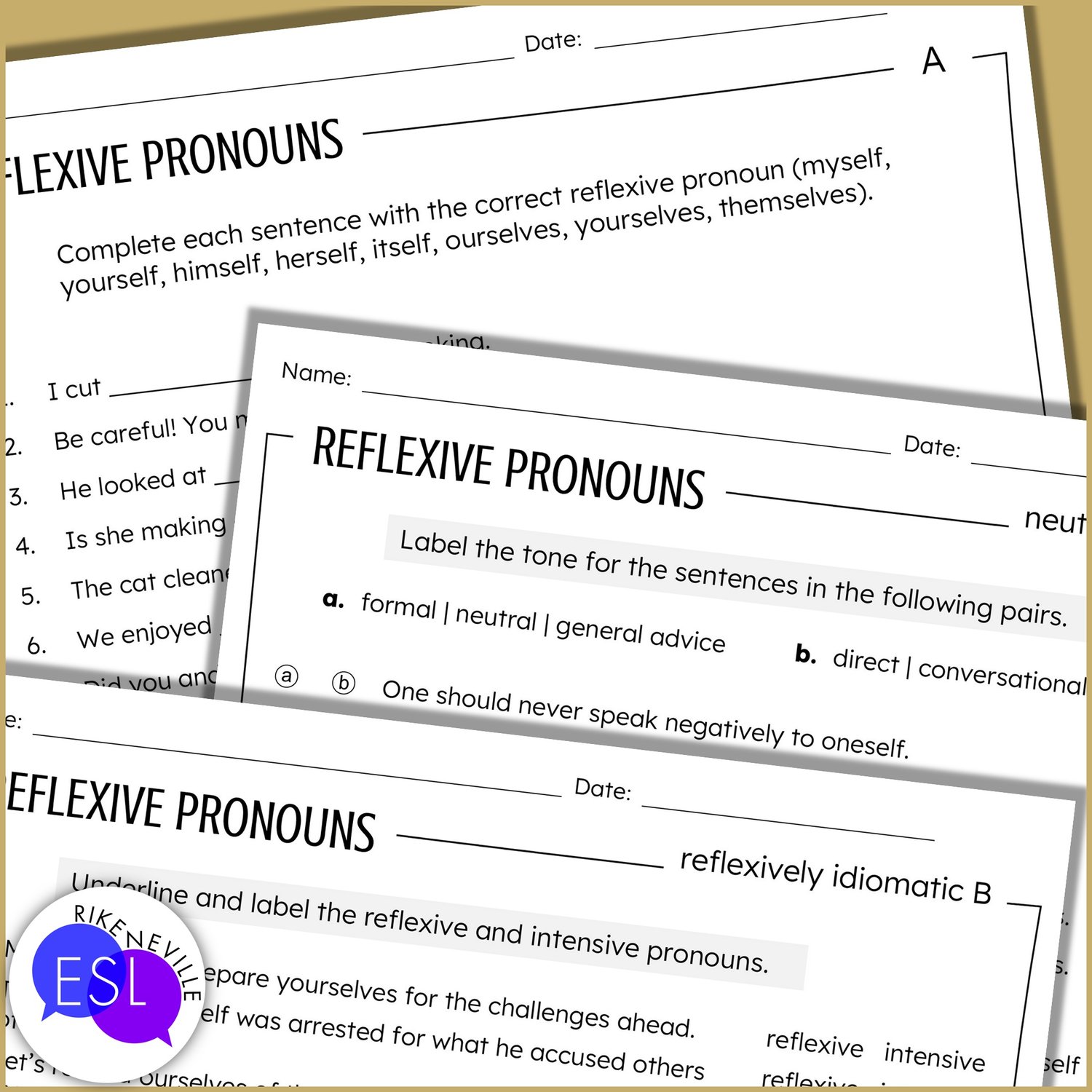
- A, B, and C — students complete sentences with the correct reflexive pronoun. Worksheet A includes the full pronoun list in the instructions (myself, yourself, himself, herself, itself, ourselves, yourselves, themselves); sentences progress in difficulty from A through C.
- Neutral vs. Personal 1 — students label the tone of sentence pairs as formal/neutral/general advice or direct/conversational/personal thought, building awareness of how reflexive pronouns shift register.
- Neutral vs. Personal 2 — students rewrite direct sentences into neutral ones using oneself.
- Reflexively Idiomatic A — students fill in the blanks with the missing reflexive pronoun in common idiomatic expressions. (Two pages.)
- Reflexively Idiomatic B — the same idiomatic practice condensed onto one page
✅ 3 speaking activities, all low-prep:
- Reflexive Relay Game — a teacher-facilitated speaking activity that gets students producing reflexive pronouns under a little friendly pressure.
- Reflexive Page Game — a speaking-based page game students play in small groups, with the teacher's instruction page included.
- Reflexive Exchange — a student-led speaking activity using 24 cards. Two teacher instruction pages cover setup; students take it from there, including checking each other's responses.
THIS IS DESIGNED FOR YOUR ADULT ESL STUDENTS
Everything in this pack was written with adult students in mind. That means no childish scenarios, no condescending explanations, and no content that feels borrowed from a middle school classroom.
That said, the materials work just as well with mature secondary ESL students who need a solid foundation in reflexive pronouns. And if you teach mature secondary native English speakers who have grammar gaps to fill, this pack gives them clear, rigorous practice without talking down to them.